

Sri Lanka In Geneva: Frozen In Fixed Positions

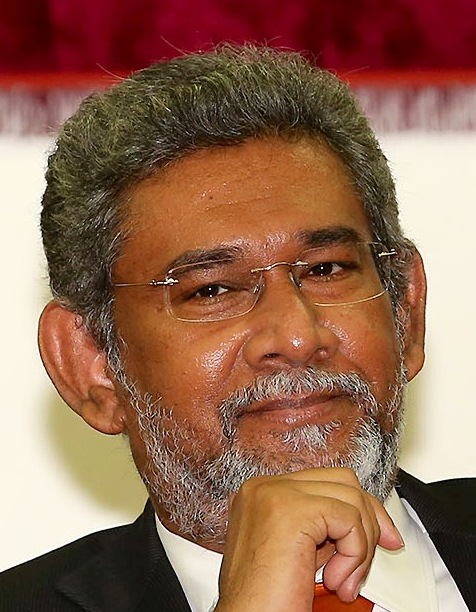
Dr. Dayan Jayatilleka
With almost exactly a week to go before a crucial vote in Geneva, Sri Lanka seems very much on the back foot. While William Hague, the Foreign Secretary of the UK makes a direct appeal to the readers of ‘The Hindu’, presenting four points in support of his country’s call for an ‘international mechanism’, his counterpart Prof GL Peiris busies himself addressing a series of meetings, not in the member states of the UNHRC but in the Southern province of Sri Lanka. Prof Peiris should rebut each one of the four points and go on to ask his counterpart, in print, in the world’s quality press, whether the failure to conclude inquiries for 28 years into Bloody Sunday indicated a lack of political will on the part of the British state which required an international inquiry so as to further reconciliation in Northern Ireland and prevent the sporadic violence by the Real IRA and the Continuity IRA.
While in Geneva the West trots out seeming precedents for an inquiry led by the Office of the High Commissioner, Sri Lanka fails to point out that these inquiries were to do with emergencies i.e. with exceptional situations. They were to do with ongoing lethal violence of considerable magnitude and not the past conflicts, however bloody of a stable civilian democracy.
During this session Sri Lanka seems to have failed to hold a single ‘side event’, none that made the media anyway, while the West has held three, in support of the draft resolution against us. Instead the Sri Lankan Government side has contented itself with Mahinda Samarasinghe’s bluff and bluster, spiced up with the clumsy and strident statement presented by the SL Mission to justify the recent arrests (some of which have fortunately been reversed) with lurid claims of Tiger revivalism. It is a source of personal and professional pride that in 2007-2009, with many ghastly incidents happening during the civil war including the murder of Lasantha Wickrematunge, Sri Lanka never damaged its credibility in Geneva by spouting such rhetoric, which represents the complete submission of Sri Lanka’s diplomacy to the warped, discordant discourse of hyper-securitisation. Read More
