

Hard Resolution: How And Why Sri Lanka Should Argue That The UNHRC Reject An External Inquiry
By Dayan Jayatilleka -March 13, 2014
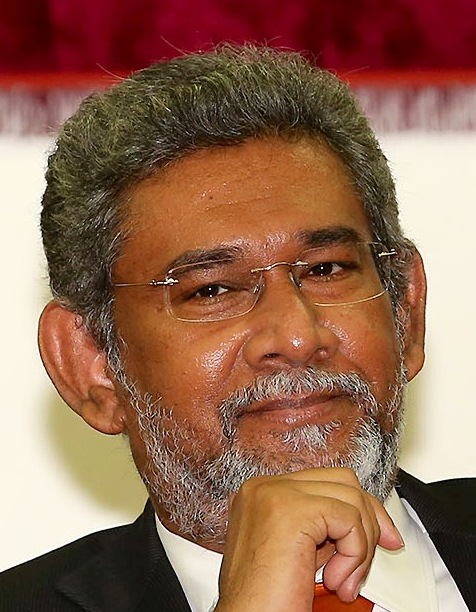
Dr. Dayan Jayatilleka
 “It’s a hard rain a-gonna fall” - Bob Dylan
Going by media reports it would seem that the US-UK is veering towards a clearer fore-grounding of a mandate for investigation of Sri Lanka by the Office of the High Commissioner for Human Rights, a position which would crystallise around March 15th or 18th in Geneva.
During the bitterly fought end of a long war of national defence against the monstrous LTTE, individual elements of the Sri Lankan armed forces may have brutally transgressed, but national self respect demands maximum resistance to being subjected like Devyani Khobragade to the institutional equivalent of an invasive full body probe. Sri Lanka should resist being singled out and its sovereignty collectively violated by resolution.
The most specious and disingenuous arguments are in play as part of a disinformation operation to justify such an investigation. For instance a list of country situations in which an investigation either by the Human Rights Council or the High Commissioner’s Office was authorised is being trotted out. The briefest of perusals of the list would show that all these situations are one of the following:
- Strongly ongoing conflicts (Syria, Darfur)
- Illegitimate regimes (unelected, military dictatorships such as Myanmar)
- Failed states (Sudan/Darfur)
- Occupied territories under international law and UN Security Council resolutions (Israel).
To bring Sri Lanka into this list would be classic case of giving a dog a bad name and hanging it or far more mildly, of mixing apples and oranges.
By sharp contrast,
- Sri Lanka is a legitimate state with an elected government, whatever its transgressions (and they are many).
- The prevalence of democracy — contrary to the recent strictures of the former president Chandrika Bandaranaike Kumaratunga— is dramatically evidenced by the 78% vote obtained by the TNA in an election held in an area saturated with troops.
- There is no ongoing armed violence on any large scale in Sri Lanka (as in Syria or Darfur). Therefore there is no urgent imperative to save lives. Sri Lanka is in a post-war situation and has been so for five years.
- Read More
