

Religion Without God
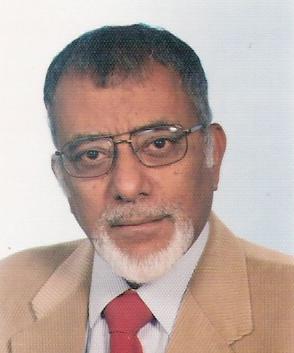
Prof. Charles Sarvan

Ronald Dworkin, Religion Without God, Harvard University Press, 2013
The attempt here is merely to draw the attention of readers to this short (about 150 pages) but concentrated and demanding work. It is likely to be of particular interest to Buddhists: they, unlike adherents of other religions, won’t find the title, ‘Religion without
 God’, oxymoronic or absurd – cf. “Marxism without Marx” – because Buddhism is agnostic. (“Among religions in this country [USA] which do not teach what would generally be considered a belief in the existence of God” is Buddhism: Dworkin, Note 5, page 161.) The Buddha in a well-known story said that what a man wounded by a poisoned arrow needs is immediate and practical help, not abstruse speculation: “So too, Malunkyaputta, if anyone should say, ‘I will not lead the noble life under the Buddha until the Buddha declares to me whether the world is eternal or not eternal […] whether the soul is the same as or different from the body; whether or not an awakened one continues or ceases to exist after death,’ that would still remain undeclared by the Buddha, and meanwhile that person would die.” Dr K. S. Palihakkara in his lucid work, Buddhism Sans Myths & Miracles (Stamford Lake Publication, Pannipitiya, 2003), notes that unlike in other religions, there is no Creator God in Buddhism (p. 97). All Buddhists know that “Buddhism preaches ‘Anathma’ or no rebirth” (page 41). Lest Dr Palihakkara’s credentials be questioned, the book tells us that he has held posts such as Director of Education, Sri Lanka; “Director of Pirivena Education (temple schools)” and was “also one time Secretary to the Oriental Studies Society (which conducts examinations mainly for the Buddhist clergy”). Going further than agnosticism, some would argue that Buddhism is practical, based on reason (“enlightenment” implies knowledge, the product of reason) and essentially atheistic.
Dworkin (1931 – 2013), renowned Professor of Law and Philosophy, aims not to divide those who believe in God and those who don’t but to unite them by showing they share certain fundamental values and approaches. Though an atheist, Einstein said he was a deeply religious man: “To know that what is impenetrable to us really exists, manifesting itself as the highest wisdom and the most radiant beauty which our dull faculties can comprehend only in their most primate forms – this knowledge, this feeling, is at the centre of true religiousness. In this sense, and in this sense only, I belong in the ranks of devoutly religious men” (Einstein, quoted by Dworkin, page 3). Einstein did not subscribe to a ‘Naturalism’ which holds that nothing is real except what can be studied by the natural sciences. One can be “spiritual” without believing in the existence of spirits; “religious” without believing in a creator, controlling, God. Men whose religion does not allow them to serve in the military are termed “conscientious objectors” and granted exemption but the US Supreme Court exempted “an atheist whose moral convictions” prohibited military service (page 4). The appellant’s moral convictions constituted his religion. Read More
