

Re-Thinking The Ethnic Imbroglio

By Izeth Hussain -January 25, 2014
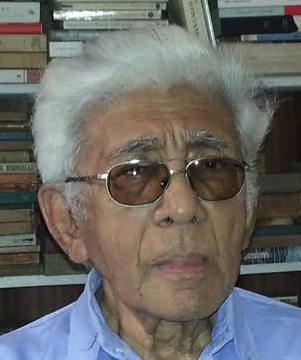
Izeth Hussain
It is always difficult to see things as they are. Somerset Maugham, a shrewd observer of human frailty in his best work, claimed that the transcendental geniuses such as Shakespeare and Dostoevsky – I am not sure of the names he actually used – could see through a brick wall, whereas he himself, unlike average humanity, could clearly see what was directly under his nose. Wyndham Lewis was even more scathing about the limitations of average humanity: he wrote that only a few people of very exceptional intelligence can see that the cow is in the field. Many readers will write all that off as misanthropic hyperbole. But most will agree that in general we are usually reluctant to see things as they are when they are unpleasant.
An example is provided by the question of the prospects for a political solution of the ethnic problem. The prospects are nil, or almost nil. The realistic prospect is that the ethnic imbroglio will continue indefinitely into the future. Such is the situation after 25 years of war and four years of peace. Our expectation that peace would lead, sooner rather than later, to noon-tide glory in the resplendent isle, has led instead to what looks like darkness at noon. This is the situation, the horribly unpleasant situation, which most of us, including myself, have been unwilling to face. What this situation demands, above all, is that we rethink the fundamentals of the ethnic imbroglio. It is a process that could lead to our posing the right questions which could lead eventually to the right answers.
What is the problem? It is not just a Sri Lankan ethnic problem, but an Indo-Sri Lankan ethnic problem, as I have argued in an earlier article. The fall-out in Tamil Nadu of what happens to the Tamils in Sri Lanka can never be ignored by the Delhi Government because that fall-out can take the form of restiveness and even a rebelliousness that spawns separatist movements that under certain unforeseeable contingencies could even threaten the very unity of India. It seems to be a unique problem because I can think of no parallel case where an ethnic problem in one country can threaten the unity of another. If Turkey had not intervened in Cyprus and there had been a blood-bath of the Cypriot Muslims, the Turkish Government would have fallen, but there would have been no threat to the unity of Turkey. We must face up to the unpleasant fact that no Government in Delhi can remain uninvolved in what happens to the Tamils here. The external Indian dimension of our ethnic problem is not of an ancillary order but is integral to our ethnic problem. And that fact is not going to change because of unalterable geographical propinquity and the common ethnicity of the two groups of Tamils. General Zia-ul Huq of Pakistan, one of the most sympathetic friends of Sri Lanka, was quite right in advising us repeatedly – not in his exact words: “If you try to solve your ethnic problem regardless of the wishes of India, you will sink into a bottomless pit”.
