

Our Buddhist Sanga Are Spiritually Exhausted
By Shyamon Jayasinghe -January 21, 2014
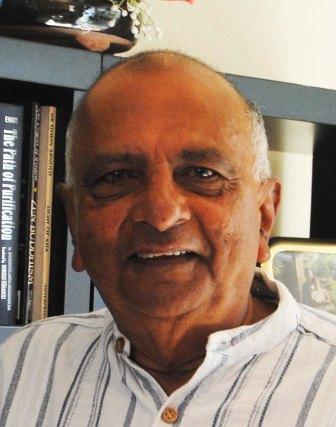
Shyamon Jayasinghe
 “All great truths are based on blasphemies”- Bernard Shaw
From the year 590 to 1517 the Roman Catholic Church had dominated the Western World. Securely entrenched in power the pope and the priests had successfully brainwashed an ignorant population to accept everything the hierarchy did. Having got this power and hold over its followers the Church unleashed a regime of corruption that was designed to pamper the senses of the Holy Rulers. This was a period when the Catholic Church was absolutely sick. The eventual recovery came during the period of the reformation that saw revolt from the bungled and the botched below who couldn’t tolerate the developments any longer. Until that liberation the people did have a hard time. I begin to wonder if similar developments are now taking place in the Buddhasasana of Sri Lanka.
It may be instructive for us to recall the full scale of corruption in the Church of the Middle Ages. This will serve as an analogy for the contemporary Buddhist situation in Lanka and help us in properly modelling the possible size of the trend that’s on now over there.
The root of the corruption in the church was a conveniently enabling ideological theory concocted by the pope. In the 14th century Pope Boniface the v11 declared: ”we declare, state define and pronounce that for every human creature to be subject to the Roman pope is altogether necessary for salvation (Caper, The Church in History). People followed suite on the theological basis that the Pope was God’s representative on earth. What more, but to do or die? Those who disobeyed were damned Salvation.
“Salvation, taken from the hands of God, fell into those of the priests, who set themselves in the place of our Lord. Souls thirsting for pardon were no more to look to heaven, but to the Church, and above all to its pretended head. To these blinded souls the Roman pontiff was God. Hence the greatness of the popes – hence unutterable abuses” (D’aubigne).
Among the myriad corrupt practices introduced was the system of indulgences that prevailed whereby the church could grant individual forgiveness for any sin by charging the offender a fee “Incest, if not detected, was to cost five groats; and six, if it was known. There was a stated price for murder, infanticide, adultery, perjury, burglary, etc. ‘O disgrace of Rome!’ exclaims Claude d’Espence, a Roman divine: and we may add, O disgrace of human nature! For we can utter no reproach against Rome that does not recoil on man himself. Rome is human nature exalted in some of its worst propensities” (D’aubigne Read More
