

Ben Bernanke: Leaving The Fed As A Repentant Central Banker?
By W.A Wijewardena -January 20, 2014
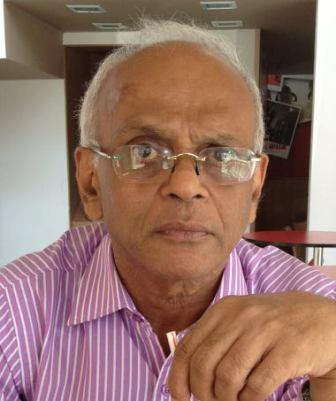
Dr. W.A. Wijewardena
Bernanke’s historic speech at LSE
 Ben Bernanke, the outgoing Chairman of the US Federal Reserve or simply the Fed, has delivered a historic speech at the London School of Economics, popularly known as LSE, just four years ago in 2009 at the height of the global financial and economic crisis and two years after the Fed started its now infamous monetary easing which was later renamed quantitative easing or QE. Since Bernanke is to relinquish his post at the Fed at the end of January, 2014, it is opportune to look at his speech closely to assess the nature of the legacy he is leaving behind for his successors to grapple with.
LSE has been inviting eminent scholars to deliver its Stamp Memorial Oration, an event established by it in honour of Josiah Charles Stamp, an alumnus and former Governor of LSE. The 2009 Stamp Memorial Oration had been delivered by Ben Bernanke, Chairman of the Fed on an apt title “The Crisis and the Policy Response”, the crisis here referring to the 2007-8 global financial crisis (available here ).
Josiah Stamp: An economy needs time for fixing
Stamp has been noted for his outspokenness as an economist and in many BBC Radio discussions held in 1930s, he had had a number of confrontations with the leading British economist of the day, John Maynard Keynes. In one discussion, when Keynes had remarked that the existence of prolonged unemployment was an admission of failure of policy and a hopeless and inexcusable breakdown of the economic machine, Stamp had objected to him saying that one cannot expect to put a complex machine into right position within a few days after it has gone wrong (available here ). Bernanke had six years to put the crashing US economy back to right position and that period is not the type of ‘few days’ within which a policy maker is unable to fix an ailing economy as opined by Stamp.
The hindsight evaluation of Bernanke’s policy package will enable one to judge what central banks can do and what central banks should not try to do.
