

Why Financial System Stability Should Be A Function Of Central Banks
By W.A Wijewardena -December 23, 2013 |
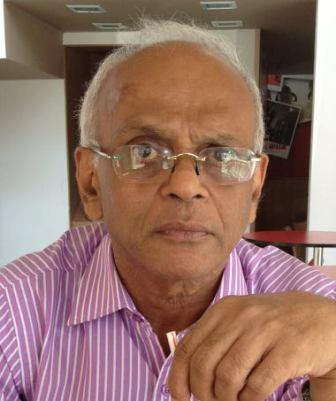
Dr. W.A. Wijewardena
Central banks to produce inflation free worlds
 Traditionally, central banks have been mandated to attain two objectives. One is to keep the value of money it has issued at a stable level known as ‘the price stability objective’. In the laymen’s language, this objective is known as maintaining an ‘inflation free world’ but in actual practice, it means maintaining an inflation rate at a very low level, say around 2 to 3%, so that it would not discourage people to save, invest and plan their activities taking a long term view of what they will do in the next five to ten years.
How this objective relates to Sri Lanka was discussed in a previous article in this series titled “Central Bank’s mandate is to attain both ‘economic and price stability’” (available here ).
Supervision of banks to be overridden by monetary policy objectives
The other is to maintain the financial system of the country – the institutional setup consisting of banks and other institutions that provide financial services to people – with no failure or disruption of the system known as ‘the financial system stability’ objective. In many central banks and even in Sri Lanka’s Central Bank before 2002, the price stability objective was the ‘supreme objective’ of the Bank meaning that it always overrode the financial system objective if the latter stood in the way of a central bank’s realisation of the price stability objective.
There is a valid economic reason for elevating the price stability objective to this supreme position. That is the conflict that arises when a central bank tries to attain both these objectives at the same time forcing it to seek to attain only one at a time. If a central bank has to sacrifice its ‘inflation-free-world objective’ simply because it had to support the banks and other financial institutions, it would be criticised later for having failed the main job it is supposed to do in an economy. That main job is to maintain the value of the money it has produced at a stable level.
Compromising the price stability objective Read More

I write to correct, for the sake of the public record, serious, egregious misrepresentations of two public interventions – “ICES & I”, and “Sri Lanka’s Common Future,” that have appeared in print recently. In the course of an article published in scholarly journal [Social Text 117 • Vol. 31, No. 4 • Winter 2013 :1-24], ( read here ) which will be cited here after as MDS) Mangalika de Silva, “interrogates,” i.e. questions, “ideologies… advanced by three prominent Sri Lankan public intellectuals…”(MDS:2). I am one of the “three prominent Sri Lankan public intellectuals,” whose work she questions. The others are Professor Michael Roberts, a senior historian and anthropologist, whose major works, including the Caste Conflict and Elite Formation: The Rise of a Karava Elite in Sri Lanka, 1500-1931, are scholarly classics and Dr. Dayan Jayatillake, the author, among other work, of Fidel’s Ethics of Violence a landmark of erudition, originality and passion. My response, however relates only to the comments about my work; I look forward to future interventions by Roberts and Dayan Jayatillake, if they choose in write in reply. Nor I am concerned all that very much with de Silva’s larger argument here, except to note that it doesn’t amount to very much at all.
A Brief Note On Inexcusable Writing: Mangalika De Silva In Social Text
By Pradeep Jeganathan -December 22, 2013
Dr. Pradeep Jeganathan
I write to correct, for the sake of the public record, serious, egregious misrepresentations of two public interventions – “ICES & I”, and “Sri Lanka’s Common Future,” that have appeared in print recently. In the course of an article published in scholarly journal [Social Text 117 • Vol. 31, No. 4 • Winter 2013 :1-24], ( read here ) which will be cited here after as MDS) Mangalika de Silva, “interrogates,” i.e. questions, “ideologies… advanced by three prominent Sri Lankan public intellectuals…”(MDS:2). I am one of the “three prominent Sri Lankan public intellectuals,” whose work she questions. The others are Professor Michael Roberts, a senior historian and anthropologist, whose major works, including the Caste Conflict and Elite Formation: The Rise of a Karava Elite in Sri Lanka, 1500-1931, are scholarly classics and Dr. Dayan Jayatillake, the author, among other work, of Fidel’s Ethics of Violence a landmark of erudition, originality and passion. My response, however relates only to the comments about my work; I look forward to future interventions by Roberts and Dayan Jayatillake, if they choose in write in reply. Nor I am concerned all that very much with de Silva’s larger argument here, except to note that it doesn’t amount to very much at all.
On the one hand, de Silva makes blanket generalizations about all three authors she is questioning. For example, she notes that they have an ideology of “minoritarian… disposability,” “opposi[ing]… transnational humanitarian discourse”(MDS:2), “Increasing tolerance of routinized extrajudicial violence”(MDS:2). In another passage, de Silva claims that, “the complicit intelligentsia of the Sri Lankan war effort strove to humanize ethnocidal war crimes by casting Tamil victims as a historically stagnant, Orientalized, and roboticized rabble”(MDS:4). These are just a few examples of her generalizations. Focusing here, exclusively on my work, I underline that these are egregious and grotesque misrepresentations of the rather straightforward ideas in the two short, public interventions of mine that she cites.
On the other hand, in the section of her essay that is devoted to my work, de Silva’s misrepresentations move from the egregious to the downright false. Take for example this first example: “In response he [Jeganathan] proposed an affinity between the nation-state project and his version of radical democracy in accordance with the formula that “the enemy of my enemy is my friend,” thereby transplanting his anticolonial rhetoric and antifascist ethics into the encampment of counterinsurgency through Carl Schmitt” (MDS:15). I have not used the words appearing in quotation marks in de Silva’s text, ““the enemy of my enemy is my friend,”” in the two essays at hand. There is a very serious question here about de Silva’s quotation and citation practice that continues in this manner throughout the essay. Read More
