

Remember Mordechai Vanunu, Israel’s Heroic Nuclear Whistleblower
Mordechai Vanunu: still fighting for his freedom, 27 years on
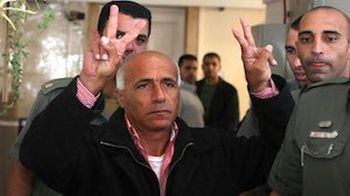

Dec-27-2013
(LONDON Redress News & Analysis) - He should have received the Nobel Peace Prize. Instead, he spent 18 years in solitary confinement.
He should be celebrated internationally as a man who has sacrificed his freedom for the truth and for the wellbeing of humanity. Instead, he has been stripped of his right to travel and prohibited from talking to foreigners.
Today, Mordechai Vanunu, the Israeli nuclear whistleblower, is almost forgotten. But he has not given up the fight for freedom.
Vanunu is appealing to the Israeli Supreme Court to set him free – free to leave Israel, the Times of Israel reports.
“I don’t want to live in Israel,” he told the court in English – he won’t speak Hebrew while imprisoned inside the Jews-only state.
Vanunu, who converted to Christianity in the 1980s, told the court that he is often subjected to harassment by the Israeli public whenever he is recognized.
Blaming the media for wrecking his public image, Vanunu said he didn’t see a future for himself in the apartheid state.
Vanunu compared his past actions to those of US National Security Agency whistleblower Edward Snowden.
“Snowden is the best example of what I did 25 years ago – when the government breaks the law and tramples on human rights, people talk. That’s what he did, he speaks for everyone, and that’s what I did – I spoke for everyone.”
Vanunu is prohibited from visiting foreign territories, including the occupied West Bank and embassies within Israel, and can only meet with foreign nationals after securing permission from security forces.
In 1986 Vanunu leaked details of Israel’s military nuclear programme to The Sunday Times, blowing the cover off Israel’s so-called “nuclear ambiguity”.
It is unlikely that Vanunu’s plea for freedom will be accepted. That is hardly surprising – the Jews-only state is a vengeful entity, Old Testament style.
But where are the international human rights warriors? We hear none speaking for Vanunu.
Let me leave Israel, nuclear leaker Vanunu implores court
Saying he has ‘no future’ in the country, nuclear leaker urges state to ease the restrictions preventing him from emigrating
 BY YIFA YAAKOV December 26, 2013
Ex-nuclear spy Mordechai Vanunu attends a hearing at the Supreme Court in Jerusalem in 2010. Vanunu has been petitioning for years against a warrant preventing him from leaving Israel. (photo credit: Miriam Alster/Flash90)

Ex-Dimona nuclear technician Mordechai Vanunu, convicted of treason and espionage for leaking Israel’s nuclear secrets to a British newspaper in 1986, asked Israel’s High Court on Wednesday to ease restrictions keeping him from leaving the country.
Vanunu, who served 18 years in prison after being convicted in 1988, told the High Court he found life in Israel too difficult to endure, and called on it to lift the warrant banning him from leaving the country or contacting foreigners.
“I don’t want to live in Israel,” Vanunu, who has said he won’t speak Hebrew until he is allowed to leave the country, told the court in English.
“I cannot live here as a convicted spy, a traitor, an enemy and a Christian,” he said.
Vanunu, who converted to Christianity in the 1980s, added that he is often subjected to harassment by the Israeli public wherever he is recognized.
He said that when he goes to Tel Aviv and Jerusalem, people on the street call him a traitor and an enemy, and that strangers have tried to beat him up.
Blaming the media for wrecking his public image, Vanunu said he didn’t see a future for himself in Israel.
In 1986, Vanunu leaked details of Israel’s reported military nuclear program to The Sunday Times, blowing the cover off Israel’s nuclear ambiguity.
Vanunu compared his past actions to those of NSA whistleblower Edward Snowden.
“Snowden is the best example for what I did 25 years ago — when the government breaks the law and tramples on human rights, people talk. That’s what he did, he speaks for everyone, and that’s what I did — I spoke for everyone.”
Vanunu is prohibited from visiting foreign territories, including the West Bank and embassies within Israel, and can only meet with foreign nationals after securing permission from security forces.
Vanunu’s attorney demanded Thursday that the state present its justifications for restricting the former nuclear spy’s movements since his release from prison in 2004.
The court is set to make a decision on the matter in the coming days.
