

Full Video: Charitha, Dhamma, Uvindu Live Censorship Case: Sri Lankan Government Tries To Prejudice Judges
December 18, 2013
 There has been a new development in the fundamental rights application against the Sri Lanka Rupavahini Corporation and others, which concerns the stoppage of a live political chat program in 2008. In November 2008, Uvindu Kurukulasuriya was participating in a state media chat show where he made critical remarks concerning the government’s media policy. In a fundamental rights application, Kurukulasuriya alleges that the program was suddenly terminated because of his critical views and in a bid to censor and silence him, in violation of his right to freedom of expression by a public-funded broadcaster.
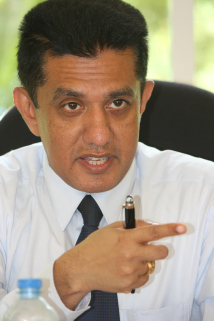
Charitha Herath
Case 557 of 2008 came up yesterday, 17 December, before Justice Ekanayaka, Justice Dep and Justice Marasinghe. The new Chairman of the Sri Lanka Rupavahini Corporation filed a fresh affidavit annexing a series of publications from The Colombo Telegraph and Uvindu Kurukulasuriya, who is a petitioner in 557. Court granted one month for the petitioners to file a fresh set of counter objections.
It seems clear that the new documents are intended to prejudice the court rather than offer a defence to the alleged violation of fundamental rights of the petitioners. Just because journalists are litigants in an on-going case, it does not mean that they are prevented from carrying out their professional activities. It is the duty of the journalists to stand up for editorial freedom and free speech.
SLRC fresh affidavit annexes;
In an earlier statement with regard to this case, RSF said:
Reporters Without Borders condemns the government pressure that led to the debate programme “Ira Anduru Pata” being cut short as it was being broadcast live on the evening of 4 November 2008 on state TV station Rupavahini. It ended a discussion of a new broadcasting law by three guests, including Free Media Movement convener Uvindu Kurukulasuriya. Read More
There has been a new development in the fundamental rights application against the Sri Lanka Rupavahini Corporation and others, which concerns the stoppage of a live political chat program in 2008. In November 2008, Uvindu Kurukulasuriya was participating in a state media chat show where he made critical remarks concerning the government’s media policy. In a fundamental rights application, Kurukulasuriya alleges that the program was suddenly terminated because of his critical views and in a bid to censor and silence him, in violation of his right to freedom of expression by a public-funded broadcaster.
Charitha Herath
