

English: Opens More Doors Than College Degrees

Dr. Jagath Asoka
 An extensive knowledge of English can open more doors than a college degree. How well you speak and write is governed by your understanding ofgrammar, syntax, diction, punctuation, and pronunciation.
I have to tell two stories, one from my childhood and another from my youth. When I was around eleven-years old, I was invited to a birthday party. I do not know what kids do nowadays in Sri Lanka at birthday parties, but when we were kids we played different games. One of the games that I played on this particular evening made a big impact on my life. My friend’s sister brought a tray full of trinkets and asked us to look at them for thirty seconds; then she took away the tray and asked us to write down the items that were on the tray—people of my neighborhood spoke English at home. I could remember almost all the items, but I struggled because I did not know how to name them in English. Of course, I did not win, but it triggered something in me. From that day onwards, I started learning new words in English. Now, I begin my day with learning new words. I always consult a dictionary, and try to use the new words as often as I can, until they become a part of my active vocabulary.
The second story is related to the first story because it happened with the same childhood friend. I had returned after earning my MS from Ukraine. Before I left Sri Lanka again in 1986 to pursue my PhD studies, I was teaching chemistry, first at Kelaniya and then at the University of Ruhuna. One day, I was in Fort, Colombo, and I walked into my friend’s office building; he owned the building and had his office there. As we talked, he mentioned about an interview that he had conducted just a few minutes prior to my arrival. I still remember his words: “This guy I interviewed today has a science degree from Kelaniya, but he could not speak English at all.” I tried my best to defend the hapless graduate; but my friend was looking for a science graduate who was fluent in English. Read More
 Professor Error Jansz, former Director of the Ceylon Institute of Scientific and Industrial Research, and later Professor of Biochemistry at the University of Sri Jayewardenepura, recently published his autobiography. The title was interesting, and the book in fact proved fascinating. Though some of the scientific detail was beyond me, what emerges is a total commitment not only to the research capacities of his students, but also an anxiety that the research should be used productive. Given that with so much potential, and such impressive staff, the CISIR has not contributed much to productivity, I would suggest that the human story that emerges in the book should be studied by Sri Lankans concerned with our current failure to have built on the educational excellences of the past – if indeed any such exist.
Swimming Against The Tide
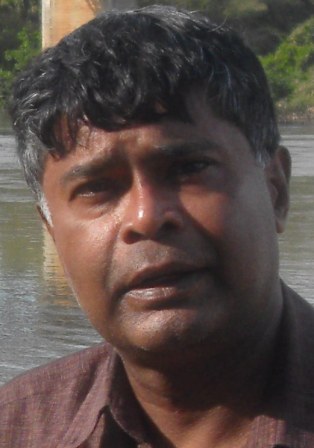
Prof. Rajiva Wijesinha MP
Professor Error Jansz, former Director of the Ceylon Institute of Scientific and Industrial Research, and later Professor of Biochemistry at the University of Sri Jayewardenepura, recently published his autobiography. The title was interesting, and the book in fact proved fascinating. Though some of the scientific detail was beyond me, what emerges is a total commitment not only to the research capacities of his students, but also an anxiety that the research should be used productive. Given that with so much potential, and such impressive staff, the CISIR has not contributed much to productivity, I would suggest that the human story that emerges in the book should be studied by Sri Lankans concerned with our current failure to have built on the educational excellences of the past – if indeed any such exist.
A perceptive analysis of the book by Prof Liminiga, the former Director of a Swedish university programme that worked with the CISIR over many years, notes that Jansz suffered throughout his career because ‘you had your roots in a minority community combined with being successful in your work, “too good” and thus creating jealousy. Perhaps it should be added also that you have always been honest and straightforward, not a “yes-man”, which didn’t make it easier for you.
Jansz himself thinks the last two reasons are the salient ones, and says that ‘being of an ethnic and religious minority played a role only on a few occasions by a few extremists’. In the present climate that is a problem that will I suspect get worse, and it is vital that government institutes a pro-active policy of promoting the involvement at all levels of all communities in public institutions and programmes. But in terms of the experiences described in the book I think Jansz’s analysis is accurate, and it is his failure, or perhaps incapacity, to blow with prevailing winds that caused him such anguish.
