

Bangladesh Must Halt Execution of War Crimes Suspect Abdul Qader Mollah

Dec-09-2013
Human Rights Ambassador William Nicholas Gomes asked president of Bangladesh stop the hanging of the leader of the country's largest Islamic party.
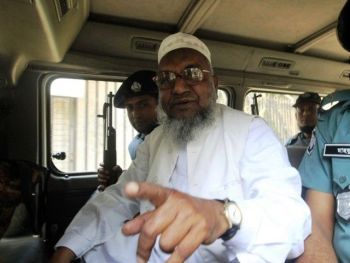
Abdul Qader Mollah
|
(WASHINGTON, DC) - Following the international standard of Justice, Abdul Qader Mollah, accused of war crimes, should be granted a right to appeal against the conviction and death sentence.
According to Human Rights Watch, Mr. Mollah's death sentence was handed down based on retroactively amended legislation. This is a violation of international fair trial standards.
On February 5, 2013, Mollah was sentenced to life in prison by the International Crimes Tribunal (ICT), a domestic court holding trials for the atrocities in Bangladesh’s 1971 war of liberation from West Pakistan.
His conviction on five of six counts, including murder and rape as crimes against humanity and war crimes. He was acquitted on one count of murder.
Mr. Md. Abdul Hamid
President of Bangladesh
President Office
Bangabhaban,
Dhaka
Bangladesh
Fax: +8802 9566593
Re: Bangladesh must halt execution of war crimes accused Abdul Qader Mollah
Dear Mr. President,
I am William Nicholas Gomes, Human Rights Ambassador for Salem-News.com.
As a civilized person I oppose the death penalty in all circumstances. The death sentence against Abdul Qader Mollah, a leader of the Jamaat-e-Islami party convicted of war crimes during Bangladesh’s 1971 war of independence, should immediately be stayed due to fair trial concerns.
Following the international standard of Justice Mollah should be granted a right to appeal against the conviction and death sentence.
According to Human Rights Watch, the death sentence was handed down based on retroactively amended legislation, a move which violates international fair trial standards. On February 5, 2013, Mollah was sentenced to life in prison by the International Crimes Tribunal (ICT), a domestic court holding trials for the atrocities in Bangladesh’s 1971 war of liberation from West Pakistan. He was convicted on five of six counts, including murder and rape as crimes against humanity and war crimes. He was acquitted on one count of murder.
According to Human Rights Watch, in response to large public protests demanding the death sentence for Mollah, the government passed amendments to the ICT law on February 17, allowing the prosecution to appeal the sentence. Until the Mollah case, the prosecution was only allowed to appeal if the accused was acquitted. On September 17, the Appellate Division of the Supreme Court reversed the life sentence on Mollah and imposed the death penalty for murder and rape as crimes against humanity. The International Covenant on Civil and Political Rights (ICCPR), to which Bangladesh is a state party, prohibits the retroactive application of criminal law that has a negative effect on the defense.
Although people sentenced to death in Bangladesh in regular courts are allowed the right to appeal, government authorities, including the Attorney General, stated that Mollah has no such right and have insisted that Mollah exhausted all legal options. The only recourse left open to Mollah, according to government authorities, is to appeal to the President of Bangladesh for clemency. The ICCPR states that everyone convicted of a crime has the right to have their conviction and sentence reviewed by a higher tribunal according to law.
The United Nations Human Rights Committee, which interprets the ICCPR, has said that “in cases of trials leading to the imposition of the death penalty, scrupulous respect of the guarantees of fair trial is particularly important” and that any death penalty imposed after an unfair trial would be a violation of the right to a fair trial.
Although the Bangladeshi constitution contains a safeguard against retroactive application of laws, a subsequent amendment removes these protections from those accused of war crimes. Human Rights Watch has long called for the repeal of this amendment as it violates international law.
“The denial of the right to appeal against the death penalty, in a case so fraught with problems, highlights the need for the government to revoke this retrograde amendment to the Constitution,” Adams said. “Justice is needed – and especially for the sake of the victims, these trials must not be tainted.”
Of particular concern in the Mollah case is the fact that the count on which the Appellate Division of the Supreme Court sentenced Mollah to death rests on accusations of which he was acquitted during the trial phase.
I therefore request you to immediately halt the execution of Abdul Qader Mollah who is accused of war crimes.
Yours Sincerely,
William Nicholas Gomes
Human Rights Ambassador for Salem-News.com
Twitter @wnicholasgomes
www.williamnicholasgomes.com
