

The Unloved Drug Industry: Will The Current War With Industry Force Atlas To Shrug?
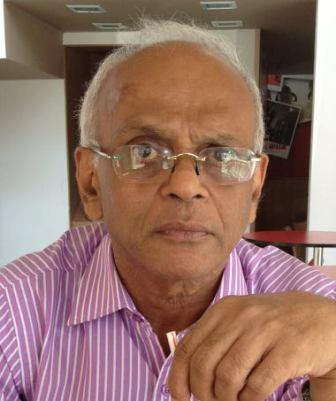
Dr. W.A. Wijewardena
The world at war with drug industry
It appears that Society has not been kind to drug industry though it holds the entire world on its shoulders like the Giant Atlas in Greek mythology. Patients accuse it of charging beyond what their purse can buy. The governmental regulators charge it of violating drug regulations which have been imposed to protect the helpless consumers. Social action groups criticise it for undertaking unethical promotional and marketing practices. Some physicians in the curative branch of the healthcare industry bring out charges of bribery committed by those companies in order to have the drugs manufactured by them prescribed to patients. Thus, it appears that it is a war waged by the whole world against the drug industry.
Without Big Pharmas, life is unthinkable
To be fair by drug industry, if it weren’t there, the life of both patients and healthcare workers would not have been so comfortable. The pharmaceutical companies known as ‘big pharmas’ not only do new research on new drugs but also manufacture drugs and deliver them in neatly packed retail packages to patients located in every corner of the globe. Some two hundred years ago, before the onset of pharmaceutical firms in the market place, it was the responsibility of the chemists attached to pharmacies to prepare mixtures of medicine prescribed by physicians and provide to patients. If there are only a small number of patients in the whole world, this practice can be continued without a hassle. But when the number of patients treated every day runs into billions, the lonely chemists cannot accomplish their duty without getting the patients to stand in queues for long hours before they get the needed drug preparations. Since most of these cases are emergencies, such a long wait for medicines will definitely be fatal to the patients. But today when the patient walks out of the physician’s consultation room with a prescription in hand, the nearby pharmacy is ready to supply him with pre-prepared medicines – in tablets, capsules, mixtures, creams or ready-to-inject serums – cutting down the waiting period practically to nothing. If it is not available locally, courier services do the handy job of delivering essential medicines to patients in time globally. A doctor or a patient has to only pick up a phone and order the required medicine from a nearby country.
Such is the efficiency of the drug industry – not only in researching and manufacturing but also in storing, marketing and delivering.
Learning To Work Together
By Rajiva Wijesinha -November 11, 2013

Prof. Rajiva Wijesinha MP
 Two weeks ago I was at a seminar in Rio de Janeiro, arranged by the Brazilian Foreign Ministry, on the topic of responses to the emergence of bipolarity, in terms of the United States and China. I was there when I got details of this discussion, and it struck me that the different ways in which the topic, essentially the same topic, was phrased represented two different views of the world, or rather of how we relate to each other in the same world.
This factor was indeed the subject of my presentation at that seminar, the difference between the oppositional view of the world, in terms of Western philosophy, and the more inclusive Eastern one. That first perspective, discussed by Tagore a century ago, when he advised Japan against adopting the Western ‘selfish separation of exclusiveness…in the name of false patriotism, it engenders hatred against other countries at times leading to conquest by war’ was conceptualized by Nirmal Verma when he spoke of ‘the European notion of the “other”, an inalienable entity external to oneself, which was both a source of terror and an object of desire’.
The alternative view of the world is one based on circles, concentric and overlapping, which encourages inclusive perspectives. That is the view which should inform our discussions, given their basis in our shared visions of and for Asia and Europe, those large and heterogeneous entities. We should be seeking what we have in common, and how we can expand areas of shared objectives rather than seeing things in terms of absolutes and of zero sum situations. Read More
