

In The Lucky Country Of Australia Apartheid Is Alive And Kicking
November 8, 2013
 The corridors of the Australian parliament are so white you squint. The sound is hushed; the smell is floor polish. The wooden floors shine so virtuously they reflect the cartoon portraits of prime ministers and rows of Aboriginal paintings, suspended on white walls, their blood and tears invisible.
The parliament stands in Barton, a suburb of Canberra named after the first prime minister of Australia, Edmund Barton, who drew up the White Australia Policy in 1901. “The doctrine of the equality of man,” said Barton, “was never intended to apply” to those not British and white-skinned.
By John Pilger - Read more in the Guardian
The corridors of the Australian parliament are so white you squint. The sound is hushed; the smell is floor polish. The wooden floors shine so virtuously they reflect the cartoon portraits of prime ministers and rows of Aboriginal paintings, suspended on white walls, their blood and tears invisible.
The parliament stands in Barton, a suburb of Canberra named after the first prime minister of Australia, Edmund Barton, who drew up the White Australia Policy in 1901. “The doctrine of the equality of man,” said Barton, “was never intended to apply” to those not British and white-skinned.
By John Pilger - Read more in the Guardian
 Aboriginal elders playing cards in their camp near Alice Springs. 'A typical, dilapidated house in an outback Indigenous community must accommodate as many as 25 people. Families, the elderly and disabled people wait years for sanitation that works.' Photograph: Anoek De Groot/AFP/Getty Images / via Guardian
November 8, 2013
The corridors of the Australian parliament are so white you squint. The sound is hushed; the smell is floor polish. The wooden floors shine so virtuously they reflect the cartoon portraits of prime ministers and rows of Aboriginal paintings, suspended on white walls, their blood and tears invisible.
The parliament stands in Barton, a suburb of Canberra named after the first prime minister of Australia, Edmund Barton, who drew up the White Australia Policy in 1901. “The doctrine of the equality of man,” said Barton, “was never intended to apply” to those not British and white-skinned.
By John Pilger - Read more in the Guardian
Aboriginal elders playing cards in their camp near Alice Springs. 'A typical, dilapidated house in an outback Indigenous community must accommodate as many as 25 people. Families, the elderly and disabled people wait years for sanitation that works.' Photograph: Anoek De Groot/AFP/Getty Images / via Guardian
Private And International Schools Can Be More Responsive To Change Than Govt Schools
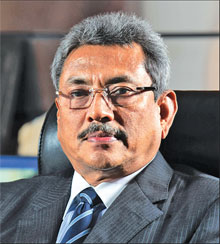
Gotabaya Rajapaksa
It gives me great pleasure to address you this evening at the Inaugural International Conference of the Heads of Schools, organised by The International Schools in Sri Lanka. I understand that this is the first international conference for Heads of Schools being organised in Sri Lanka, and that representatives from Government schools as well as private schools are attending this event, which is organised under the theme “Leadership to Inspire Learning”. This theme is an especially appropriate one, considering the country’s present development drive, which envisages that Sri Lanka will become an education hub in the region by 2020. It is important that the Heads of Sri Lanka’s schools discuss ways and means of improving the country’s education system to achieve this bold vision. I trust that this conference will contribute a great deal to the current national discourse in this regard.
Formal education in Sri Lanka has a history of more than 2,000 years. Early inscriptions record the existence of specialised knowledge and professions that were sustained, disseminated and developed through individual teaching and educational institutions. Early in our history, education was centred on large monasteries and specialised academies. Some of these were reputed throughout the region, and even attracted foreign students from distant nations. Like the ancient universities of Taxila and Nalanda in India, these ancient Sri Lankan academies flourished in the early pre-Christian era and during the first millennium. As Sri Lanka’s demography shifted away from the large ancient cities and to smaller and more dispersed settlements, education came to be centred on village temples and pirivenas, which imparted knowledge to both novice monks and lay youth. Many pirivenas continued their work throughout Colonial times but came under increasing pressure from succeeding colonial administrations, which sought to suppress Buddhist oriented education and instead encouraged the establishment of missionary schools .Read More
