

Tamils: Broker Politics Or Democratic Action?
By S Sathananthan -August 9, 2013 |
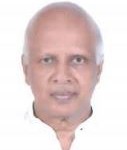
Dr. S Sathananthan
 The more incisive comments on my previous posting, The Meanings of Wigneswaran, raise several, inter-related issues that have been central to the Tamil Question and still bedevil action. This writing responds to and builds on them and attempts to probe further.
It is necessary at the outset to clarify an unfortunate misreading in one comment, that my arguments envisage ‘a need to fight the regime’. It’s ludicrous on my part to suggest Tamils ought to ‘fight’ the regime. That vocabulary belongs to theLTTE era.
Instead I strongly underlined, ‘the utterly desperate need today is to campaign and mobilise’ Tamils. Campaigning and mobilising are universally recognised democratic activities; they are integral to the exercise of the fundamental right of freedom of expression. It’s a pity these long established, legitimate avenues for peoples’ participation are interpreted in the LTTE idiom of ‘fight’ (5 times) and ‘force’ (twice) in that comment.
The time-tested power of the people is not our discovery. Tamil politicians paid lip service to peoples’ power during the Ilankai Tamil Arasuk Katchi’s (ITAK) 1961 Satyagraha. The new-and-improved Tamil United Liberation Front’s (TULF) 1976 Vaddukkoddai Resolution called ‘the Tamil Nation in general and the Tamil youth in particular to come forward to throw themselves fully into the sacred fight for freedom’. The LTTE andV.Pirapaharan took the urging to heart and, no doubt dismayed by the impotence of Tamil parliamentary politics, had launched mass armed resistance.Read More
When Will They Break Their Silence Again?
S. V. Kirubaharan
Often, the question is raised internationally about Sri Lanka giving the foremost place for Buddhism and making it the state’s duty to protect and foster Buddhah Sasann (Sri Lanka’s constitution – Chapter 2 – article 9).Buddhist diplomats reply that Articles 10 and 14 (1) (e) of the same constitution allow others the freedom to have or adopt a religion or belief of their choice and permit them to worship in public or private. But is the freedom and inclusiveness conveyed in Articles 10 and 14 (1) (e) evident in the true situation in Sri Lanka?
On 9 March 2013, President Rajapaksa’s brother, the Defence SecretaryGotabhaya Rajapaksa was the chief guest at a ceremony of an extreme nationalist Buddhist organisation known as Bodu Bala Sena – BBS (Buddhist Strength Force). In this ceremony Gotabhaya said that the Buddhist Monks are those who protect Sri Lanka, Buddhists and the Sinhala race! BBS claims that Sri Lanka is a “Sinhala-Buddhist nation” where the Christians, Muslims and Tamils have no place. Presently Sri Lanka is experiencing saffron rule backed by the Rajapaksas.
In fact, authentic Buddhism abstains from killings, protects living creatures and promotes loving-kindness. Hatred has no place. If the Buddha’s preaching were practised in Sri Lanka, there would not have been two consecutive resolutions by the UN Human Rights Council – UN HRC. Also the UN High Commissioner for Human Rights – HCHR would not be visiting Sri Lanka in another 3 weeks. Read More
