

War Victory Celebrations Hinder Rather Than Promote Reconciliation
By R.M.B Senanayake -May 25, 2013 |
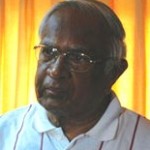
R.M.B. Senanayake
 The Government celebrated last week the victory of the Armed Forces over the LTTE with an impressive display of weaponry. If Sri Lanka is one country and the Tamils and Sinhalese are brothers should the victor celebrate the war victory?
The American leaders during the Civil War between the North and the South in 1961-65, did not think so. The American Civil War was to prove one of the most ferocious wars ever fought”. Without geographic objectives, the only target for each side was the enemy’s soldier. 750,000 soldiers died.
General Lee of the Confederate Army surrendered with his Army on April 9, 1865. In an untraditional gesture and as a sign of (Unionist) General Grant’s respect and anticipation of peacefully restoring Confederate states to the Union, General Lee was permitted to keep his sword and his horse, President Lincoln had earlier treated the Confederate states with respect and appealed to them to restore allegiance to the Union. He was prepared to compromise on all other issues of the South if they agreed to do this one thing. He was shot by, a Southern sympathizer and Andrew Johnson became president. The leniency showed by both Presidents made reconciliation possible. Confederate nationalism died a natural death and American nationalism triumphed. It was the conciliatory attitude of Abraham Lincoln and Andrew Johnson that led the South to surrender. Similar attempts were made by Church leaders in the north in the final phase of our civil war but they were branded as LTTE sympathizers by Sinhalese chauvinists.
Should not Sri Lanka follow this noble example of the American Presidents? Should the majority community gloat over the victory? Will that help reconciliation? Will it not strengthen Tamil nationalism instead?
The Sinhalese are currently in a state of relief that the civil war has ended, a point repeatedly emphasized by the government. On the other hand, there is uncertainty, confusion and anxious expectation among the Tamils as to how their living together with the Sinhalese in the country will go on. One would like to believe the government that the era of reconciliation and a new beginning has started. But events like the celebration of the war victory do not convey such message. It is not the presence of the Army that is resented but their intrusion into civilian life and the suspicion that they are behind the several attacks on the Tamil press and the Tamil political parties. The military’s claim to be a national army is somewhat vitiated since it consists almost entirely of Sinhalese. So they are seen as “foreign” occupiers. The soldiers for their part continue to see the majority of Tamils as disguised terrorists. The restored civil administration is manned mainly by Sinhalese officials who neither speak Tamil nor understand the mentality of the population. It is absolutely necessary to restore civil administration in the North and give the Tamil politicians a voice in the affairs of State at the provincial level. Failure to do so will only revive the demand for Eelam.
The years of civil war have left deep scars. The mistrust between the two ethnic groups of Sinhalese and Tamils is deeply rooted, and many wounds are still open and will remain so for a long time. The Prevention of Terrorist Acts (PTA), gives the Security authorities special powers that allow them, without a court order, to arrest, interrogate, torture, without fear of having to stand trial, because the law guarantees them immunity.
This state of affairs is first of all not the fault of the government. It was Prabakaran who refused to accept any compromise during the peace talks and insisted on Eelam. The LTTE systematically eliminated Tamil leaders and intellectuals who wanted to compromise. But the Government must still accept the fact that the Tamil people will vote for their regional parties rather than for the two national parties- the UNP and the SLFP. The Tamil people are unlikely to barter their right to be represented by their leaders merely because of government largesse. It is therefore unfortunate that the talks between the government and the Tamil National Alliance broke down.
The Church having members of both communities in its ranks welcomes the restoration of a single unified State of Sri Lanka. But this unity must be borne of the freely given consent of the Tamil people and not achieved through any form of coercion. It also does not remove the need for devolution of power. In fact the ethnic issue was resolved in 1987 with the acceptance of the 13th Amendment by both the Sinhalese and Tamil leaders although Prabakaran did not give his free consent but was pressurized to do so. So the 13th Amendment should be the basis for a resolution of the problem and any amendments should be to remove any ambiguities or short comings rather than to do away with the powers already envisaged.
