

Rajapaksa Samagama And The Removal Of The Chief Justice
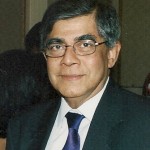
Dr.Nihal Jayawickrama
 HThe removal from office of the Chief Justice of Sri Lanka was an unprecedented act in the judicial history of the country. I have been requested to examine the constitutionality of that act. In fact, that was the single issue on which the proceedings leading to the removal of the Chief Justice were questioned and challenged from the outset. Except in the government-owned media, there was hardly any reference to the alleged acts of misbehaviour. It was evident, from the beginning, that the objective of the exercise was to remove an inconvenient Chief Justice, and replace her with one more amenable to the government. It was candidly and authoritatively admitted by a political columnist close to the government that the resolution for her removal was motivated “for political reasons”.
Even the President reportedly complained to a former Chief Justice that “she has got too big for her boots”. The only member of the government parliamentary group who declined to sign the resolution for her removal publicly declared that one reason for his refusal to do so was that he was presented with a blank sheet of paper that contained no charges.The Constitution is the “supreme law”
In Sri Lanka, unlike in the United Kingdom, the written Constitution is the supreme law of the Republic. It is from the Constitution that the three principal branches of government derive their powers. Legislative power is exercised by Parliament and by the People at a Referendum. Executive power is exercised by the President elected by the People. Judicial power is exercised through courts, tribunals and institutions, created and established by the Constitution or by law”. The only exception is in respect of the privileges, immunities and powers of Parliament and of its Members, where “judicial power may be exercised directly by Parliament according to law”. That law, which Parliament has enacted, is the Parliament (Powers and Privileges) Act.
Impeachment Read More
................................................................................

 UN Human Rights Council's 22nd session is held in Geneva and the resolution brought by US against Sri Lanka will be taken for debating on the forthcoming 21st.
It is understood that the resolution will be submitted on 14th by US ambassador for Human Rights Commission Warren Tichenor
The copies of the resolution were distributed by US to the delegate’s in Geneva one week back.
Meanwhile Latin America and European countries have pointed out that some vital proposals should be included in the document.
Hence with new amendments with more vital issues included resolution would be submitted at the council is according to high level diplomatic circles.
Meanwhile reports states Sri Lanka government is also processing diplomatic activities to avoid strong recommendations to pertain in the resolution submitted by US.
In the meantime Delhi Medias have published information that India would support and vote the resolution against Sri lanka brought by US at the UN Human Rights Council sessions.
At a state, Indian Central government is trapped in severe pressure regarding Sri Lanka issue, a short-time debate concerning Sri Lanka Tamils issue will be conducted today at the Indian parliament.
During this debate, Indian government's stance concerning the Geneva resolution may be revealed is according to Delhi information.
Thursday , 07 March 2013
