

 Ilankai Tamil Sangam-
இலங்கை தமிழ் சங்கம்
- Association of Tamils of Sri Lanka in the USA
It Happened 65 Years Ago- When two independent Tamils pawned Eelam rights
So, what’s the price for a Ceylon Tamil politician? If you are a keen student of politics in independent Sri Lanka, the answer is a Cabinet portfolio. For the sake of Cabinet positions, two independent Tamils namely Chellapah Suntharalingam (1895-1985) and Cathiravelu Sittampalam (1898-1964) pawned Eelam rights.
by Sachi Sri Kantha, October 12, 2012
History writing is no mean task these days. Tamils have been so lackadaisical in their history writing in the past and have permitted other ‘tribes’ (adversaries, colonialists and freelancers) to write their version of Tamil history. Because of this lazy trend, Tamils have suffered. I try my best to rectify this lapse. I present ‘my interpretation’ to an event which happened 65 years ago. My views may ruffle the feathers of the progeny of the two independent Tamil politicians. But, I care the less, as history has to be recorded.
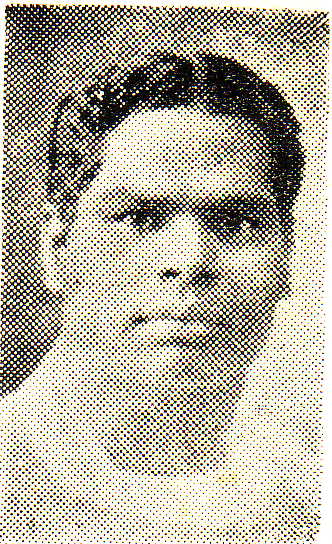 C. Suntharalingam
A long standing universal dictum in politics and business is that ‘Everyone has a price’. The ‘price’ could be money, a prize award, fellowship, position and even one’s weaknesses (like that of addiction to sex or liquor). The best practitioner of this dictum in the past was Joe Stalin (1879-1953). He had admonished his subordinates, ‘If you fail miserably, it’s because you failed in plumbing the mind of your adversary. Even Uncle Sam, in his dealings with foreign diplomats, academics, journalists, businessmen and spies do adhere to this universal dictum. So, what’s the price for a Ceylon Tamil politician? If you are a keen student of politics in independent Sri Lanka, the answer is a Cabinet portfolio. For the sake of Cabinet positions, two independent Tamils namely Chellapah Suntharalingam (1895-1985) and Cathiravelu Sittampalam (1898-1964) pawned Eelam rights.
What I mean by the word ‘independent’ was that, they did not belong to any political party when they contested the 1947 general election, 65 years ago. They represented the peripheral Tamil electorates (Vavuniya and Mannar) of the Northern province. They were groped into the Cabinet by the wily Don Stephen Senanayake (1884-1952). In the photo of the first Cabinet, we see Suntharalingam (in white national costume) at left extreme (front row). On to his left was S.W.R.D.Bandaranaike (in white national costume). Sittampalam is seen at the right side(in white national costume) of the front row. To his right, in the second row was J.R.Jayewardene (in white national costume).
V. Navaratnam’s 1991 version
V. Navaratnam (1910-2006), one of the Federal Party leaders, who was also an MP from 1963 to 1970, published his memoir The Fall and Rise of the Tamil Nation in 1991. In it, he had written as follows:
“D.S.Senanayake had a faithful adviser in the person of Sir Oliver Goonetilleke, one of the astutest and wiliest diplomats of the time. Possibly on Goonetilleke’s advice he set about the business of Cabinet-making keeping in mind Britain’s conditions for the grant of independence. He constituted his Cabinet to include Singhalese, Tamil, Muslim, Malay, European and Burgher ministers as representatives of all the communities. C.Sundaralingam, MP for Vavuniya, was the Tamil minister who was supposed to represent the Tamils.
C. Suntharalingam
A long standing universal dictum in politics and business is that ‘Everyone has a price’. The ‘price’ could be money, a prize award, fellowship, position and even one’s weaknesses (like that of addiction to sex or liquor). The best practitioner of this dictum in the past was Joe Stalin (1879-1953). He had admonished his subordinates, ‘If you fail miserably, it’s because you failed in plumbing the mind of your adversary. Even Uncle Sam, in his dealings with foreign diplomats, academics, journalists, businessmen and spies do adhere to this universal dictum. So, what’s the price for a Ceylon Tamil politician? If you are a keen student of politics in independent Sri Lanka, the answer is a Cabinet portfolio. For the sake of Cabinet positions, two independent Tamils namely Chellapah Suntharalingam (1895-1985) and Cathiravelu Sittampalam (1898-1964) pawned Eelam rights.
What I mean by the word ‘independent’ was that, they did not belong to any political party when they contested the 1947 general election, 65 years ago. They represented the peripheral Tamil electorates (Vavuniya and Mannar) of the Northern province. They were groped into the Cabinet by the wily Don Stephen Senanayake (1884-1952). In the photo of the first Cabinet, we see Suntharalingam (in white national costume) at left extreme (front row). On to his left was S.W.R.D.Bandaranaike (in white national costume). Sittampalam is seen at the right side(in white national costume) of the front row. To his right, in the second row was J.R.Jayewardene (in white national costume).
V. Navaratnam’s 1991 version
V. Navaratnam (1910-2006), one of the Federal Party leaders, who was also an MP from 1963 to 1970, published his memoir The Fall and Rise of the Tamil Nation in 1991. In it, he had written as follows:
“D.S.Senanayake had a faithful adviser in the person of Sir Oliver Goonetilleke, one of the astutest and wiliest diplomats of the time. Possibly on Goonetilleke’s advice he set about the business of Cabinet-making keeping in mind Britain’s conditions for the grant of independence. He constituted his Cabinet to include Singhalese, Tamil, Muslim, Malay, European and Burgher ministers as representatives of all the communities. C.Sundaralingam, MP for Vavuniya, was the Tamil minister who was supposed to represent the Tamils.
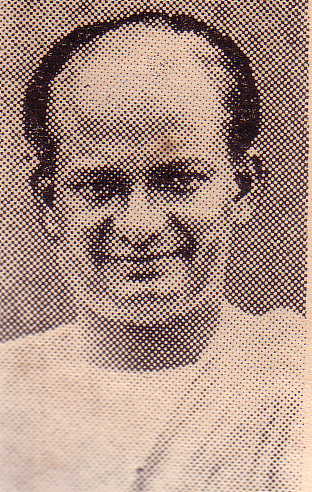 C. Sittampalam
There was considerable opposition in the country against Sundaralingam joining the government. He convened a meeting at the New Town Hall in Colombo to explain to the people why he had accepted D.S.Senanayake’s offer of a Ministry. It turned out to be a particularly boisterous meeting at which the opposition forces led by G.G.Ponnambalam (Jaffna), S.J.V.Chelvanayakam (Kankesanthurai), C.Vanniasingham (Kopay), Dr.E.M.V.Naganathan (Senator) and V.Kumaraswamy (Chavakachcheri), who were the new members of parliament all elected on the newly formed Tamil Congress party ticket, clashed with the supporters of Sundaralingam. The oppositionists demanded that Sundaralingam quit the Cabinet. Sundaralingamstubborned refused, and the meeting broke up in a pandemonium.
One of the first acts of Prime Minister D.S.Senanayake was to introduce a resolution in the Cabinet requesting Britain to grant complete independence. The Cabinet approved it unanimously,C. Sundaralingam gave his consent to signify that the Tamils joined in the request. In December 1947 the United Kingdom parliament enacted the Ceylon Independence Act renouncing forever its right to legislate for Ceylon, and making the legislature in Ceylon the sovereign parliament of an independent nation. On February 4, 1948, in a glittering ceremony at Torrington Square (now renamed Independence Square) in Colombo, the Duke of Gloucester hauled down the Union Jack and hoisted the lion flag of the Singhalese signifying the transfer of power.
That last act Sundaralingam giving his consent constituted the final seal placed on the fate of his people, the Tamil race in Ceylon. The last remaining shred of a trump card which the Tamils might have used to their advantage at an opportune moment was bartered away by a Tamil minister. By that single act the Tamils changed their rulers, from the British to the Singhalese.” (pp. 41-42)
Chronology between August 1947 and February 1948
Navaratnam’s above version is incomplete. Probably due to memory lapse, and distance of time in recording the events 40 years later, some errors had crept in his account. About this demerit, Navaratnam had acknowledged in his preface, “the writing has had to be done entirely from memory. It is possible that some mistakes in dates or in the sequences of events might have crept in. If there are any I would like to assure that they are quite unintentional and hope that readers will bear with me and be forgiving.”
C. Sittampalam
There was considerable opposition in the country against Sundaralingam joining the government. He convened a meeting at the New Town Hall in Colombo to explain to the people why he had accepted D.S.Senanayake’s offer of a Ministry. It turned out to be a particularly boisterous meeting at which the opposition forces led by G.G.Ponnambalam (Jaffna), S.J.V.Chelvanayakam (Kankesanthurai), C.Vanniasingham (Kopay), Dr.E.M.V.Naganathan (Senator) and V.Kumaraswamy (Chavakachcheri), who were the new members of parliament all elected on the newly formed Tamil Congress party ticket, clashed with the supporters of Sundaralingam. The oppositionists demanded that Sundaralingam quit the Cabinet. Sundaralingamstubborned refused, and the meeting broke up in a pandemonium.
One of the first acts of Prime Minister D.S.Senanayake was to introduce a resolution in the Cabinet requesting Britain to grant complete independence. The Cabinet approved it unanimously,C. Sundaralingam gave his consent to signify that the Tamils joined in the request. In December 1947 the United Kingdom parliament enacted the Ceylon Independence Act renouncing forever its right to legislate for Ceylon, and making the legislature in Ceylon the sovereign parliament of an independent nation. On February 4, 1948, in a glittering ceremony at Torrington Square (now renamed Independence Square) in Colombo, the Duke of Gloucester hauled down the Union Jack and hoisted the lion flag of the Singhalese signifying the transfer of power.
That last act Sundaralingam giving his consent constituted the final seal placed on the fate of his people, the Tamil race in Ceylon. The last remaining shred of a trump card which the Tamils might have used to their advantage at an opportune moment was bartered away by a Tamil minister. By that single act the Tamils changed their rulers, from the British to the Singhalese.” (pp. 41-42)
Chronology between August 1947 and February 1948
Navaratnam’s above version is incomplete. Probably due to memory lapse, and distance of time in recording the events 40 years later, some errors had crept in his account. About this demerit, Navaratnam had acknowledged in his preface, “the writing has had to be done entirely from memory. It is possible that some mistakes in dates or in the sequences of events might have crept in. If there are any I would like to assure that they are quite unintentional and hope that readers will bear with me and be forgiving.”
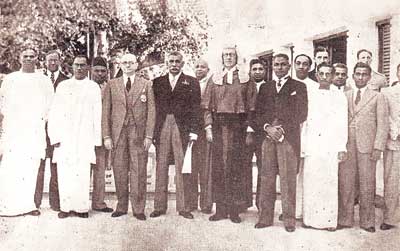 First Cabinet of Ceylon
Here is the proper chronology.
August 23 to September 20, 1947: The first general elections were held in a staggered sequence to the Ceylon parliament. This was the first time, the elections were fought under a party system.
Sept.8, 1947: Vavuniya constituency polled. C.Suntharalingam (Independent), polling 4,026 votes was the victor by a majority of 2,008 votes. Percentage polled was 55.6%.
Sept.13, 1947: Mannar constituency polled. C.Sittampalam (Independent), polling 5,877 votes was the victor by a majority of 2,496 votes. Percentage polled was 67.7%.
Sept.24, 1947: D.S.Senanayake accepted the prime minister rank from the governor.
Sept.26, 1947: A Cabinet of 14, led by D.S.Senanayake was sworn in at the Queen’s House. Among the 14, Suntharalingam and Sittampalam were the two Tamils. Suntharalingam was assigned the ministry of commerce and trade. Sittampalam was assigned the ministry of posts and telecommunications.
Oct.14, 1947: the first meeting of the House of Representatives held.
Dec.10, 1947: The Ceylon Independence Act 1947 was placed in the roster for debate.
Feb.4, 1948: Ceylon received independence from Britain.
The Lion Flag
According to Professor Kingsley M. de Silva, the hagiographer of J.R. Jayewardene (popularly known as JR, later to be the first executive President of Sri Lanka), JR took the initiative to drift the newly independent Ceylon towards the Sinhalese state, by choosing the lion flag. I quote from his hagiography:
“As late as December 22, 1947, the government had no clear policy on this as evident in the prime minister’s response to a question regarding this raised in the House of Representatives.
A few days later, the MP for Batticaloa, A. Sinnalebbe, gave notice of the following motion – it came up for discussion on 16 January 1948: ‘That this House is of opinion that the Royal Standard of King Sri Wickreme Raja Sinha depicting a yellow lion passant holding a sword in its right paw on a red background, which was removed to England after the Convention of 1815, should once again be adopted as the official flag of free Lanka.’
Few knew at that time, that it was JR who had drafted the resolution and persuaded Sinnalebbe to move it…
The choice of Sinnalebbe as mover of JR’s motion was an astute one. As a Muslim he would have caused some confusion among the Tamils for whom the strongest opposition to the idea of the lion flag as the national flag was anticipated. Secondly, as a notoriously inarticulate MP there was no danger of some unguarded statement of his causing embarrassment if not positive harm to the cause he was chosen to espouse by proxy…” (J.R.Jayewardene of Sri Lanka: a political biography 1906-1956, vol.1, 1988, p. 196)
Cabinet tenures of Suntharalingam and Chittampalam
The irony is that Suntharalingam and Chittampalam did not last long as Cabinet ministers. As both did not belong to any party, Senanayake senior groped them into his cabinet, by showing the carrot of a minister portfolio! Suntharalingam resigned his position on December 13, 1948, after 14 months. Later, to atone for his sin, he promoted himself as a ‘pioneering figure’ of Eylom nation! That’s how he spelled Eelam. In the past, Dr. Gnanalingam, one of the sons of Suntharalingam, was an acquaintance of mine. This was 27 years ago, when he was a visiting scholar at the University of Illinois. Suntharalingam died in 1985, and I did hear from his son about his journey to Vavuniya to participate at his father’s funeral. Sadly, I have not kept in touch with him since 1986.
Sittampalam held on to his cabinet portfolio until the death of D.S.Senanayake on March 22, 1952. He retained his portfolio when Senanayake’s son Dudley formed his new Cabinet on March 26, 1952. But he was dropped, when a new Cabinet was announced on June 2, 1952 by Dudley. Sittampalam’s tenure as a Cabinet minister lasted little less than 5 years. As he barely scraped through to a win at the 1952 general election, without the prestige of a ‘minister’, he was defeated at the next general election by his rival Federal Party candidate V.Alegacone.
After 65 years, the roster of names (G.G. Ponnambalam, KanthiahVaithianathan, M. Tiruchelvam, S. Thondaman, V. Nalliah, K.W. Devanayagam, C. Rajadurai, Lakshman Kadirgamar, Douglas Devananda– just a select list) do indicate that the price of a Tamil politician’s head equals a Cabinet position.
First Cabinet of Ceylon
Here is the proper chronology.
August 23 to September 20, 1947: The first general elections were held in a staggered sequence to the Ceylon parliament. This was the first time, the elections were fought under a party system.
Sept.8, 1947: Vavuniya constituency polled. C.Suntharalingam (Independent), polling 4,026 votes was the victor by a majority of 2,008 votes. Percentage polled was 55.6%.
Sept.13, 1947: Mannar constituency polled. C.Sittampalam (Independent), polling 5,877 votes was the victor by a majority of 2,496 votes. Percentage polled was 67.7%.
Sept.24, 1947: D.S.Senanayake accepted the prime minister rank from the governor.
Sept.26, 1947: A Cabinet of 14, led by D.S.Senanayake was sworn in at the Queen’s House. Among the 14, Suntharalingam and Sittampalam were the two Tamils. Suntharalingam was assigned the ministry of commerce and trade. Sittampalam was assigned the ministry of posts and telecommunications.
Oct.14, 1947: the first meeting of the House of Representatives held.
Dec.10, 1947: The Ceylon Independence Act 1947 was placed in the roster for debate.
Feb.4, 1948: Ceylon received independence from Britain.
The Lion Flag
According to Professor Kingsley M. de Silva, the hagiographer of J.R. Jayewardene (popularly known as JR, later to be the first executive President of Sri Lanka), JR took the initiative to drift the newly independent Ceylon towards the Sinhalese state, by choosing the lion flag. I quote from his hagiography:
“As late as December 22, 1947, the government had no clear policy on this as evident in the prime minister’s response to a question regarding this raised in the House of Representatives.
A few days later, the MP for Batticaloa, A. Sinnalebbe, gave notice of the following motion – it came up for discussion on 16 January 1948: ‘That this House is of opinion that the Royal Standard of King Sri Wickreme Raja Sinha depicting a yellow lion passant holding a sword in its right paw on a red background, which was removed to England after the Convention of 1815, should once again be adopted as the official flag of free Lanka.’
Few knew at that time, that it was JR who had drafted the resolution and persuaded Sinnalebbe to move it…
The choice of Sinnalebbe as mover of JR’s motion was an astute one. As a Muslim he would have caused some confusion among the Tamils for whom the strongest opposition to the idea of the lion flag as the national flag was anticipated. Secondly, as a notoriously inarticulate MP there was no danger of some unguarded statement of his causing embarrassment if not positive harm to the cause he was chosen to espouse by proxy…” (J.R.Jayewardene of Sri Lanka: a political biography 1906-1956, vol.1, 1988, p. 196)
Cabinet tenures of Suntharalingam and Chittampalam
The irony is that Suntharalingam and Chittampalam did not last long as Cabinet ministers. As both did not belong to any party, Senanayake senior groped them into his cabinet, by showing the carrot of a minister portfolio! Suntharalingam resigned his position on December 13, 1948, after 14 months. Later, to atone for his sin, he promoted himself as a ‘pioneering figure’ of Eylom nation! That’s how he spelled Eelam. In the past, Dr. Gnanalingam, one of the sons of Suntharalingam, was an acquaintance of mine. This was 27 years ago, when he was a visiting scholar at the University of Illinois. Suntharalingam died in 1985, and I did hear from his son about his journey to Vavuniya to participate at his father’s funeral. Sadly, I have not kept in touch with him since 1986.
Sittampalam held on to his cabinet portfolio until the death of D.S.Senanayake on March 22, 1952. He retained his portfolio when Senanayake’s son Dudley formed his new Cabinet on March 26, 1952. But he was dropped, when a new Cabinet was announced on June 2, 1952 by Dudley. Sittampalam’s tenure as a Cabinet minister lasted little less than 5 years. As he barely scraped through to a win at the 1952 general election, without the prestige of a ‘minister’, he was defeated at the next general election by his rival Federal Party candidate V.Alegacone.
After 65 years, the roster of names (G.G. Ponnambalam, KanthiahVaithianathan, M. Tiruchelvam, S. Thondaman, V. Nalliah, K.W. Devanayagam, C. Rajadurai, Lakshman Kadirgamar, Douglas Devananda– just a select list) do indicate that the price of a Tamil politician’s head equals a Cabinet position.
So, what’s the price for a Ceylon Tamil politician? If you are a keen student of politics in independent Sri Lanka, the answer is a Cabinet portfolio. For the sake of Cabinet positions, two independent Tamils namely Chellapah Suntharalingam (1895-1985) and Cathiravelu Sittampalam (1898-1964) pawned Eelam rights.
by Sachi Sri Kantha, October 12, 2012
History writing is no mean task these days. Tamils have been so lackadaisical in their history writing in the past and have permitted other ‘tribes’ (adversaries, colonialists and freelancers) to write their version of Tamil history. Because of this lazy trend, Tamils have suffered. I try my best to rectify this lapse. I present ‘my interpretation’ to an event which happened 65 years ago. My views may ruffle the feathers of the progeny of the two independent Tamil politicians. But, I care the less, as history has to be recorded.
C. Suntharalingam
A long standing universal dictum in politics and business is that ‘Everyone has a price’. The ‘price’ could be money, a prize award, fellowship, position and even one’s weaknesses (like that of addiction to sex or liquor). The best practitioner of this dictum in the past was Joe Stalin (1879-1953). He had admonished his subordinates, ‘If you fail miserably, it’s because you failed in plumbing the mind of your adversary. Even Uncle Sam, in his dealings with foreign diplomats, academics, journalists, businessmen and spies do adhere to this universal dictum. So, what’s the price for a Ceylon Tamil politician? If you are a keen student of politics in independent Sri Lanka, the answer is a Cabinet portfolio. For the sake of Cabinet positions, two independent Tamils namely Chellapah Suntharalingam (1895-1985) and Cathiravelu Sittampalam (1898-1964) pawned Eelam rights.
What I mean by the word ‘independent’ was that, they did not belong to any political party when they contested the 1947 general election, 65 years ago. They represented the peripheral Tamil electorates (Vavuniya and Mannar) of the Northern province. They were groped into the Cabinet by the wily Don Stephen Senanayake (1884-1952). In the photo of the first Cabinet, we see Suntharalingam (in white national costume) at left extreme (front row). On to his left was S.W.R.D.Bandaranaike (in white national costume). Sittampalam is seen at the right side(in white national costume) of the front row. To his right, in the second row was J.R.Jayewardene (in white national costume).
V. Navaratnam’s 1991 version
V. Navaratnam (1910-2006), one of the Federal Party leaders, who was also an MP from 1963 to 1970, published his memoir The Fall and Rise of the Tamil Nation in 1991. In it, he had written as follows:
“D.S.Senanayake had a faithful adviser in the person of Sir Oliver Goonetilleke, one of the astutest and wiliest diplomats of the time. Possibly on Goonetilleke’s advice he set about the business of Cabinet-making keeping in mind Britain’s conditions for the grant of independence. He constituted his Cabinet to include Singhalese, Tamil, Muslim, Malay, European and Burgher ministers as representatives of all the communities. C.Sundaralingam, MP for Vavuniya, was the Tamil minister who was supposed to represent the Tamils.
C. Sittampalam
There was considerable opposition in the country against Sundaralingam joining the government. He convened a meeting at the New Town Hall in Colombo to explain to the people why he had accepted D.S.Senanayake’s offer of a Ministry. It turned out to be a particularly boisterous meeting at which the opposition forces led by G.G.Ponnambalam (Jaffna), S.J.V.Chelvanayakam (Kankesanthurai), C.Vanniasingham (Kopay), Dr.E.M.V.Naganathan (Senator) and V.Kumaraswamy (Chavakachcheri), who were the new members of parliament all elected on the newly formed Tamil Congress party ticket, clashed with the supporters of Sundaralingam. The oppositionists demanded that Sundaralingam quit the Cabinet. Sundaralingamstubborned refused, and the meeting broke up in a pandemonium.
One of the first acts of Prime Minister D.S.Senanayake was to introduce a resolution in the Cabinet requesting Britain to grant complete independence. The Cabinet approved it unanimously,C. Sundaralingam gave his consent to signify that the Tamils joined in the request. In December 1947 the United Kingdom parliament enacted the Ceylon Independence Act renouncing forever its right to legislate for Ceylon, and making the legislature in Ceylon the sovereign parliament of an independent nation. On February 4, 1948, in a glittering ceremony at Torrington Square (now renamed Independence Square) in Colombo, the Duke of Gloucester hauled down the Union Jack and hoisted the lion flag of the Singhalese signifying the transfer of power.
That last act Sundaralingam giving his consent constituted the final seal placed on the fate of his people, the Tamil race in Ceylon. The last remaining shred of a trump card which the Tamils might have used to their advantage at an opportune moment was bartered away by a Tamil minister. By that single act the Tamils changed their rulers, from the British to the Singhalese.” (pp. 41-42)
Chronology between August 1947 and February 1948
Navaratnam’s above version is incomplete. Probably due to memory lapse, and distance of time in recording the events 40 years later, some errors had crept in his account. About this demerit, Navaratnam had acknowledged in his preface, “the writing has had to be done entirely from memory. It is possible that some mistakes in dates or in the sequences of events might have crept in. If there are any I would like to assure that they are quite unintentional and hope that readers will bear with me and be forgiving.”
First Cabinet of Ceylon
Here is the proper chronology.
August 23 to September 20, 1947: The first general elections were held in a staggered sequence to the Ceylon parliament. This was the first time, the elections were fought under a party system.
Sept.8, 1947: Vavuniya constituency polled. C.Suntharalingam (Independent), polling 4,026 votes was the victor by a majority of 2,008 votes. Percentage polled was 55.6%.
Sept.13, 1947: Mannar constituency polled. C.Sittampalam (Independent), polling 5,877 votes was the victor by a majority of 2,496 votes. Percentage polled was 67.7%.
Sept.24, 1947: D.S.Senanayake accepted the prime minister rank from the governor.
Sept.26, 1947: A Cabinet of 14, led by D.S.Senanayake was sworn in at the Queen’s House. Among the 14, Suntharalingam and Sittampalam were the two Tamils. Suntharalingam was assigned the ministry of commerce and trade. Sittampalam was assigned the ministry of posts and telecommunications.
Oct.14, 1947: the first meeting of the House of Representatives held.
Dec.10, 1947: The Ceylon Independence Act 1947 was placed in the roster for debate.
Feb.4, 1948: Ceylon received independence from Britain.
The Lion Flag
According to Professor Kingsley M. de Silva, the hagiographer of J.R. Jayewardene (popularly known as JR, later to be the first executive President of Sri Lanka), JR took the initiative to drift the newly independent Ceylon towards the Sinhalese state, by choosing the lion flag. I quote from his hagiography:
“As late as December 22, 1947, the government had no clear policy on this as evident in the prime minister’s response to a question regarding this raised in the House of Representatives.
A few days later, the MP for Batticaloa, A. Sinnalebbe, gave notice of the following motion – it came up for discussion on 16 January 1948: ‘That this House is of opinion that the Royal Standard of King Sri Wickreme Raja Sinha depicting a yellow lion passant holding a sword in its right paw on a red background, which was removed to England after the Convention of 1815, should once again be adopted as the official flag of free Lanka.’
Few knew at that time, that it was JR who had drafted the resolution and persuaded Sinnalebbe to move it…
The choice of Sinnalebbe as mover of JR’s motion was an astute one. As a Muslim he would have caused some confusion among the Tamils for whom the strongest opposition to the idea of the lion flag as the national flag was anticipated. Secondly, as a notoriously inarticulate MP there was no danger of some unguarded statement of his causing embarrassment if not positive harm to the cause he was chosen to espouse by proxy…” (J.R.Jayewardene of Sri Lanka: a political biography 1906-1956, vol.1, 1988, p. 196)
Cabinet tenures of Suntharalingam and Chittampalam
The irony is that Suntharalingam and Chittampalam did not last long as Cabinet ministers. As both did not belong to any party, Senanayake senior groped them into his cabinet, by showing the carrot of a minister portfolio! Suntharalingam resigned his position on December 13, 1948, after 14 months. Later, to atone for his sin, he promoted himself as a ‘pioneering figure’ of Eylom nation! That’s how he spelled Eelam. In the past, Dr. Gnanalingam, one of the sons of Suntharalingam, was an acquaintance of mine. This was 27 years ago, when he was a visiting scholar at the University of Illinois. Suntharalingam died in 1985, and I did hear from his son about his journey to Vavuniya to participate at his father’s funeral. Sadly, I have not kept in touch with him since 1986.
Sittampalam held on to his cabinet portfolio until the death of D.S.Senanayake on March 22, 1952. He retained his portfolio when Senanayake’s son Dudley formed his new Cabinet on March 26, 1952. But he was dropped, when a new Cabinet was announced on June 2, 1952 by Dudley. Sittampalam’s tenure as a Cabinet minister lasted little less than 5 years. As he barely scraped through to a win at the 1952 general election, without the prestige of a ‘minister’, he was defeated at the next general election by his rival Federal Party candidate V.Alegacone.
After 65 years, the roster of names (G.G. Ponnambalam, KanthiahVaithianathan, M. Tiruchelvam, S. Thondaman, V. Nalliah, K.W. Devanayagam, C. Rajadurai, Lakshman Kadirgamar, Douglas Devananda– just a select list) do indicate that the price of a Tamil politician’s head equals a Cabinet position.
