

“Crisis Within The Human Rights Movement” A Rejoinder
July 8, 2012
By Laksiri Fernando -
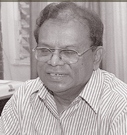
Dr. Laksiri Fernando
 In a short article written to the Colombo Telegraph (1 July 2012) titled “The Crisis Within The Human Rights Movement,” Sajeeva Samaranayake has raised some important questions regarding the approaches of the human rights movements today which implicitly resonate some of the vexed issues pertaining to the violations and accountability in Sri Lanka.
The general problem that he poses is the following.
“Most of us are working for human rights – on different themes, in different work settings and in different countries. But we would like to think we have a common objective, and it would be good if this were so. The reality is that we are at cross purposes and sometimes working against our stated objectives.”
If we take human rights as a movement or ‘human rights movement/s’ as our main focus, like any other movement, obviously it is subject to many cross currents and cross purposes. As many commentators to Samaranayake’s article (13 in number) have rightfully point out, there can be considerable gap/s between what some preach and what they actually practice, whether those are powerful governments or nongovernmental organizations. Sometimes we brand this behaviour as ‘hypocrisy,’ ‘double standards’ or attribute them to ‘dollar greed.’ The central question however is whether we need to ‘throw the baby with the bath water,’ even if these accusations are completely correct.
Objectives of Human Rights
What is this baby? Human rights are fundamental requirements of human beings, particularly in modern times, whether they are economic, social and cultural rights or civil and political rights. There is an increasing understanding that all human rights are interrelated and interdependent and one set of rights (i.e. in the economic and social sphere) cannot be achieved without the other set of rights (i.e. in the political and civil sphere) or vice versa. The ideological controversy that existed particularly during the cold war period has now largely disappeared or disappearing. Even the old classification between the two sets today is mostly outmoded.
Human beings have two basic drives; one for physical survival and the other for mental dignity. There are economic and social needs deriving from the drive for survival; and civil and cultural needs from the drive for dignity. These drives and needs have existed from almost the beginning of humankind and their complexity today requires codification of them in legal terms, national and international. In addition, humans require today political rights to safeguards all the other rights or otherwise those could be denied or jeopardize by the State. One may even argue that all humans have a third drive for power or participation and political rights today are related to that drive of the human beings.
Human rights philosophy and codification are also based on the concept of common humanity. This means that all human beings are of common species, Homo sapiens, with common drives and common needs irrespective of ethnic, colour, physical, social or cultural differences. Human rights also acknowledge the ethnic, cultural or language differences and recognize the related rights through cultural, civil and political rights. They are particularly related to human dignity and the exercise of proper political participation.
The above are some of the basic concepts of human rights and if we understand them properly, in my opinion, there cannot be much confusion about the common objective of human rights. I state them, at least briefly, for the benefit of the general reader and not as response to Samaranayake, except that he also seems to be rather weary about what he calls “ideals and concepts – fortified by the already massive and ever growing edifice of human rights conventions, rules and guidelines.” He further says, “This seems to have every answer to every human problem,” which is also not the case.
The difference between me and him perhaps is that I consider human rights to be ‘fundamental human requirements and needs’ and he appears to consider them as some ‘ideals and concepts’ alone. Giving the benefit of the doubt, perhaps he refers to the others rather than to himself in saying so.
