

 Apr-10-2012 21:36
Tim King Salem-News.com
Sri Lanka's Buddhist tormentors force Hindus and Christians to play the ultimate humiliation game.
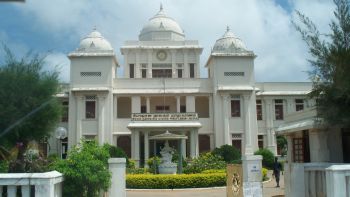
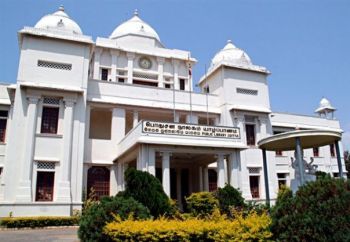 Jaffna Library dates back to 1933, is one of Asia's finest. |
(SALEM) - A terrible history of murdering journalists who dissent from the government's grace isn't evil enough for Sri Lanka's continual conflict against the Tamil population in Jaffna. Now the man presiding over the country's northern Tamil area, a war crime suspect, is going to transform the high technology section of the Jaffna Library into a toilet for Sinhalese visitors from the south.
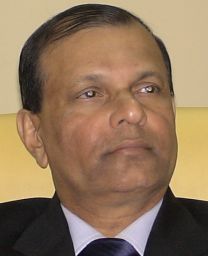 G. A. Chandrasiri as Governor |
Sources report that The Sri Lankan Governor for the Northern Province of Jaffna proposes the construction of a toilet to replace the Computer section on the second floor of the Jaffna Public library[1] .
It's pretty sad when a nation's entire military mission is based around ethnic cleansing. It is even sadder when you learn that the agents of death and state terrorism in Sri Lankan are Buddhists.
But this story isn't about the Genocide this religious government is responsible for, where Tamil Hindu and Christian people were slaughtered in a systematic, utterly cruel way.
It is about the post-war actions of this same Buddhist government, and if there is one underlying theme in this report it might be the question, how much are people really expected to take?
New Song 'Depression' - Graphic Truth of Sri Lanka Tamil Genocide- Song by Agron Belica, news article by Tim King Salem-News.com This is an extremely graphic... visual tour of the Tamil Genocide. These images allow one to grasp the enormous loss that the Tamil tragedy represents. |
By the summer of 2009, right under the world's nose, vast segments of a culture were annihilated, ground into pieces, children were hacked, shot and stabbed. There are horrible accounts of Tamil women and girls being raped. Resistance fighters with white flags were murdered by the government forces of Sri Lanka as they attempted to surrender to what they believed was an honorable military force.
Instead we learn of their plight; we discover the photos of a resistance leader's son who had been shot in the chest, just a 12-year old boy who had
 |
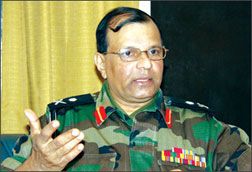 G. A. Chandrasiri - SLA Major General |
Foreign Governor - G. A. Chandrasiri
But again, I digress; this story is about the problems that continue to spill out from this violent conflict. It is about the despicable humiliation of human beings by a retired Sri Lankan Army (SLA) Major General named G. A. Chandrasiri - the former Commander Security Forces Headquarters in Jaffna. He is now the civilian governor of this disputed region[2].
This is Tamil country, the one region that the Tamils called their own; the former breakaway state of Tamil Eelam, that was protected by the LTTE (Liberation Tigers of Tamil Eelam) until their defeat in May 2009.
He has no real ties to the area, other than military conquest. Chandrasiri's history involves serving as a commander with Security Forces Headquarters in the northern part of this island nation during the final stages of this three-decade long Sri Lankan Civil War. It now appears as though he is existing to take steps of revenge... that is sure how it appears.
Appointed Governor of the region by Rajapaksa, he is free to do anything he wants and he knows Colombo will back his every move. This ultimately becomes an endorsement on a license to commit human rights violations. When a government remains oblivious to the obvious, inherent hazards of this behavior, it truly has crossed the border into madness.
 |
1981 Burning of Jaffna Library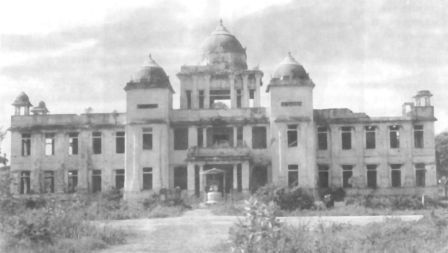 Almost a decade ago, before the slaughter of innocents and milants that raged from 2005 to 2009, Vasuki Nesiah wrote the article,Monumental history and the politics of memory:Public space and the Jaffna public library, which included the associated photo. Almost a decade ago, before the slaughter of innocents and milants that raged from 2005 to 2009, Vasuki Nesiah wrote the article,Monumental history and the politics of memory:Public space and the Jaffna public library, which included the associated photo.The Jaffna public library was burned under state supervision in 1981 – the memory of that event burned into Tamil consciousness as an iconic marker of the physical and imaginative violence of state sponsored Sinhala majoritarianism. Today the rebuilding of the library is embroiled in a different kind of battle over memory and history; the scaffolding and reconstruction captured in the cover photograph by Dominic Sansoni represents how the memory of Tamil victimhood is itself under construction. Yet as Sansoni’s photograph suggests, the scaffolding gets assimilated into the clean lines and reconstructed façade of the rebuilt library (in fact at first glance I didn’t even notice the scaffolding), i.e., the construction of memory itself becomes naturalized into our narratives of the past. In that context, the controversy over the reopening of the library reminds us that memory is itself a field of contestation: Who ‘owns’ the memory of 1981 in the Tamil community – “heroes” and rulers or their victims and survivors? The burning of the library is a story about the Sri Lankan government’s racist and violent campaign to conquer public space in Jaffna. Perhaps the debate over the re-opening of the public library constitutes a reclaiming of public space from the reach of the LTTE? |
Mobs of Buddhist Book Burners
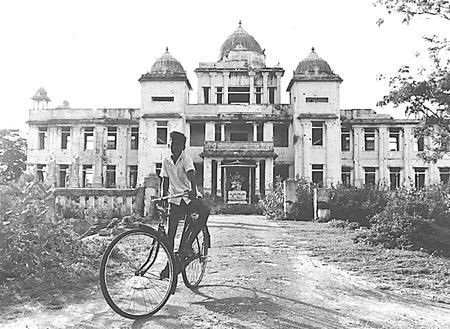
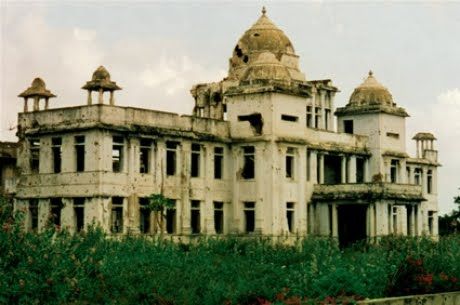 After the tragic fires set by Sri Lanka Army in '81 |
