

Reconciliation And The Role Of India
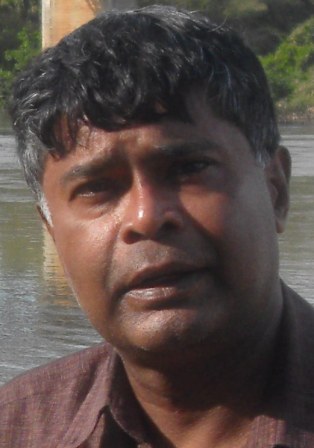
Prof. Rajiva Wijesinha MP
 I must admit to being deeply worried about the current state of relations between India and Sri Lanka. I contrast this with the excellent situation that obtained in 2009, when India was the chief component of the protective barrier against efforts to stop us eradicating terrorism from our shores. One might have thought that this was a goal the whole world would have supported, but sadly this is not an ideal world and countries will naturally put their own self interest first. Fortunately, not only did India’s interests coincide with our own at that stage, but given the terrible toll terrorism funded by external sources was taking on both our countries, I think it is also true to say that we worked in accordance with the highest moral perspectives.
But the aim we shared then, of eradicating terrorism on our shores, went hand in hand with another commitment, which was the promotion of pluralism in Sri Lanka. This again is a moral goal, but it also has a practical dimension, in that the full incorporation of the Tamil people in the body politic in Sri Lanka would have reduced the potential for future terrorism.
Sadly Sri Lanka has not pursued the Reconciliation process with the commitment it requires. Given its urgency I believe we should try to understand the reasons for this, and try to overcome them. In this process India has a significant role to play.
The first reason is myopia. Major decision makers in government, or rather the only decision maker in this regard, the Minister of Economic Development, believed that material development would ensure integration of conflict affected areas in the national economy and hence promote reconciliation. He was wrong, and it is a pity that he does not understand the need for consultation of potential beneficiaries as well as professionals when planning benefits for some sectors. But in mitigation it should be said that the strategy had worked to a great extent in the East, and he did not have established institutions to which to turn when making plans for the North. The absence of think tanks in Sri Lanka, the abolishing of the Ministry of Policy and Plan Implementation, as well as the Ministry of Human Rights, left a vacuum which sheer energy cannot fill.Read More
