Peace for the World

Peace for the World
First democratic leader of Justice the Godfather of the Sri Lankan Tamil Struggle: Honourable Samuel James Veluppillai Chelvanayakam

Thursday, October 31, 2013

Sri Lanka’s Commonwealth Summit and the international media

By  Oct 31, 2013 
Journalists’ vigilance must continue post-CHOGM if Sri Lanka is to be held accountable for its crimes
Asian CorrespondentIn the run up to the Commonwealth Summit in Sri Lanka there is burgeoning media attention on the human rights abuses and suspected war crimes the host nation has tried to conceal. Many hope the attention will keep Sri Lanka accountable and also facilitate progress on human rights and good governance. While media scrutiny during the Summit is indeed important, if the regime in Colombo is to be made accountable for its crimes it is vital that the vigilance continues.
Jurists have pronounced Sri Lanka has violated principles that the 54-member group of former British colonies hold sacrosanct by undermining human rights and the rule of law. This means the next Commonwealth Heads of Government Meeting (CHOGM) in Colombo will ring a death knell for the organisation’s legitimacy. Further, Sri Lanka, by assuming leadership of the body for the next two years, will legitimise violent and authoritarian principles of governance in the Commonwealth.
Britain's Queen Elizabeth II , right, shakes hands with Sri Lanka President Mahinda Rajapaksa, left, as his wife Shiranthi Rajapaksa, center, looks on during a Commonwealth event in London last year. Pic: AP.
There are two schools of thought on attending CHOGM. Those among them who feel that engagement is better than boycott would argue that deploying the international media to cover CHOGM and also report on past and continuing human rights violations could be useful in making Sri Lanka accountable for its actions.
Aware of this, Sri Lanka displayed a marked reluctance to granting media accreditation to Britain’s Channel Four television, apparently because it produced the Sri Lanka’s Killing Fields trilogy, a TV documentary that records violations by both government troops and rebel LTTE fighters that experts say point to war crimes. However, due to sustained pressure, including an international Twitter campaign, Channel Four was given media accreditation, although the Colombo says it still reserves the right to deny any journalist a visa.
The question, however, is what impact the coverage of stories of rights violations and abuses will have on long-term improvement in the country’s accountability and governance. For an answer one could be guided by the past, although comparisons might not be watertight. The examples that come to mind are: Yoweri Museweni’s Uganda that hosted CHOGM in 2007 and Nigeria under Olusegun Obasanjo where CHOGM 2003 was held.
Uganda in 2007 was designated by Freedom House as “partially free.” The country was riddled with problems, some more critical than others including massive human rights violations by Joseph Kony’s Lord’s Resistance Army (LRA) and troops loyal to Museveni that had enslaved child soldiers, displaced millions and devastated Northern Uganda; systematic crackdown on LGBT rights and endemic corruption by the government officials.
There were no restrictions on reporting the war in Uganda in 2007 as there are in Sri Lanka. However, because its horrors were underreported it was characterised as the “forgotten war.”
The Ugandan government’s homophobia was much more controversial. And as CHOGM got under way, LGBT activists had arranged to use the Commonwealth Peoples’ Space to advocate for better treatment for the gay and transgender communities. They were however beaten by police and prevented from speaking. These issues were widely covered by the international media and commented on, mostly negatively. But all that publicity was of no avail for long-term recognition of LGBT rights. Homophobia continues in Uganda with a bill criminalising same-sex relationships introduced to parliament in 2009, although it is yet to be enacted.
Nigeria hosted the CHOGM in 2003. Obsanjo’s government was accused of the massacre at Odi where many hundred civilians at least were killed; violence during the April 2003 elections in which his People’s Democratic Party emerged victorious and continuing acts of violence and torture of his critics.
These issues came under the spotlight when Human Rights Watch publicised a report on violations on the freedom of expression to coincide with the Summit. The international media in the country to cover CHOGM gave the issues publicity. Despite that, authoritarian rule continues, including fraudulent elections in 2007 and even today, where it results in sectarian violence.
Therefore, it appears that the exposure of human rights abuses by the international media when CHOGM was hosted by Uganda and Nigeria did not mean much for long-term accountability. It could be that Obsanjo, Museveni and Sri Lanka’s President Mahinda Rajapakse, who govern on the wrong side of democracy, are not unduly perturbed if the lowlights of their regimes are aired during summits, knowing full well that after the summit such negativity will be forgotten.
That is why if the international media is to contribute meaningfully to curb authoritarianism and calling the Rajapakse to account, its role has to be more robust than only shining the spotlight during CHOGM. First, rather than ceasing scrutiny of the regime in Colombo, as usually happens when important international events come to an end, it should build on the information it collects while in Sri Lanka and deploy it effectively. It would go a long way to prove the allegations Colombo has been contesting.
Second, leaders like Britain’s Prime Minister David Cameron have said they will not boycott CHOGM so as to deliver a “tough message” to the Rajapakse government. But are they sincere when they say so, or is it merely because they want to preserve the status quo and focus on business and not values or rights? One way of finding out will be the domestic media in countries like Britain highlighting human rights and governance issues as they develop in Sri Lanka after CHOGM, and ascertain how far the “tough message” has helped or hindered good governance, accountability and human rights.
The road ahead is long and winding for those desiring change in Sri Lanka. If progress is to be made, the media’s mission will have to be after CHOGM just as much as during it.

Leaked Emails Show Park Entered Sri Lanka For Workshops And SL Media Orgs Fighting Each Other

October 31, 2013  Read More
Colombo TelegraphLeaked emails show that Jacqueline Park, Asia Pacific Director of the International Federation of Journalists (a paid worker), is currently being questioned by immigration authorities over suspected violation of immigration laws lied about her entering to Sri Lanka.  Park entered Sri Lanka on a tourist visa.
Park
Free Media Movement Convener Sunil Jayasekerahas claimed that Park and another IFJ member were originally not assigned to take part in the workshop organized by them. “After hearing that they were in the country we (FMM) decided to request for their presence at the workshop. They did not come here on an invitation extended by us,” he said.
Last night the Colombo Telegraph reported that the Immigration authorities had been tipped off about Park’s visa issue by elements in organisations that are full members of the IFJ, disgruntled over continued preference of the IFJ for an affiliate (FMM) over member organizations.  Even this event, as evident by the wording on the banner, clearly shows that full members of the IFJ are not involved.
We publish below some of the leaked emails;
On 29 October 2013 17:59, Sunil Jayasekara <sunil.jayasekara@gmail.com> wrote:
Dear all,
Reference to the letter dated 28th October 2013,sent by Mr.Lankapeli addressing to Jacqui Park saying unwanted matters which were inappropriate, inaccurate  and misleading the IFJ officials by giving false information.
We, on behalf of the Executive Committee, regretting, regarding this false information which was put forward by Mr.Lankapeli.
According to our knowledge, the IFJ had informed regarding the workshop to the all affiliated bodies in Sri Lanka months ago. Other than FMM, there is no single affiliated  body given a positive response to the IFJ.
During this situation, IFJ contacted us and requested to organize this workshop. We have agreed and also we believe that we don’t have any compulsory to ask any other affiliated bodies.
After accepting to hold this workshop, we have given the information to the heads of the   five media   organizations during the last meeting which was held at the Sri Lanka Press Institute. Even at that time, they did not put forward proper objection to us regarding this matter.
We totally reject the blame saying that we informed them only two days before.
And also I have to point out that this workshop is not only for the affiliates. This was organized to the  media organizations which are functioning in Sri Lanka.
Regarding this matter, up to now the SLWJA did not object our workshop and also the General Secretary Mr.Ranga Jayasooriya of SLWJA informed me that they have no any objections against this workshop.
The FMM also regret to mention that if there is any issues come up within the five media organizations or with IFJ, it should be solved in respected way within us.                    Read More

A police agent cum paid journalist behind the betrayal of FMM and IFJ to MaRa regime


(Lanka-e-News-31.Oct.2013, 11.00PM) The Police intelligence arm SIS and officials of the Immigration department who raided the IFJ- FMM media workshop continued the questioning of Jacqueline Park for the second day on 31st. 

The intelligence officials has brought the paper cuttings of the articles published by the Sunday Leader news paper against the Free Media Movement after its editor Lasantha Wikrematunga was shot dead. 

Jacqueline Park is the editor of monthly publication of Australia Media Alliance, the journalists Trade Union with 20,000 members. She has been a trade unionist and a journalist for a long time. 

Inelegance officials grilled FMM convenor Sunil Jayasekara for nearly 6 hours on 30 in an apparent attempt to intimidate and stop the media freedom activities of the FMM. 

The Rajapaksha regime has accused Jacqueline Park of breaking Sri Lanka Immigration laws by obtaining visitor visa to attend a media workshop.

Before Sri Lanka became a country ruled by the Rajapaksha jungle rule representatives of all most all International Press Freedom organisations visited Sri Lanka on visitor visa and openly engaged in press freedom activities without any hindrance. It was militarised mind set of Gotabhaya Rajapaksha changed that practice in order to restrict international solidarity for media and journalists in Sri Lanka.

Now not only the Rajapaksha regime, but also a police agent cum journalist who is working for the murderous regime has been finding fault with obtaining visitor visa to attend a workshop. Many suspect that this police agent /journalist may have provided more information on other media personal and press freedom leaders who had visited Sri Lanka on visitor visas. 

This police agent who living exile and run the website has advised Rajapaksha regime to investigate previous visits by J. Park and that is what exactly regime police men did. This is a warning too all media personal who visit Sri Lanka to report under cover. It was only weeks before that MaRa regime was looking for two Channel 4 under cover journalists in Sri Lanka. This police agent journalist would have dignity informed the regime if he know the names of the two journalists. It is very clear that this agent journalist has taken to duty if providing information to MARA regime on visiting journalists and press freedom advocates. 

It was President Rajapaksha himself admitted that this person was one of his agents; further it was the same president who told that this person had served the Premadasa regime too masquerading as a student. Once the student movement unearthed the real role of the ''student'' this person had to move to another area. He served a short period as a convener of the FMM and FMM leadership came under death threats thereafter. 

Now this police agent has shown his real face by openly advocating suppression against the FMM and IFJ by the MaRa regime.

Sri Lanka: RSF calls on UNHRC to ensure the safety of FMM and IFJ personal


SRI LANKA BRIEF
To the attention of : Ajith Sunghay
Human Rights Officer , Asia-Pacific
Office of the United Nations High Commissioner for Human Rights
Dear Mr Sunghay,

A raid on a workshop co-organized by the Free Media Movement (FMM) and the International Federation of Journalists (IFJ) was conducted on Wednesday and have lead to the arrest of FMM and IFJ members, among them Jacqueline Park, by officers from the Emigration and Immigration Department.  Members of the  Sinhalese Buddhist nationalist organisation Bodu Bala Sena, also present, have threatened the owners of the venue, the Hotel Renuka, where the workshop is conducted, not to allow FMM and IFJ to conduct the workshop on Thursday. They have threatened the owners to be present at the venue in the morning to force the cancellation of the workshop. 


We fear for the security of the members of FMM and IFJ who risk physical assault, as they have planned, according to my information, to go ahead with the workshop.

We hope the Office of the United Nations High Commissioner for Human Rights can intervene in the most rapid and efficient way in order to prevent such possibility and help ensure the security of the journalists and members of civil society organisations who will be present at this workshop.

I remain at your entire disposal should you need more information.

Because of the very short amount of time available, the limited ressources to react to such threat, and in order to maximize the efficiency of this alert, I am also sending the present email to a number of International media organizations and non-governmental organizations (in blind copy of this email).

However, you can be assured that your answer and my following emails will remain strictly confidential.

Details on today's incident can be found in the media, see below :

http://www.srilankamirror.lk/news/11460-fmm-workshop-raided
http://www.dailymirror.lk/news/37914-ifj-officials-asked-to-leave-sl-for-violating-their-visas.htm
Directress of International Media Federation Asia arrested and questioned on Gota’s order
(Lanka-e-News-30.Oct.2013,10.00PM) The officers of Department of immigration and emigration and a group of defense secretary’s security division officers who swooped on Hotel Janaki, Colombo this noon where a workshop was organized by the free media movement , had arrested Jacqueline Parker, Directress in charge of Asian region of International Media federation (IMF), and a officer working in that division.

Jacqueline Parker is a regular visitor to Sri Lanka . The Immigration and emigration officials have stated that Parker who had come to SL on a tourist visa participating in a media workshop is illegal. Though Sunil Jayasekera the convener of the Free Media Movement who conducted this workshop had tried to explain , the officers had paid no heed to him , and made the arrests stating that they are acting on orders from the top. Jayasekera and the two foreigners who were arrested had been taken along by the officers who made the arrests. When Lanka e news spoke to Sunil Jayasekera via the phone at 7.00PM he stated that he is being interrogated by the officers.

The IMF is the world’s largest body that is in the service of protecting journalists and their rights world wide.

Unfortunately , the Rajapakse regime is suffering from acute paranoia and fear as regards international media personnel who visit SL in view of the commonwealth summit.

Govt To Fully Investigate IFJ Reps For Violating Immigration Laws

October 31, 2013 |
Two representatives from the International Federation of Journalists had been detained by the immigration authorities for violating Sri Lanka’s immigration laws Cabinet Spokesman Keheliya Rambukwella said, vowing to investigate the matter thoroughly.
Keheliya
Colombo Telegraph“Just because of CHOGM we cannot let everything go. The law of the land prevails,” Rambukwella told the weekly cabinet press briefing a short while ago.
He said the two representatives had arrived in the island on tourist visas although they needed Government accreditation in order to conduct a media workshop in the country.
When it was pointed out to Rambukwella that Sri Lanka had stopped issuing business visas and the only visa available on the immigration website was the tourist visa option, the Minister said that it was still necessary to obtain necessary media accreditation to engaged in media activity in the country.
Asked if all business people travelling for CHOGM would also be arrested since they would be arriving on a tourist visa since the business visa option was no longer available, the Cabinet Spokesman said “Business is not media, media needs accreditation.”
He said immigration authorities were conducting a full investigation into whether the two representatives from IFJ were journalists or not.
The CID and immigration authorities have been grilling IFJ Asia Pacific Head Jacqui Parks and a second member of the organisation since last evening on the basis that they had violated immigration laws and participated in a workshop on tourist visas.
The two IFJ representatives were to be deported this morning but are still being questioned.

Women and children in the North: Sexual harassment, grievances and challenges

In September 2013, Watchdog travelled to the Vanni[1] and met with survivors of sexual violence, women’s rights activists and representatives of women’s groups. This report is based on information provided during interviews conducted with them, Human Rights organisations based in the North and Colombo and Government sources. During our interactions with these groups, we learnt of a disturbing trend of minors being subject to sexual violence over the last several months. In addition, we also spoke to war widows, single women and former female combatants who continue to face harassment and abuse at the hands of the military and from their own community.
by Tisaranee Gunasekara

“…justice by its very nature has to have a universal reach, rather than being applicable to the problems and predicaments of some people but not of others”.
Amartya Sen (The Idea of Justice)
( October 31, 2013, Colombo, Sri Lanka Guardian) Rs.1.8 billion was spent on building one kilometre of the Katunayake-Colombo expressway.
That was more than the 2014 Budgetary allocation for Child Development and Women’s Affairs (Rs.1.24 billion), Culture and Arts (Rs.1.48 billion), Telecommunication and Industrialisation Technology (Rs.0.957 billion), Wildlife Resources and Conservation (Rs.1.31 billion), National Heritage (Rs.1.26 billion) or Foreign Employment Promotion and Welfare (Rs.0.58 billion).

SL abjectly surrenders to China :National flag is taboo at Katunayake expressway opening

http://www.lankaenews.com/English/images/logo.jpg
(Lanka-e-News-31.Oct.2013, 8.00PM) Like how when the new breakwater and the southern terminal were being opened of the Colombo harbor constructed by China so at the recent inauguration of the Katunayake – Colombo expressway built by China , the Sri Lanka (SL) national flag was not allowed to be displayed. Only the small school children who arrived to welcome pompous Medamulana MaRa were permitted to carry small flags on sticks .

Even along the way , the SL flags were not on display. But of course permission had been granted for display of huge cutouts of the two Medamulana Sri Lankan betrayers who are making SL a Chinese colony.

The Chinese who made sure that the SL national flags are not on display at the venue of the ceremonies however made sure that even at the entrance to the expressway , a massive cutout is displayed with a message of warm welcome in Chinese language . Sadly , even the welcome message had not been allowed to be displayed in English , Sinhala or Tamil , the languages Sri Lankans know.

All these only go to prove how disdainfully ou mother Lanka is being treated and how abjectly SL has surrendered to China. Is this what is meant by ‘SL the miracle?’ or is this China’s ostentation of pride after converting ‘SL the miracle’ into ‘SL the debacle ?’ concerned Sri Lankans question .

The Medamulana scoundrels whose gaze are fixed only on illicit commissions in every deal have taken loans from China on prohibitive interest rates which rates even the mother earth is unable to endure. In short after ‘selling’ the country to China , the Medamulanas have only filled their private coffers and lined their pockets while pretending all this is done for development of the country and deceiving the people after offering them sugar coated fatal pills.

The so called cardboard patriots too are watching idly with opened mouths all these disastrous actions in the name of socialism because monies are flowing into their party funds in a deluge. Therefore they are blind to China’s colonization of our motherland . Only the suddhas (whites) who colonized before 1948 they can see as Mahasonas (devils).

The bottom line is the so called socialists have metamorphosed into capitalists following illicit amassment of wealth via the Medamulana regime which has opened the gateway wide for corruption , bribe taking , illicit commissions and ‘legalized’ them for its regime members and its bootlicking politicos who are permitted only to fawn on them and not utter a word against after securing positions , perks and evil power at people’s expense.

‘Ceylon Today’ sports editor refuses to do Tiran’s biddings, resigns!

ceylon todayCallistus David has resigned as sports editor of ‘Ceylon Today’, owned by MP Tiran Alles.
The most immediate reason behind David’s resignation is that he had been reprimanded by the owner for having published an article in the sports page to the effect that sports minister Mahindananda Aluthgamage had ordered Sri Lanka Cricket president Jayantha Dharmadasa not to attend an ICC meeting and that secretary Nishantha Ranatunga should participate instead.

The talk of the media circle these days is Callistus, a man of silent habits and small in stature, but very big in self-confidence, in light of the fact that there are editors who dance to the tune of media institution owners and do their dirty biddings.
 
He is the second journalist to resign due to intimidation by Tiran Alles, after Shantha Wijesuriya, who left ‘Mawbima’ following pressure by the owner.
 
Shantha later received death threats and had left the country.
Monk arrested for possession of cannabis

BY Yapa Kumara and Premalal Rathnayake-Thursday, 31 Oct 2013


The Mahiyanganaya Police have arrested a monk for allegedly transporting a stock of cannabis in a bus plying from Thanamalwila- Mahiyanganaya.


The 62 year old monk who is attached to a prominent Temple in the Hambegamuwa area was arrested for the possession of 4kg cannabis.


The suspect was arrest when the Police who were inspecting the bus had discovered the stock of cannabis concealed in the suitcase belonging to the monk.


The monk has been released on bail after being produced before the Magistrate’s Court, while the Case is due to be taken up again. (Ceylon Today Online)
Lascivious notorious Navy Commander as Corporation chairman: militarization of country forges ahead

(Lanka-e-News-31.Oct.2013, 8.00PM) The latest in the series of measures taken towards militarization of the country is the appointment of Navy Commander Vice Admiral Jayanath Colombage as the chairman of the shipping Corporation. This is the first time in SL , while a commander of the forces is continuing in that post , an additional appointment has been awarded to him in a civil organization as a chief.

Going by this trend , in the future , officers of the forces will be appointed to the Rupavahini Corporation , Broadcasting Corporation , Film Corporation and so forth. If a country is to be militarized there is no other method than this. Hitler too followed this same approach.

Jayanath Colombage who was given an extension of service in his navy commander post while he is not competent even as a navy commander being given an additional appointment defies all cannons of logic and norms, which is all the more because of his ignominious reputation as a notorious womanizer , meaning that he is going to bring disgrace on the government service wholesale. 

He is the accused in a case No. D / 4897 that is being heard in he Gampaha court in which he is indicted on charges of breaking up a family due to his illicit relationship with a woman by the name Chandima Bambarenda .

In this case filed by the husband of Bambarenda it is alleged that his family was broken up by Jayanath Colombage .Two cases of the children of Bambarenda claiming maintenance are being heard in that court . It is specially noteworthy that the children are claiming maintenance from their mother who was snatched away illegally by Colombage . The case Nos. are M/202 and M /203

One of the respondents in these cases is Jayanath Colombage the present navy Commander and chairman of shipping corporation from today. Truly and legally speaking , Colombage should have been thrown out lock, stock and barrel from his posts for bringing the government service to disrepute by his shameless and disgraceful conduct.

A classic case in point is :

When a former Air force Commander was involved in a vehicle accident at Borella , he was at the wheel with an ‘unknown’ woman and because this was recorded in the police register , he had to resign his post of Commander. 

In the cases that are being heard in the court against Colombage , the latter is not only indicted, but among the production to court , an inexplicable photograph with that woman who is another man’s wife was one. In such circumstances how can it be said Colombage had not defamed or disgraced the government service ? 

We shall bring to you shortly more reports on the lascivious behavior and misconduct of this womanizer . The appointment of misbehaving officers of the forces to the high echelons of government civil service , should naturally be opposed by the public, out of whose funds they are paid. In this instance , Colombage the womanizer is holding two government posts concurrently . The public must therefore protest twice over.

Tolstoy’s Hadji Murad : Sri Lankan Parallels?


By Charles Ponnuthurai Sarvan -October 31, 2013 
Prof. Charles Sarvan
The mind often functioning associatively, this work by Tolstoy (set in Chechnya; one of the last stories he ever wrote) reminded me of Sri Lanka and of a certain Tamil militant now turned government supporter. Subservient and still useful to the government, he is permitted to have an armed gang; as a reward, he is above the helpless and hapless Tamil population.
Colombo TelegraphRussia attempted to absorb Chechnya into its empire but met with fierce resistance: the leitmotif of the novella is the thistle which defends itself using its thorns with ferocious determination. The mountains and thick forests they knew so well were an advantage. Their resistance made the Russians fear and hate the Chechens, and they resorted to all means to vanquish the guerrillas, including attacks on civilians (children and women not exempt) and the deliberate destruction of their livelihood. Many were killed, and many more fled the region. In 1847, the Chechen population was about 1. 5 million; in 1861 it was 140, 000 and in 1867 it was down to 116,000. (Tamil dispersal and dwindling are on-going.)
Read More

The World Today: China, India And The United States As Seen From Sri Lanka


By Rajiva Wijesinha -October 31, 2013
Prof. Rajiva Wijesinha MP
Colombo TelegraphLet me begin with one of the formative myths of the Sri Lankan state. It deals with the introduction of Buddhism to the country, in the 2nd century BC. The king at the time, Devanampiyatissa, was out hunting when he came across a strange man in the forests of Mihintale. This was Mahinda, the son, or some say the brother, of the Mauryan Emperor Asoka, who had converted to Buddhism after a terrible war in which, to complete his conquest of India, he had slaughtered thousands.
When the monk saw Tissa, he asked him whether he saw the mango tree before them. Tissa said yes, and then the monk asked whether there were other mango trees. Tissa said yes, and then the monk asked if there were trees other than mango trees. Tissa said yes again, whereupon the monk asked whether, apart from all the other mango trees, and all the other trees that were not mango trees in the world, there were any other trees.
Tissa thought hard, and then replied that there was indeed the original mango tree the monk had pointed out. This was when Mahinda decided that Tissa was a fit person to understand the doctrines of Buddhism, so he preached to him and converted him and through him his people. Buddhism has since been the dominant religion in Sri Lanka, though, I think uniquely, we also have substantial proportions of our population belonging to the other principal faiths of the world, Hinduism and Islam and Christianity.
When I was young I used to think the story a silly one, but I have since understood its implications for the way we should look at the world. It seems to me now the epitome of what I would describe as the Eastern vision of the individual, society and the world, as opposed to the dichotomies the West believes in, and therefore often creates. In what I would posit as an ideal concept of our relations with the world, we should see ourselves as existing at the centre of several concentric circles, to all of which we belong. While we share aspects of identity with others belonging to those circles, ultimately we need also to be aware of the unique nature of our own individuality.

The “De-Zionization” of Israel: Drying up Ideological Wellsprings of Arab – Israeli Conflict


Global Research (Centre for Research on Globalization) - Montreal, QCBy Nicola Nasser-October 30, 2013
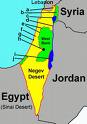
palestine (2)Gradually, awareness that de-Zionization of the US and European foreign policy as well as the internal policies of the State of Israel has become a prerequisite for peace in the Middle East is steadily taking roots in Israeli and world public opinion and consciousness.
However this awareness has yet to wait for drying up the Zionist ideological wellsprings of the Arab – Israeli conflict and translating it into real politics by de-Zionization of Israel and disengaging western foreign policy from its ideological attachment to Zionism.
In his article published by Foreign Policy on last October 25, James Traub quoted US President Barak Obama in a speech last May, “announcing a re-formulation of the war on terror,” as saying: “We cannot use force everywhere that a radical ideology takes root;” the only alternative to “perpetual war” is a sustained effort to reduce “the wellsprings of extremism.”
The “wellsprings” of “perpetual wars” and “extremism” in the Middle East during most of the past twentieth century until now could easily be detected in the unholy combination of real politics and the “radical ideology” of the secular – turned – religious Zionism.
This combination made it possible and seemingly ethical for Americans and Europeans to accept and justify the unethical displacement of the indigenous Arab people of Palestine to be replaced by a multi-national artificial gathering of Jews who suffered oppression, anti – Semitism, pogroms and holocaust in their western home countries.
US and European continued attachment to the Zionist ideology lies at the heart of their treatment of Israel, the offspring of this ideology, as one of their top “vital interests” in the Middle East, which is an attachment that in turn lies at the heart of anti-Americanism and other forms of Arab conflicts with the “west.”  
The safe haven of the “new world” in America was a timely and practical solution for Europeans to get rid of and solve their “Jewish Question;” it now absorbs more Jews than Israel does.
The communists offered their own solution; it materialized in the Jewish autonomous “Oblast” first ever republic in the Russian Birobidzhan, close to the border of the former Soviet Union with China, which was home to some three million Jews before some one third of them immigrated to Israel following the collapse of the communist empire.
The nation states basing citizenship on the rule of law is now the rule of the day in Europe , where Jews enjoy full constitutional religious, civil, political and all the other rights enjoyed by their compatriots.
There is no more a “Jewish Question” in Europe in particular or in the west in general. If such a question still persists there it is one related to the disproportionate influence of Jewish citizens on the decision makers in the political, financial and media arenas.
Nonetheless, the Zionist propaganda in Israel and abroad is still fervently inciting that Jews are an endangered species outside Israel , soliciting Jewish immigration, encouraging dual citizenship and binational loyalty among them and considering all Jews outside Israel as “refugees.”
Writing in the http://www.huffingtonpost.com on September 6 last year, Hanan Ashrawi, a Palestinian leader and elected parliamentarian, quoted Shlomo Hillel, a government minister and an active Zionist from Iraq , as saying, “I don’t regard the departure of Jews from Arab lands as that of refugees. They came here because they wanted to, as Zionists” and quoted Former Knesset member Ran Cohen, who immigrated from Iraq , as saying: “I have to say: I am not a refugee. I came at the behest of Zionism.”
Consequently, the “Jewish Question” moved ironically to the very Arab safe haven to which the oppressed European Jews fled with their lives to survive the culture of inquisition in Medieval Europe. The largest Jewish minority among Arabs in Morocco nowadays tells the story.
This Arab safe haven was turned by the Zionist ideology into a hell of wars, instability, ongoing conflict and home of a revived “Jewish Question” since Israel was artificially created 65 years ago in the heart of the Arab world, where Jews used previously to be a prosperous minority in every one of the capitals of the 22 Arab states except Jordan.
Zionism justifies the creation of Israel in Palestine by two basic controversial arguments: That God promised the land to Jews no matter what would happen to its Arab inhabitants who was there long before Joshua and his army crossed River Jordan to destroy Jericho and kill every man, woman, child and animal by “God’s command.”
On November 2, 1917, British Foreign Secretary then, Lord Balfour, acted as the self – appointed messenger of God’s will to issue a modern God’s promise to Jews to have a “homeland” in Palestine .
The modern justification of the Holocaust does not care that another people, namely Arab Palestinians, pay the price for a crime they did not commit.
Ironic but informative as well is the fact that Zionism was not originally a Jewish product.
According to the author of “Christian Zionism: Road-map to Armageddon?” (InterVarsity Press, 2004) Revd. Dr. Stephen Sizer, writing in the Middle East Monitor on last August 1, “The origins of the movement can be traced to the early 19th century when a group of eccentric British Christian leaders began to lobby for Jewish restoration to Palestine as a necessary precondition for the return of Christ… Christian Zionism therefore preceded Jewish Zionism by more than 50 years. Some of Theodore Herzl’s strongest advocates were Christian clergy.” Dr. Sizer headlined his article, “Christian Zionism: The Heresy that Undermines Middle East Peace.”
He, together with the Heads of Churches in Jerusalem: The Latin Patriarch Michel Sabbah, Archbishop Swerios Malki Mourad of the Syrian Orthodox, the Episcopal Church Bishop Riah Abu El-Assal and the Evangelical Lutheran Church Bishop Munib Younan issued in 2006 and signed the Jerusalem Declaration on Christian Zionism, which concluded: “We categorically reject Christian Zionist doctrines as a false teaching that corrupts the biblical message of love, justice and reconciliation.”
The Zionist narrative was challenged by Israel ’s “New Historians.” Benny Morris, Ilan Pappe’, Avi Shlaim, Tom Segev, Hillel Cohen, Baruch Kimmerling and others have already reconsidered and created a post – Zionists’ awareness. Pappe’ concluded that the Zionist leaders planned and executed “ethnic cleansing” to displace most of the Arab Palestinians.
Shlomo Sand’s trilogy – - “The Invention of the Jewish People,” “The Invention of the Land of Israel ” and his upcoming third volume “The Invention of the Secular Jew” – - hits hard at the very foundations of Zionism.   
The fact that the secular Zionism was not popular among the world religious Jewry in the early stages of the movement and that it is an ideology still opposed by a strong Jewish minority is a fact Zionists are keen to smokescreen.
“The UN avenue” in Haifa, Jerusalem and Tel Aviv was renamed “The Zionism avenue” in response to the adoption by the United Nations General Assembly (UNGA) of Resolution 3379 on November 10, 1975, which determined that “Zionism is a form of racism and racial discrimination;” it was revoked by the UNGA resolution 46/86 in 1991; the ongoing Israeli Zionist ideology and practices render its repeal a premature step that should be reconsidered to reinstate it.
The world community as represented by the United Nations, by adopting resolution 181 of 1947 dividing Palestine between its indigenous Arab Palestinians and the invading aliens of the Zionist settlers played in the hands of Christian and Jewish Zionism to commit an historical mistake that doomed peace in the Middle East as an elusive humanitarian hope for a long time to come.
Jews were an integral part of the region’s history and social fabric until Zionism cut this fact short. Only the prerequisite of de-Zionization of Israel and world politics will make peace a dream that would come true in the region and restore history to its normal course in it. The Crusaders’ interruption of the regional history is an informative precedent from which all those concerned could draw lessons.
* Nicola Nasser is a veteran Arab journalist based in Birzeit, West Bank of the Israeli-occupied Palestinian territories. nassernicola@ymail.com