Peace for the World

Peace for the World
First democratic leader of Justice the Godfather of the Sri Lankan Tamil Struggle: Honourable Samuel James Veluppillai Chelvanayakam

Saturday, June 2, 2012

USA Child Abuse Case: A Roman Catholic Church Official Had Shielded Predatory Priests
June 2, 2012
By Erick Eckholm -

Cases Close for Philadelphia Diocese Official

Colombo TelegraphMonsignor William Lynn leaves the Criminal Justice Center/ Photo AP
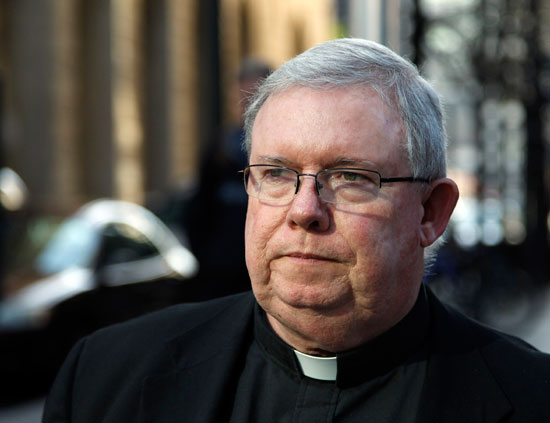
New York Times /PHILADELPHIA — In an emotional summary after more than two months of testimony, the prosecution in a landmark sexual-abuse trial said here on Thursday that overwhelming evidence showed that a Roman Catholic Church official had shielded predatory priests, lied to parishioners and victims, and exposed innocent children to abuse. 
But a defense lawyer for the official, Msgr. William J. Lynn, told the jury that Monsignor Lynn had done all he could to protect children within his limited powers and that he deserved praise rather than condemnation.
Monsignor Lynn, 61, as secretary of the clergy for the Philadelphia Archdiocese from 1992 to 2004, was responsible for priests’ assignments and for investigating abuse allegations. He is on trial for endangering minors and conspiracy to keep an accused priest in active ministry, charges that could carry a sentence of 10 ½ to 21 years.
He is the first Catholic Church official in the country to face criminal charges not for committing abuses himself, but for enabling abuses by playing down credible accusations and reassigning suspect priests to new parishes.
Government’s financial crisis hits commercial banks
Saturday, 02 June 2012
A decision has been made to utilize the investments and deposits in commercial banks for state development programmes. Investment deposits in commercial banks are considered as assets of the banks.
Commercial banks are classifies as weak financial institutions when their investment deposits decline.
However, the government’s decision has placed commercial banks in a risk. The government has decided to use these monies in road development projects and it is learnt that these financial institutions are faced with a huge crisis due to the problems faced in regaining the monies.
Speaker urged to table Govt’s Action Plan on LLRC proposals to US

June 1, 2012,
article_image
by Zacki Jabbar

The government’s Action Plan, on the Lessons Learnt and Reconciliation Commission (LLRC) recommendations, which was submitted in secrecy to the US recently, should be tabled in parliament, the UNP has told the Speaker Chamal Rajapaksa.

Lakshman Kiriella MP, in a written communication to the Speaker yesterday, said that a delegation headed by External Affairs Minister, Prof G. L. Peiris had met the US Secretary of State Hillary Clinton in Washington on or around May 18, 2012 and submitted the government’s Action Plan on the LLRC proposals, while denying the legislature and general public their inalienable right to know its contents.

The Action Plan, which stemmed from the US Resolution on Sri Lanka on Accountability and Reconciliation, that was adopted by the United Nations Human Rights Council on March 22, should have been submitted to parliament first, he said while noting that there could not be secret negotiations on national issues.

The proper procedure would have been to permit the legislature to debate the proposed programme of action, before making secret pledges to the US, UN or any other foreign organization, the MP observed.

Kiriella said that the government, which accuses the UNP of being traitors at the drop of a hat, was dancing to the tune of the Obama administration, while claiming that it would not allow foreigners to dictate terms.

The US Resolution called on the Sri Lankan government to implement an Action Plan for the UN Human Rights Commissioner to work in consultation and with the concurrence of Sri Lanka, in implementing the LLRC proposals.

Friday, June 1, 2012


Friday, 01 June 2012 00:01

United National Party (UNP) front-liner Wijedasa Rajapakse yesterday submitted a Private Member’s Bill asking that Sri Lanka’s Constitution be amended to prevent a priest of any religion becoming a member of parliament.

Mr. Rajapaksa said this Act may be called the 19th Amendment to the Constitution. “The Article 91 of the Constitution be amended by adding the Article 91 (H) Priest of any religion,” it said. The Bill also mentioned that the, ‘Amendment shall come into operation soon after the expiry or the dissolution of the 17th Parliament.’

Mr. Rajapakse said he had decided to bring this amendment for the purpose of maintaining and preserving religious dignity and holiness of all religions.


Breaking News:Chief Sanghanayaka Thera Of Great Britain Sentenced To 7 Years In Prison For Child Abuse 


By Colombo Telegraph -June 1, 2012
Colombo TelegraphChief Sanghanayaka Thera of Great Britain and chief incumbent of the Thames Buddhist Vihara, Parivenadhipathi of the Vidyaravinda Pirivena, Pahalagama, Gampaha and Chief Lekakhadhikari of the Sri Kalyani Samagi Dharma Maha Sangha Sabha has been convicted of four counts of indecent assault on a underage, sentenced to 7 years in prison a judge ruled today. He is also banned for working with children for life and his name is added to sex offenders register for life, a court spokesman told Colombo Telegraph.
Pahalagama Somaratana
Monk Pahalagama Somaratana, 65, of Dulverton Road, Croydon was convicted at Isleworth Crown Court on 1,  May, of four counts of indecent assault on a female under 16 between January 01, 1977 and December 31,1978 at an address in Chiswick.
He was found not guilty of the rape of a female under 16 between January 1,1977 and December 31,1978 at an address in Chiswick and not guilty of indecent assault on a female under 14 between January 01,1985 and December 31, 1986 at an address in Croydon.
In May 2010 Child Abuse Investigation Command officers began an investigation into historical allegations of indecent assault and rape. On Tuesday, 14 September 2010 a (then) 64-year-old monk was arrested on suspicion of an historical indecent assault and rape. He was questioned at Heathrow police station and later bailed pending further enquiries
He was charged on 12 September 2011 and further charged on 11 November 2011.
On Friday, 23 September Pahalagama Somaratana,  chief incumbent of Thames Buddhist Vihara, of Dulverton Road, Croydon appeared on bail at Feltham Magistrates’ Court charged with rape of female under 16 between January 1, 1977 and December 31, 1978 at an address in Chiswick and indecent assault on a female under 16 between January 1, 1977 and December 31, 1978 at an address in Chiswick.
Pahalagama Somaratana , has been charged with another eight counts of sexual abuse on Friday, 11 November, the London Metropolitan police told Colombo Telegraph. According to the metropolitan police these eight indecent assaults on a female under 14 took place between January 01,1985 and December 31,1986 at an address in Croydon.The 65-year-old Pahalagama Somaratana thero appeared on bail at Feltham Magistrates’ Court on Friday, 2 December and was bailed to appear at Isleworth Crown Court on December 20, 2011.
To read Pahalagama Sri Somaratana Stories click here

SRI LANKA: An innocent man has been detained more than six months without being produced before any court or charged


AHRC LogoJune 1, 2012

ASIAN HUMAN RIGHTS COMMISSION-URGENT APPEAL PROGRAMME
Urgent Appeal Case: AHRC-UAC-093-2012
Dear friends,
The Asian Human Rights Commission (AHRC) has received information that Mr. Jesuthasan Tennisan Leon (27) has been detained in Boossa Detention Camp for more than six months without being produced before any court by the state authorities. Leon was abducted by the Liberation Tigers of Tamil Eelam (LTTE) in 2001, a period when many villagers in his location also faced the same fate. Leon was forced to undergo training by the LTTE.
In early 2009 he was able to escape the LTTE and returned to his parents and found employment. However, after his return he was followed by the officers attached to the Terrorist Investigation Department (TID). Later he learned that these officers gone to the Arpico office where he was working. Leon was tortured in custody and has been held in Boossa detention Centre for six months without being produced before a court of law or charged. This case is yet another illustration of the exceptional collapse of the rule of law in the country.
CASE NARRATIVE:    Full Story>>>  

SRI LANKA: An innocent man has been detained more than six months without being produced before any court or charged


K Shanmugam makes official visit to Sri Lanka


01 June 2012
SINGAPORE: Law and Foreign Affairs Minister K Shanmugam was in Sri Lanka for a four-day official visit.

During his trip, he visited Trincomalee, a port city in the Eastern Province and Jaffna, the capital city of the Northern Province.

Mr Shanmugam met the Governor of the Eastern Province Mohan Wijewickrama and Governor of the Northern Province G A Chandrasiri and other local leaders in both cities. 

The Foreign Affairs Ministry said they briefed him on their respective development plans and priorities. 

The focus in Trincomalee was in building up tourism, agriculture and fisheries. 

Mr Shanmugam also visited the Prima Flour Mill in Trincomalee.

Prima is the largest Singapore-based investor in Sri Lanka.

The ministry said in Jaffna, Mr Shanmugam saw a province that was slowly recovering from the decades-long conflict. 

He was briefed on the reconstruction and development efforts there.

In his meetings, Mr Shanmugam said Singapore would be happy to consider some technical assistance in capacity building, such as skills upgrading and teacher-training in computer literacy. 

While in Jaffna, he also visited the Jaffna Public Library.

In 2011, Singapore contributed a project to refurbish the Children's Section of the Library and provided training of Jaffna librarians. 

Mr Shanmugam said: "I am very happy to see that a project by Singapore is helping so many children in Jaffna. The local officials have asked for further assistance to enhance the library, including the library data management system.

"I promised them that Singapore will certainly help where we can, to build on our earlier contribution. This is a worthwhile project. It will have a great impact on the lives of the children of Jaffna."

Mr Shanmugam also visited a village which resettled displaced persons. He was briefed by local officials on the progress of resettlement. He visited some of the houses and talked to the inhabitants.

Minister Shanmugam said: "Rebuilding is taking place. The government and local officials are focused on reconstruction and helping the people find new livelihoods. The international community should do what we can to help them so that they can have a better future."

Earlier, Mr Shanmugam met his counterparts Minister of External Affairs Professor G L Peiris and Minister of Justice Rauff Hakeem on 30 May 2012 in Colombo.

Mr Shanmugam and Minister Peiris reaffirmed the friendly bilateral relations since the establishment of diplomatic ties in 1970. Minister Peiris updated Minister Shanmugam on post-conflict developments in Sri Lanka, and the steps taken by the government towards national reconciliation.

The two ministers agreed that there was scope for expanding linkages in the areas of trade and investment, technical assistance and people-to-people ties.

In his interaction with business leaders at the seminar cum networking session organised by the Singapore Business Federation and the Sri Lanka-Singapore Business Council of the Ceylon Chamber of Commerce on 30 May 2012, Mr Shanmugam shared their hope that the restoration of peace and reconciliation would bring about opportunities in trade and investment, education and tourism, which would mutually benefit people in both countries and bring about greater prosperity.

Mr Shanmugam and Minister of Industry and Commerce Rishad Bathiudeen jointly witnessed the signing of the memorandum of understanding between the Singapore Business Federation and the Sri Lanka-Singapore Business Council of the Ceylon Chamber of Commerce aimed at stepping up greater economic exchanges.

- CNA/ck
Incredible but true :World fuel prices down by 20 $– yet SL fuel prices shoot up again lastnight
Friday 1 of June 2012
(Lanka-e-News-01.June.2012, 3.00PM) Truth is stranger than fiction . Can you beat that ! , while the world market fuel prices have tumbled down on a record breaking scale , the fuel prices in SL have been raised yet again lastnight. Accordingly , the price of a liter of IOC super diesel has been raised from Rs. 118/- to Rs. 119/- , that is an increase of Rs.1/- , while normal diesel has shot up by Rs. 2/- per liter from Rs. 115/ - to Rs. 117/- 

What is most intriguing and disgusting from the point of view of the people who are being burdened daily as a routine by this ruthless regime is, why this increase in fuel prices at this juncture when the world market prices of a barrel of crude oil which was US dollars 108 in April had steeply plummeted to US $ 87.90 by now. That is when the price of fuel had declined by about US $ 20/- , why is the benefit of that price drop not passed on to the consumers who the Govt. burdens with price hikes immediately even when there is a price rise in fuel in the world market .
Those responsible for this say , these price hikes are necessitated even when the world market fuel prices have plummeted is because the value of the rupee has tremendously depreciated. The value of a dollar in SL Rs. is now 133.76 - fiscal mismanagement the cause.

The other reason they cite is ,in SL , imports of fuel has a 35 day time lag . Accordingly , the fuel which we are using today have been imported 35 days ahead. During that period, the price of a barrel of crude oil was US $ 117/- and that of refined oil was US $ 130/-. Hence when world prices dropped by a percentage subsequently , the local prices cannot be reduced, the Govt. Says

The Rights Of Women In The Post War Conflict: The Constitution And Its Guarantees


May 31, 2012
Colombo Telegraph
By Munasinghe Prasadika Sandamani -
Sri Lanka suffered enormously from the conflict between the government and the Liberation Tigers of Tamil Elam (LTTE) for more than 30 years resulting in economic, civil, political, social and cultural devastation. During the armed conflict a significant growth of continuous displacement resulted in more than a million people being internally displaced. Some of them were internally displaced within the districts that they inhabit whilst some were forced to leave the shores of their home and become refugees in countries such as India or other western countries. As a postmortem to the post war conflict, the male population has declined due to their disappearances or their involvement in the conflict which has resulted in their death and this has inevitably increased the female population in the North and East.
The main objective of this article is to discuss how far the constitution of Sri Lanka has gone to implement laws to address the rights of the women in the post war conflict with respect their religious, social and cultural differences. With this aim in mind the post war conflict experiences of women have been discussed. The first section of this report highlights the definition of constitutionalism and fundamental rights. Section two describes women rights and the main issues faced by women in the post war conflict. There is a brief review of the role of the Constitution and its crisis and I describe in overall terms of the world how far the post conflict problems have been solved. Government reforms and a conclusion are discussed in the last section.
What is a ‘constitution’?    Read More
Rwanda's Calllixte Nzabonimana gets life for genocide
BBC31 May 2012


Up to 800,000 people were killed in just 100 days
Grave of one of the victims during Rwanda's 1994 genocide
A former Rwandan youth minister has been given a life sentence after being found guilty of playing a key role in the 1994 genocide.
Callixte Nzabonimana was found guilty of genocide, conspiracy, incitement and extermination by the UN tribunal based in Arusha, Tanzania.
His lawyer told AFP he will appeal.
Ethnic Hutu militia and soldiers killed some 800,000 minority Tutsis and politically moderate Hutus in 100 days between April and June 1994.
Public incitement
""The trial chamber found that... Nzabonimana instigated the killing of Tutsis. It also found Nzabonimana guilty of entering into two separate agreements to kill Tutsis," the International Criminal Tribunal for Rwanda (ICTR) said in a statement.
The conviction of the former youth minister hinged on his participation, alongside other members of the government, in a meeting held on 18 April, 1994 in the town of Murambi, in the central Gitarama province.
This meeting led to "an agreement" between Nzabonimana and other ministers "to encourage the killing of Tutsis... with the specific intent to destroy, in whole or in part, the Tutsi population as such in Gitarama prefecture," the AFP news agency reports the court's verdict as finding.
The three ICTR judges ruled that Nzabonimana used public appearances in different parts of Gitarama to incite people to kill Tutsis.
"We will definitely appeal. The appeal hearing starts now," lead defence counsel, Vincent Courcelle-Labrousse, said.
Nzabonimana, 59, was arrested in Tanzania in February 2008.
The ICTR - set up in Arusha shortly after the 1994 genocide - is due to wind up its work by the end of 2014.
More evidence of Tamils facing torture - TAG
Friday, 01 June 2012
A report by the Tamil rights group, Tamils Against Genocide (TAG), provides primary evidence supporting the claims of torture against failed asylum seekers, and Tamils deemed to be political active.
Find report here.
See TamilNet article here.
One signed witness statement, which we should warn is extremely distressing, said:
"... about 5 CID officers beat me. And pushed me roughly and tightly. They hit my head against the wall and tore my T shirt off. Then one person untied the knots in my hand and ordered me to undress. They forced me to undress and then beat me left and right with their booted legs..."
"They tied my hands back again, spoke something in Sinhala, switched off the lights and locked me inside. The light switch was outside the room. I was locked alone in a small room. I was not given any food that day. I did not know what will happen to me ever after."
"After some time, they came in switched on the lights and opened the door. It should have been the following day. I wouldn't gage the time. I was lying naked on the floor. They came and kicked me with the boots. One of them spoke in broken Tamil. He said that I was a member of the LTTE because my family member was an important person in the LTTE."
"They beat me all over (my head, back and legs). I replied that I didn't know anything at all already screaming with pain. One of them spoke very bad Tamil and beat me with a big stick. He didn't want to my pleas and then they hit my genitals with their booted legs. I couldn't bear the pain and I fainted. I did not know what happened thereafter."
Speaking to TamilNet, Jan Jananayagam of TAG said,
"TAG's report presents these sources of evidence showing how failed asylum seekersmay face risks either simply by virtue of their status as failed asylum seekers, or due to imputed political opinion regarding LTTE involvement or support especially when returning from places such as the UK that traditionally have very active Tamil diaspora communities."

Union Station flooding shuts subway


The StarDylan C. Robertson
Staff Reporter


There will be no TTC rush-hour service at Union Station after flooding this afternoon, according to TTC Chief Operating Officer Andy Byford
Shuttle buses are being co-ordinated after foot-deep water caused the TTC to suspend its transit hub service around 12:30 p.m.
Service is also halted along the Yonge-University-Spadina line between Osgoode and Bloor stations. The University line is still running to St. Patrick station. But streetcars on the 509 Harbourfront and 510 Spadina are turning back upon approach to Union Station.    Full Story>>>>

It is not just the diaspora or Tamil Nadu people who are up against Sinhala chauvinism
  By A Correspondent
  
02 Jun 2012
A CorrespondentPosted 01-Jun-2012
Vol 3 Issue 22
Three years after the Mullivaikkal massacre, Tamils are beginning to assert their rights in Sri Lanka in spite of continuing incidents of state oppression, and increasing militarisation of their homeland.

Last Sunday, thousands of people defied threats by the Sri Lankan armed forces and attended a protest meeting in Mannar town to condemn the industry and commerce minister Rishad Bathiudeen’s outrageous outburst against the Bishop of Mannar, Rayappu Joseph in Parliament.
An eyewitness said about 5000 – 6000 people attended last Sunday’s meeting in Mannar
The minister had compared the Bishop to Ven Innamaluwe Sumangala Nayak Thero, a Buddhist monk from the Golden temple in Dambulla who in late April had backed a Buddhist mob that attacked a mosque.

An eyewitness said about 5000 – 6000 people attended last Sunday’s meeting in Mannar, turning it into one of the largest public meetings post-Mullivaikkal massacre.

Tamil politicians who participated included TULF leader, V. Anandasangari, Parliamentarians Sivasakti Anandan (Vavuniya MP), Selvam Adaikalanathan (Mannar MP), Vino Noharathalingam, (Vanni district MP), Suresh Premachandran, (Jaffna MP), and former Parliamentarians, Selvarasa Gajendran, and P. Soosaithasan.     Read More 
Boycott unfriendly High Commissions – Regime chief tells central SLFP working Committee
Friday 1 of June 2012
(Lanka-e-News-01.June.2012, 3.00PM) The regime chief at the SLFP working Committee meeting held a few days ago ,had given instructions to boycott functions of foreign missions which are unfriendly to the MaRa regime., according to reports reaching Lanka e news. 

The working committee is the highest body of the SLFP that takes party decisions. Even Johnston Fernando a powerful Minister in the Govt. who pole vaulted from the UNP has no place in the working committee , but Karuna Amman is a member of the Committee.
Nevertheless the regime chief had not identified the foreign missions which are hostile by names.

The seniors of the SLFP who have had cordial relations with the foreign Commissions for a long time are however carrying on their friendliness with them regardless without following the SLFP policies which are destructive and distorting. The senior SLFP ers are exchanging views with those High Commissions in a most cordial manner. 

The regime chief who is presently obsessed to the point of madness with how to prolong his life as ‘ Ayubowewa great King’ has given the order mentioned in the foregoing paragraphs.

At the same time , the regime chief had told at the Central working committee meeting that “our Minister G L had returned after visiting America and ‘shaping up’ (resolved ) the LLRC issue.”
However the program that was forwarded to Hilary Clinton had not been presented to the Central working committee. The regime chief had then drawn attention to the forthcoming elections in the Eastern and Sabaragamuwa provinces at the meeting.

The regime chief who is steeped in superstitions and governed by astrological calculations , is now of the view that he is going through a bad patch . In order to escape from this unpropitious period, he is making arrangements to make another foreign tour and be abroad until his un propitious period fades away, reports say.

One Law For Julian Assange , Another For War Criminal Pinochet


June 1, 2012   By  -

Amy Goodman
Colombo TelegraphWikiLeaks founder Julian Assange‘s protracted effort to fight extraditionto Sweden suffered a body blow this week. Britain’s supreme court upheld the arrest warrant, issued in December 2010.
After the court announced its split 5-2 decision, the justices surprised many legal observers by granting Assange’s lawyers an opportunity to challenge their decision – the first such reconsideration since the high-profile British extradition case from more than a decade ago against former Chilean dictator Augusto Pinochet. The decision came almost two years to the day after Private Bradley Manning was arrested in Iraq for allegedly leaking hundreds of thousands of classified US government documents to WikiLeaks.
The cases remind us that all too often whistleblowers suffer, while war criminals walk.
Assange has not been charged with any crime, yet he has been under house arrest in England for close to two years, ever since a European arrest warrant was issued by Sweden (importantly, by a prosecutor, not by a judge). Hoping to question Assange, the prosecutor issued the warrant for suspicion of rape, unlawful coercion and sexual molestation. Assange offered to meet the Swedish authorities in their embassy in London, or in Scotland Yard, but was refused.
The UK supreme court gave Julian Assange 14 more days to fight his extradition to Sweden. Photograph: Kirsty Wigglesworth/AP
Assange and his supporters allege that the warrant is part of an attempt by the US government to imprison him, or even execute him, and to shut down WikiLeaks. In April 2010, WikiLeaks released a US military video under the title Collateral Murder, with graphic images showing an Apache helicopter unit killing at least 12 Iraqi civilians, including a Reuters cameraman and his driver. In July 2010, WikiLeaks released the Afghan war diary, tens of thousands of secret US military communications that laid out the official record of the violent occupation of Afghanistan, the scale of civilian deaths and likely war crimes. The Swedish arrest warrant followed just weeks later.
So many public figures have called for Assange’s assassination that a website was created to catalogue the threats. Former Arkansas governor, presidential candidate and Fox News commentator Mike Huckabee said that, for Assange, “anything less than execution is too kind a penalty”. Prominent conservative Bill Kristol asked:
Jonathan MillerChannel 4 News
Jonathan Miller Foreign Affairs Correspondent
Last-minute reprieve for Sri Lankan deportees

Scores of Sri Lankans, due to have been deported from the UK on a government charter flight on Thursday afternoon, have had their removal orders overturned by high court judges.

About 40 failed asylum-seekers - most of whom are thought to be Tamils - were granted dramatic last-minute stays.
Immigration lawyers ascribe the judges' apparent change of heart to serious concerns over Sri Lanka's dismal human rights record and the risk that those forcibly returned face arbitrary arrest and torture. The judgements affected around half of the estimated 70 to 80 Tamils due to have been sent back to Sri Lanka on flight PVT030 from Stansted.
Two senior barristers with the London-based Renaissance Chambers, which specialises in human rights and immigration law, say the judgements are very unusual. Nishan Paramjorthy and Shivani Jegarajah say they represent a judicial shot across the bows of the British government.
"Judicial attitudes have changed," said Mr Paramjorthy. "Previously hard-line judges are granting stays, mostly on grounds of risk upon return."
Channel 4 News has obtained a copy of one judgement, by the Honourable Mr Justice Eady, which cites as the reason for his granting a stay of removal: "The recent Human Rights Watch report, dated 29.05.2012 suggests that there may be new evidence relevant to the risk of ill treatment."
We are unable to publish the document because the proceedings are ongoing and live.
The High Court judge orders "that the secretary of state be restrained from removing the applicant from this jurisdiction." Today's flight was the fifth British government charter flight to Sri Lanka since June last year. The flights are shrouded in secrecy and the UK Border Agency has a policy of not commenting on them. Full Story>>>