

11 years today - Thousands killed in one day

 08 May 2020
Marking 11 years since the Sri Lankan military onslaught that massacred tens of thousands of Tamils, we revisit the final days leading up to the 18th of May 2009 – a date remembered around the world as ‘Tamil Genocide Day’. The total number of Tamil civilians killed during the final months is widely contested. After providing an initial death toll of 40,000, the UN found evidence suggesting that 70,000 were killed. Local census records indicate that at least 146,679 people are unaccounted for and presumed to have been killed.
See more at www.RememberMay2009.com, a collaborative project launched last year, between the Adayaalam Centre for Policy Research, Tamil Guardian and 47 Roots.
10th May 2009
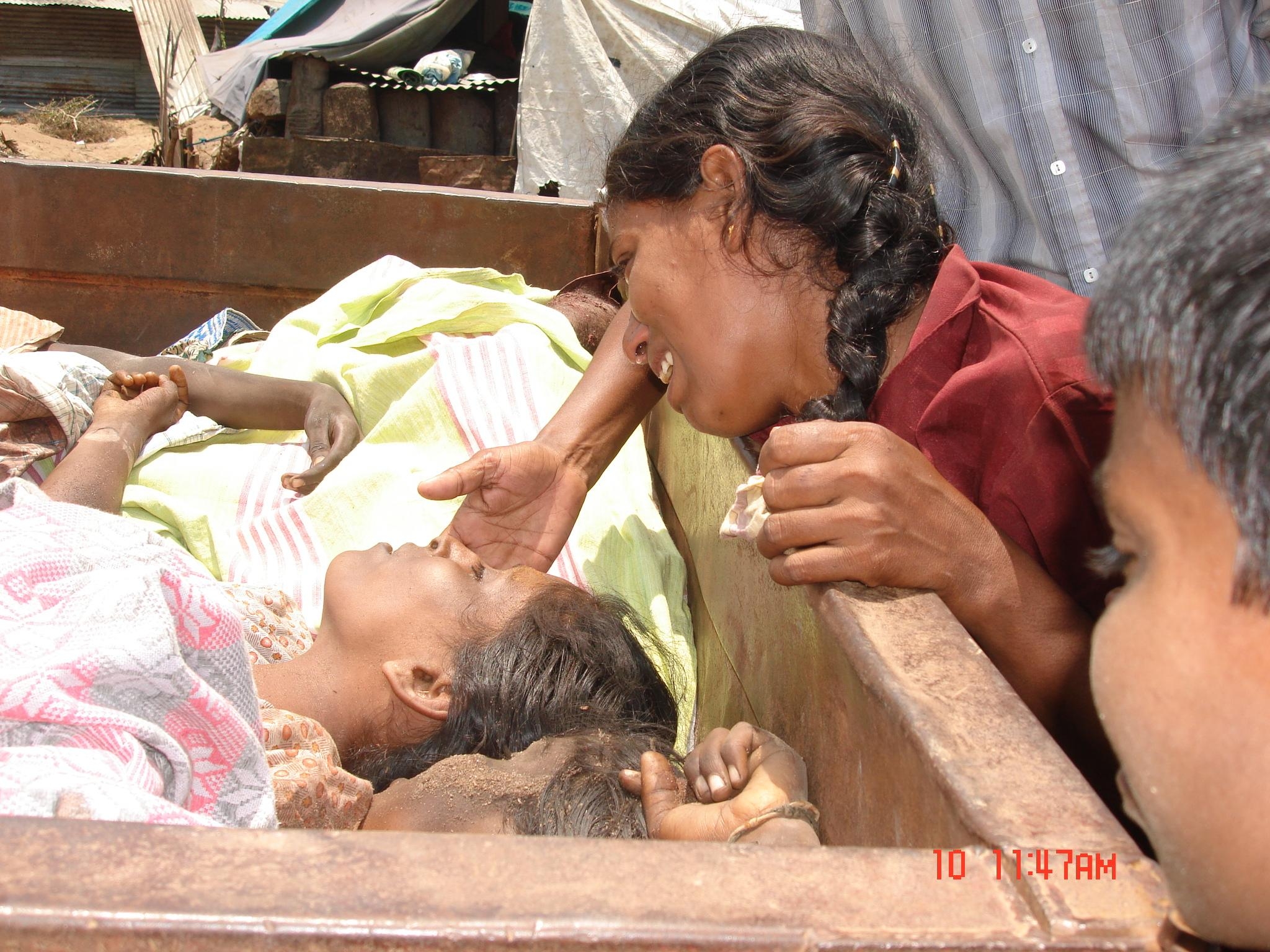 Photograph: A Tamil woman mourns, after her relative was killed in a Sri Lankan military attack on May 10th 2009.
Thousands killed in one day
As many as 2,000 civilians were reportedly killed in a barrage of artillery fire by the Sri Lankan military throughout the day, reports TamilNet.
“Dead bodies are found in bunkers and inside the tarpaulin tents,” TamilNet added.
Photograph: A Tamil woman mourns, after her relative was killed in a Sri Lankan military attack on May 10th 2009.
Thousands killed in one day
As many as 2,000 civilians were reportedly killed in a barrage of artillery fire by the Sri Lankan military throughout the day, reports TamilNet.
“Dead bodies are found in bunkers and inside the tarpaulin tents,” TamilNet added.
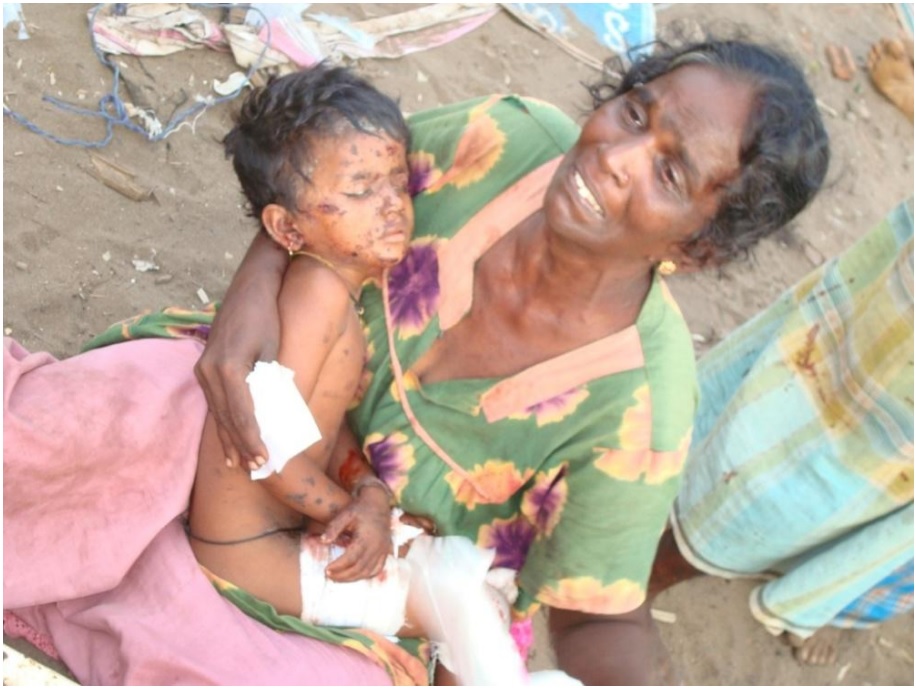 Rescue workers had counted at least 1,200 bodies with fears that many more had been undiscovered.
See more here. (Graphic images)
Rescue workers had counted at least 1,200 bodies with fears that many more had been undiscovered.
See more here. (Graphic images)
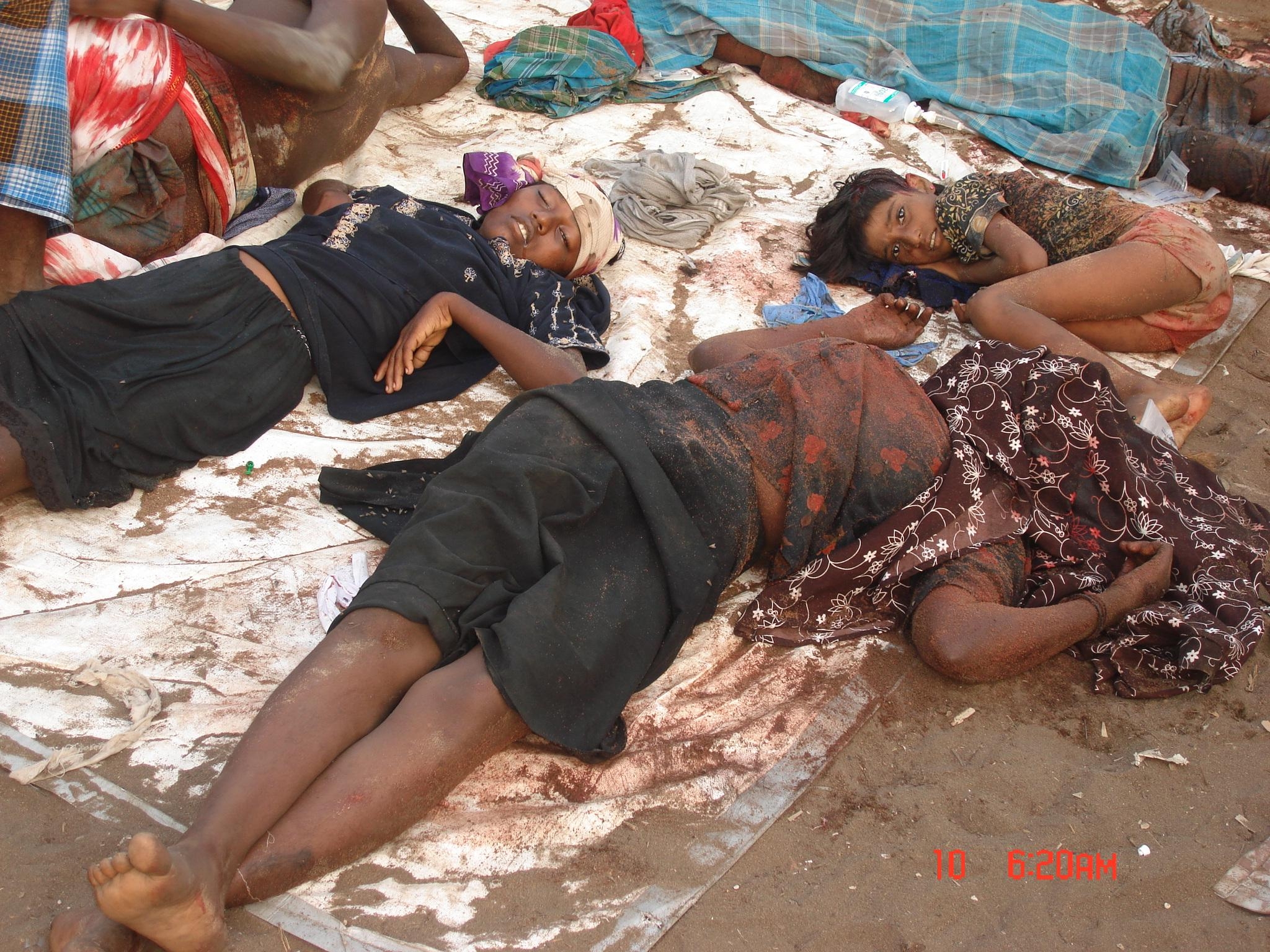 Photographs: The aftermath of intense shelling by the Sri Lankan military on May 10th 2009.
The US State Department quoted a local source in the NFZ as reporting that “a congested civilian area was under heavy shell attack with many houses and vehicles burning”.
Photographs: The aftermath of intense shelling by the Sri Lankan military on May 10th 2009.
The US State Department quoted a local source in the NFZ as reporting that “a congested civilian area was under heavy shell attack with many houses and vehicles burning”.
“Many civilians’ temporary tarpaulin houses were struck by shells, and many hundreds of civilians were killed.”
“A local source for an organization also reported heavy shelling with an estimated 1,000 killed and another estimated 1,000 injured. Embassy Colombo also reported that heavy shelling occurred in the NFZ, killing at least 300 civilians.”
“More bodies were on the beaches and along road sides. The source said that heavy arms appeared to have been fired from government-controlled territory into a mainly civilian area under LTTE… The death toll is thought to be closer to 1,000; many of those killed would have been buried in the bunkers where they were slain, and many of the gravely wounded never made it to the hospital for treatment.”
A leaked US embassy cable notes,
The Embassy has credible information that the Sri Lankan Air Force conducted an air strike south of the civilian safe zone yesterday afternoon, May 10.
Read the full cable here.
Satellite evidence
Satellite imagery analysed by the American Association for the Advancement of Science at the request of Human Rights Watch and Amnesty International showed evidence of bomb shell craters, destroyed permanent structures, mortar positions, and 1,346 individual graves, from May 6th to May 10th 2009.
“Many civilians’ temporary tarpaulin houses were struck by shells, and many hundreds of civilians were killed.”
“A local source for an organization also reported heavy shelling with an estimated 1,000 killed and another estimated 1,000 injured. Embassy Colombo also reported that heavy shelling occurred in the NFZ, killing at least 300 civilians.”
“More bodies were on the beaches and along road sides. The source said that heavy arms appeared to have been fired from government-controlled territory into a mainly civilian area under LTTE… The death toll is thought to be closer to 1,000; many of those killed would have been buried in the bunkers where they were slain, and many of the gravely wounded never made it to the hospital for treatment.”
The Embassy has credible information that the Sri Lankan Air Force conducted an air strike south of the civilian safe zone yesterday afternoon, May 10.
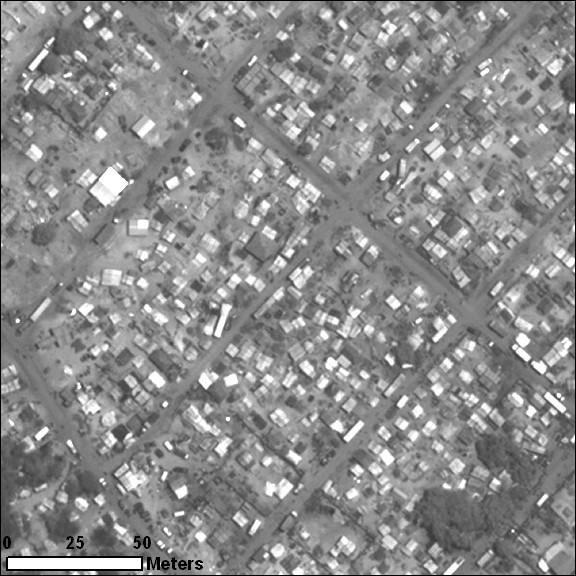 | 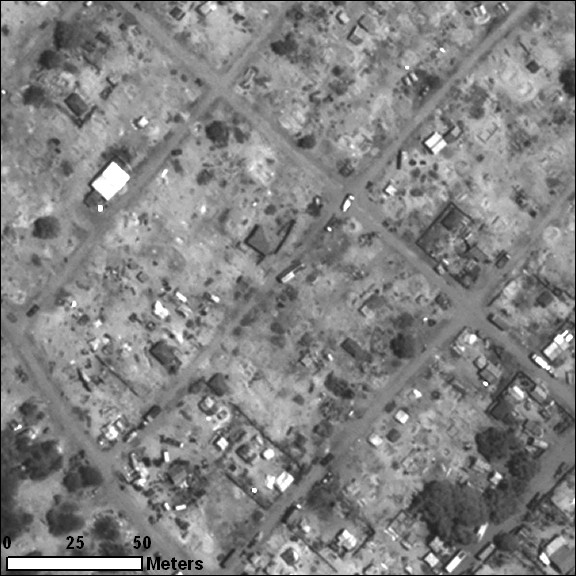 |
IDP tents inside the No Fire Zone on May 6th (left) and May 10th (right). There is almost complete removal of all structures that were present.
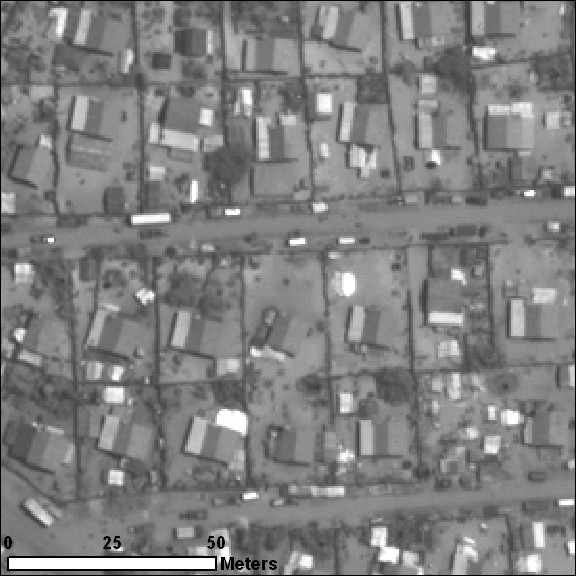 | 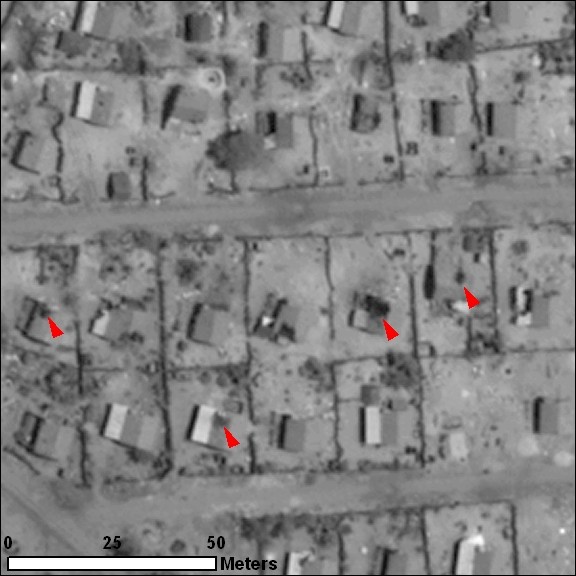 |
Red arrows indicate craters from possible artillery or air fire from May 6th (left) and May 10th (right).
Further analysis of crater morphology shows evidence of fire in a similar tactic to that described in a US Army field manual.
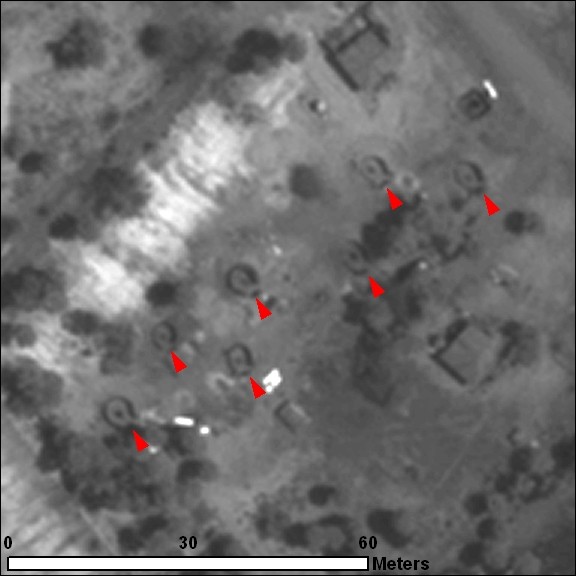 | 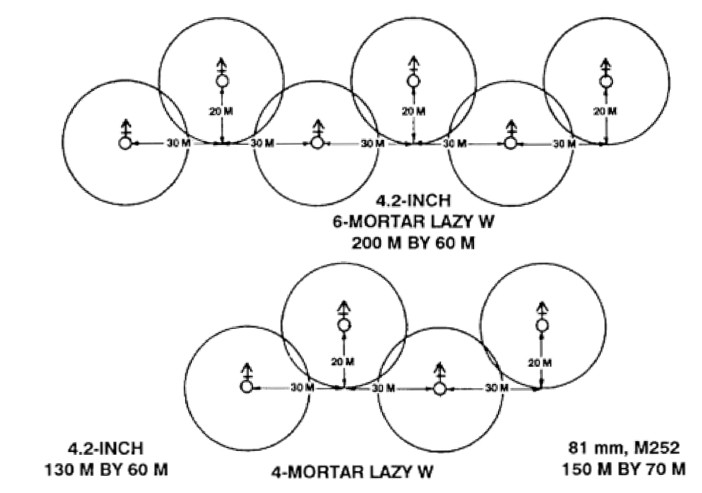 |
Possible mortar craters landing in a 'Lazy W' formation (left) as detailed in a US military manual (right).
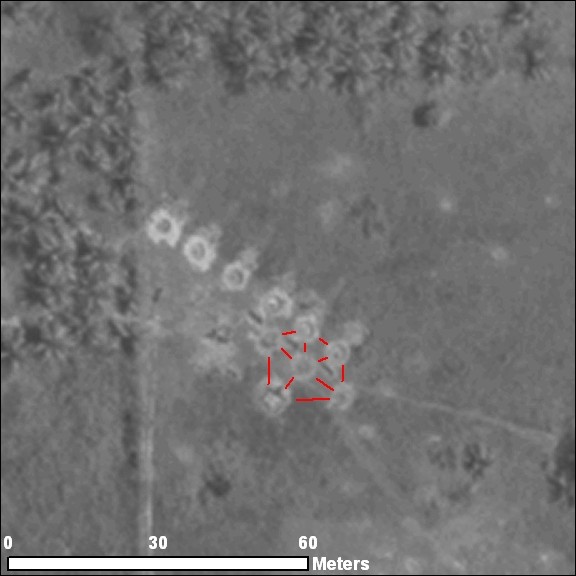 | 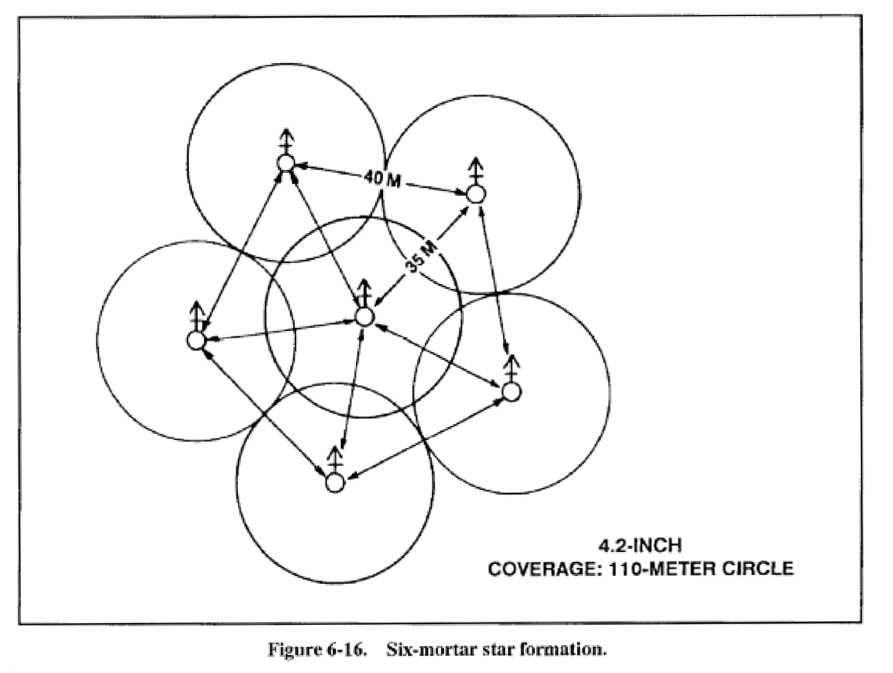 |
Possible mortar craters landing in a 'Six Star' formation (left) as detailed in a US military manual (right).
‘The Tamil people are dismayed’
The LTTE released a statement stating,
“At this very moment (Sunday, May 10 2009), the Sri Lankan Government has unleashed its ferocious military aggression against the hapless Tamil civilians living in the so-called "Safe Zone" in Vanni, Sri Lanka. More than 2,000 innocent civilians have been killed in the last 24 hours. The wholesale bombardment by Sri Lankan planes and shelling on a densely populated, non combatant civilian safe zone is state terrorism and a war crime.”“The international community and UN have an obligation to protect the Tamil people facing genocidal aggression directed in a manner against all international humanitarian laws. It is clear that the Sri Lankan Government has prevented all aid agencies and humanitarian organisations from visiting the conflict zone. The Tamil people are dismayed that the United Nations and the International Community have failed in their obligations to protect the endangered civilians.”“Every passing day is resulting in the loss of countless number of civilian lives and alienation of the entire Tamil community.”
'It is a genocidal war'
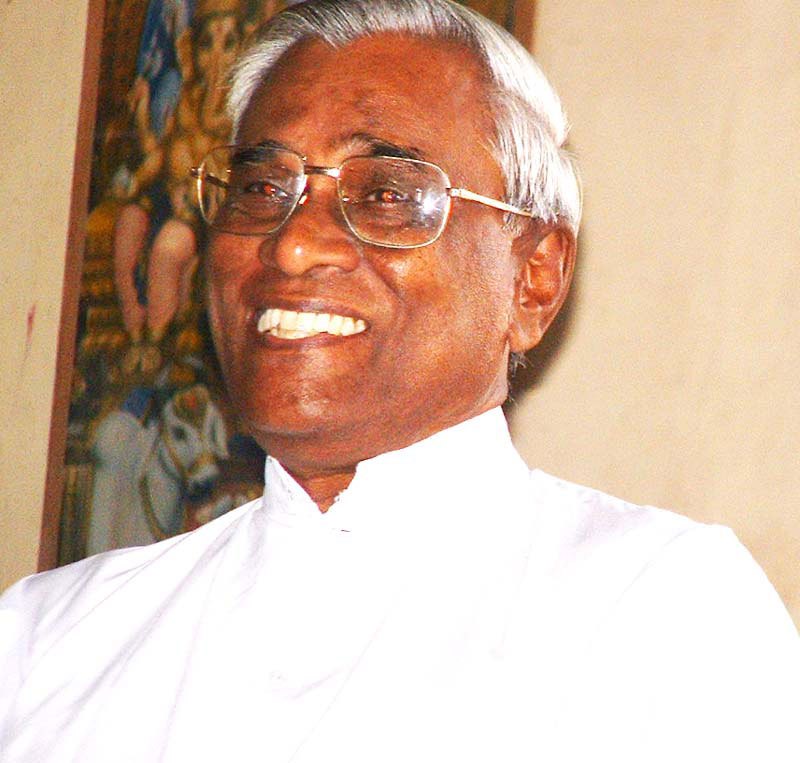
Catholic Priest Father Francis Joseph writes to the Pope from inside the No Fire Zone, calling on the Church to break its silence on the massacre of Tamils. The father, who was later detained by Sri Lankan security forces after passing through a military checkpoint in May 2009, has not been seen since.
Extracts of his letter are below.
Last night’s toll of the dead is 3318 and of the injured more than 4000. It was a barrage of artillery, mortar, multi-barrel shelling and cluster bombs…The cries and woes of agony of babies and children, the women and the elderly fill the air that was polluted by poisonous and unhealthy gases…I deem it my duty to point my finger at the Church for its silence while some of the countries like USA, UK, France and some of the European Union countries and others, even the UN have voiced their dismay at the way the Sri Lankan Government is conducting a war to annihilate the Tamils…Let it be known that under the guise of eradicating terrorism, the Sri Lankan Government is waging the war to annihilate the Tamil nation. It is a genocidal war.
See the full text of the letter here.
Tamil diaspora continues protests
Protests continued in capitals across the world, where the Tamil diaspora had taken to the streets to demand a ceasefire.
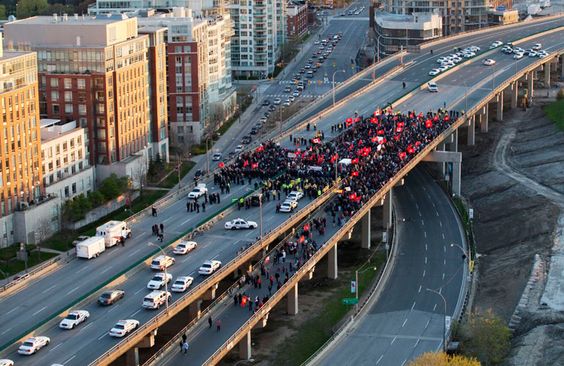
Photograph: Tamil Canadians protest on the Gardiner Expressway on May 10th 2009.
Tamils in Canada including women and children, held a peaceful protest, blocking the main Gardiner Expressway that runs through the city.
Sri Lanka deports 3 British journalists
"It's not often that the most powerful man in the country rings you," Channel 4's Nick Paton Walsh said.
"I'd spoken amicably to defence secretary Gotabaya Rajapaksa 45 minutes earlier about getting some better access to Sri Lanka's 25 year war. But this time he was calling me, and seemed to have remembered something."
"Who is this? You rang me earlier? Is this Channel 4? You have been accusing my soldiers of raping civilians? Your visa is cancelled, you will be deported. You can report what you like about this country, but from your own country, not from here," Gotabaya told Walsh.
India Congress President Sonia says now 'people moved to safer places'
India's Congress President Sonia Gandhi, is in Tamil Nadu, where she says, "our government had done everything possible to bring an end to the hostilities and it was due to our resolute efforts that Sri Lanka announced conclusion of combat operations and people moved to safer places."
"Our ultimate goal, as Prime Minister Manmohan Singh had said and as has been the stand of the Congress in the last 30 years, is to secure for the Tamils equals rights and status within the framework of the 1987 Indo-Sri Lanka accord."
9th May 2009
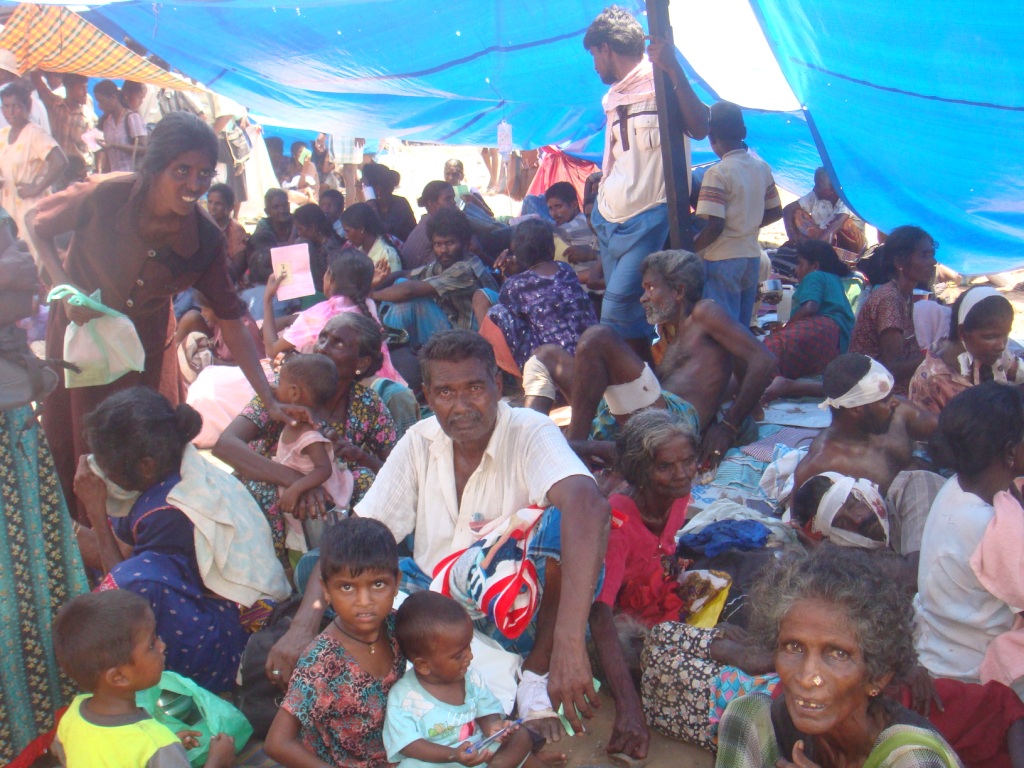
‘Artillery from all directions’
The US State Department quoted a local as stating that the No Fire zone “received artillery fire from all four directions for over 12 hours”.
“He estimated that over 1,000 were killed and another 1,000 injured.”
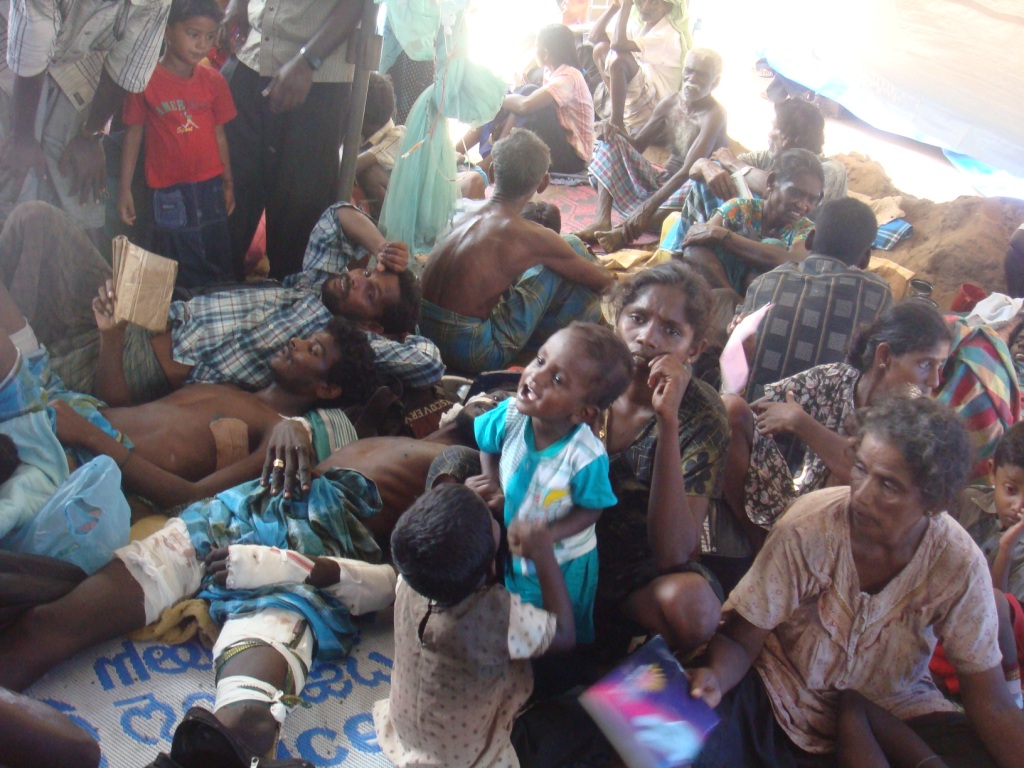
Human Rights Watch reported two witness testimonies from the day.
"K. Kanaga," a 35-year-old woman whose name is withheld for security reasons, said that around 7 p.m. on May 9, she and 15 others were hiding in a bunker that they had built under a tractor when a shell struck the tractor. "If it hadn't been for the tractor, we would have all been dead," she said. About eight to 10 shells struck the immediate area, which was populated with tents and improvised bunkers. Kanaga's 45-year-old cousin was staying in a tent nearby; she never reached the bunker and was killed in the attack. "Many other people were injured as well, but I don't know how many," Kanaga said. "I could hear their screams."
"R. Raman," 29, said that he and his family had been hiding in their bunker in Mullaivaikal - a dug-out trench without any cover - for several days. "We were being attacked from all sides," he said. "My wife and I only left the bunker to get food and water for our three children."Early in the morning on May 9, a shell struck one of the tents closeby, killing Raman's 15-year-old nephew and wounding his nephew's older brother and sister. Raman believes that the shell came from Sri Lankan army positions and may have been targeting LTTE forces that were deployed in the jungle about 100 meters away. Several shells struck the tented area inhabited by displaced civilians.
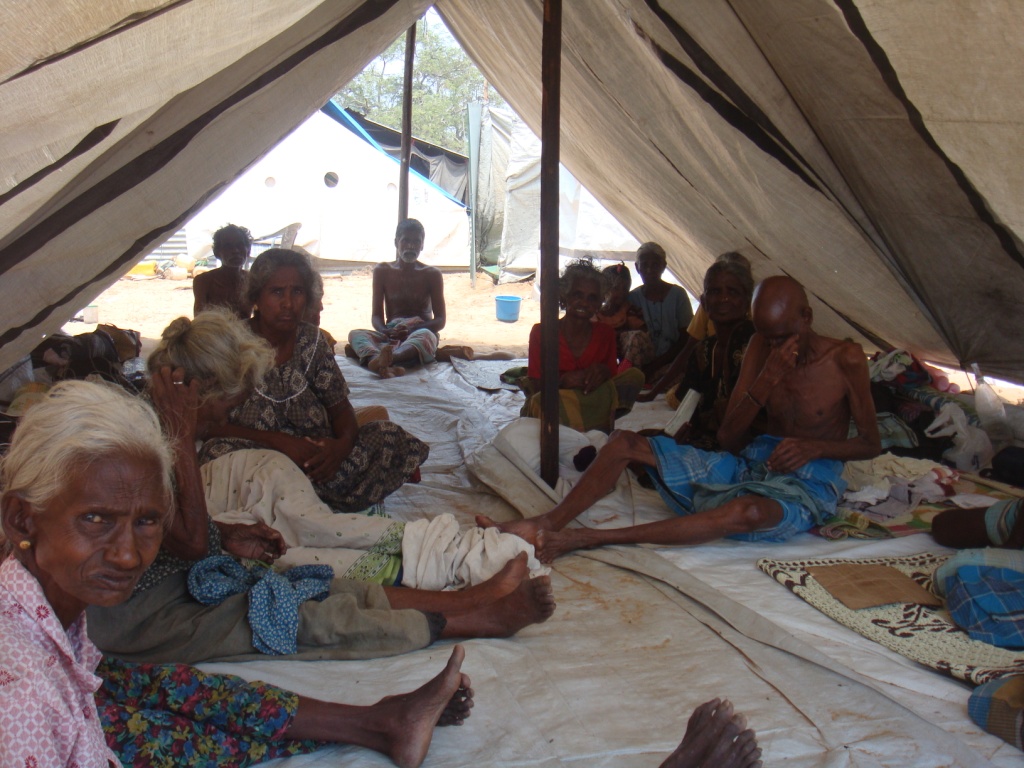
Photographs above: A makeshift hospital pictured on May 9th 2009.
Barrage hits NFZ as last ICRC ship leaves
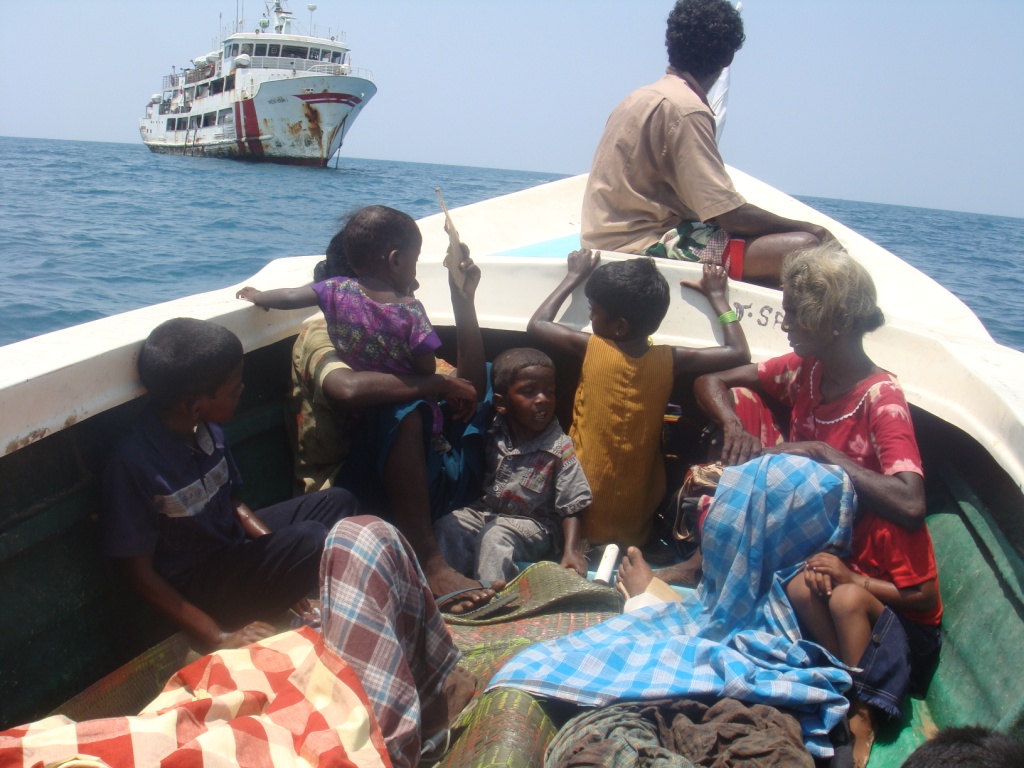
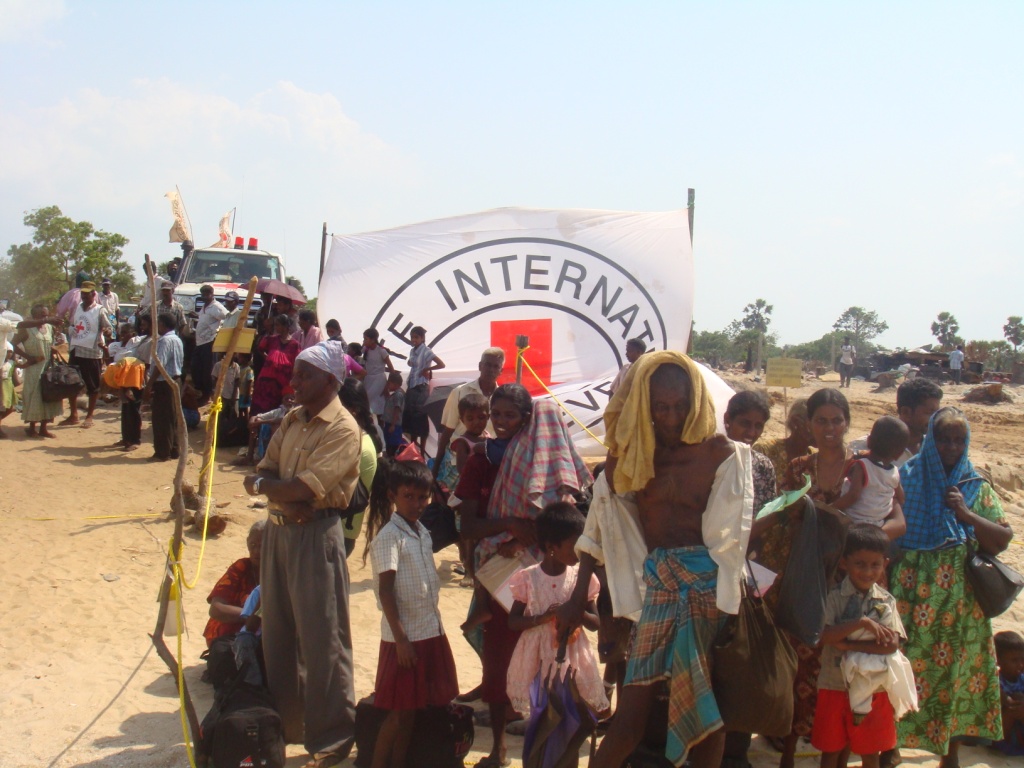
The Sri Lankan military launched a barrage of heavy weapon fire in to the No Fire Zone as the last ICRC-chartered ferry that visits the conflict area leaves.
“Fighting also made it impossible for the ferry to approach the shore on the previous day, 8 May,” said an ICRC press release.
"The plight of the people remaining in the combat area is desperate, " said ICRC's head of delegation in Sri Lanka, Paul Castella.
"We need unimpeded access to them in order to save lives. "
Head of Sri Lankan army visits Vanni
Then Commander of the Army Lieutenant General Sarath Fonseka flew to Vavuniya to meet with senior military commanders and “review the latest developments of the security situation in Vanni areas,” reports the military.
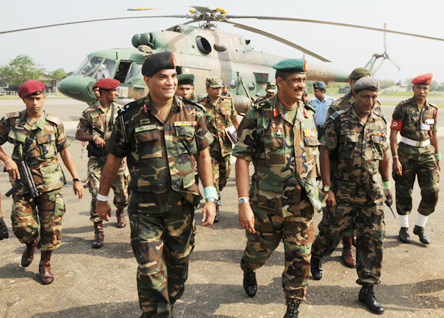
Photograph: Sarath Fonseka visits the Vanni, with other senior military officials on May 9th 2009.
"Army Commander, after being received by Commander Security Forces Headquarters Wanni (SFHQ-W) Major General Jagath Jayasuriya, was conducted to the SFHQ auditorium where he met senior ground commanders and discussed the present security situation in Wanni. He also issued further instructions to his ground commanders," said an official military website.
British Channel 4 journalists arrested
Sri Lanka arrests three British journalists from Channel 4 News, after they compiled a report on the conditions of war refugees and alleged sexual abuse in camps for those who fled the northern war zone.
