

How To Spot A Potential Public Intellectual

By Rohan Samarajiva –March 18, 2017
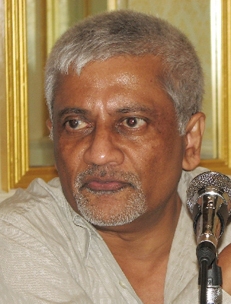
Prof. Rohan Samarajiva
Recently I wrote about who a public intellectual is. This complementary piece seeks to attenuate its pessimistic conclusion by suggesting some rules that may help gatekeepers perform their function better.
Today, all sorts of people are positioned as public intellectuals by gatekeepers of various kinds, principally those in the media. Because one cannot become a public intellectual without the public having an opportunity to assess one’s intellectual contribution, getting through the gatekeepers is critical. I expressed doubt about whether our gatekeepers had the wherewithal to exercise their power in a responsible manner.
What rules of thumb or filters may an editor or equivalent apply to choose between different intellectuals seeking opportunities to communicate to the public? The public’s attention is limited; and so is the “speaking time” that could be offered. Giving time on TV/radio or space in an online or print publication necessarily involves judgment. One putative intellectual gets the opportunity; another does not. How should that judgment be exercised?
The easiest rule, or the first filter, is to see whether the intellectual is basing his or her contribution on some kind of evidence. Many of those who are permitted to make demands on the public’s limited attention do so on the basis of who they are, and not on what they have to say.
The previous discussion, including Dr Siri Gamage’s contribution, ruled out the possibility that one could make a claim to be a public intellectual simply on the basis of holding a university appointment or an academic qualification. The first filter must therefore be not who the writer/speaker is, but what the writer/speaker has to say. Is it plain and pure opinion, unadorned by evidence? If yes, it should be excluded except in exceptional circumstances, discussed below.
What gets through the first filter must also get through the second. Is the presented evidence of adequate quality?
The second filter requires more effort. I recently described the problem:
A Professor from the country’s oldest Department of Mass Communication was asked to make some comments from the floor at a recent panel discussion I participated in. I was shocked to hear him say that the country needed an industrialization policy because we were importing vehicles that needed tyres manufactured abroad while we still exported raw rubber.
He appeared to be unaware that most of Sri Lanka’s rubber has been exported in value-added form as gloves, tyres, etc. for several decades and that their total value exceeded USD 1.7 Billion in 2014. He was ignorant of the facts that Sri Lanka is the world’s leader in solid rubber tyres and actually imports rubber to meet the demand for the tyre factory. This was just one of the misstatements the Professor made.
Other examples are the oft made claims about housemaids in the Middle East. It is no longer true to claim that we export more housemaids than skilled workers or that more women leave for short-term employment than do men. These erroneous claims are repeated ad nauseam by all sorts of so-called experts and are rarely challenged, adding to the pollution of public discourse.
The data necessary to fact check such claims exist on the web, but one must want to, and know how to, search for them.
But the costs of fact checking have been dramatically lowered by the Internet. Editors/producers do not have to pay for the contributions of the putative pundits. The least they can do is to spend some money and time checking the quality of the punditry and asking a few questions.
Some pundits will undoubtedly be offended on being challenged by editors/producers, especially because of the easy ride they’ve had so far. But in fact, they should be thankful. I have found that questions by journalists always sharpen my arguments and help me avoid mistakes.
The discerning reader should by now be asking whether this article would make it through the two filters. What evidence have I presented to support my recommendation regarding the application of two filters? Some may consider my factual claims to be illustrations, not amounting to evidence supporting the principal claims.
This is where the exception has to come in.
A writer/speaker with a track record of contributions that meet the criteria embodied in the two filters should be permitted to make contributions that are more opinion than evidence. These kinds of summative pieces have to be judged in relation to the overall body of work of the writer/speaker.
The exception should be based on the overall track record of the writer, which means that those who are in the early stages of making intellectual contributions would have to place more weight on evidence than those who have been in the game long. Sir Arthur C. Clarke supported his 1945 proposal for satellites in the geostationary orbit with mathematical calculations. When he was proposing a single time zone for the world in the last two decades of his life, he provided little or no evidence. In my view, he had earned that right.
Ideally, the editor/producer will apply some criteria of quality even to the opinion-heavy pieces. Is the argument well-constructed? Is it internally consistent? Is it consistent with the previous positions of the writer/speaker? Are the positions of others who are quoted being presented fairly?
