

The Story Of A Latent Management Trick

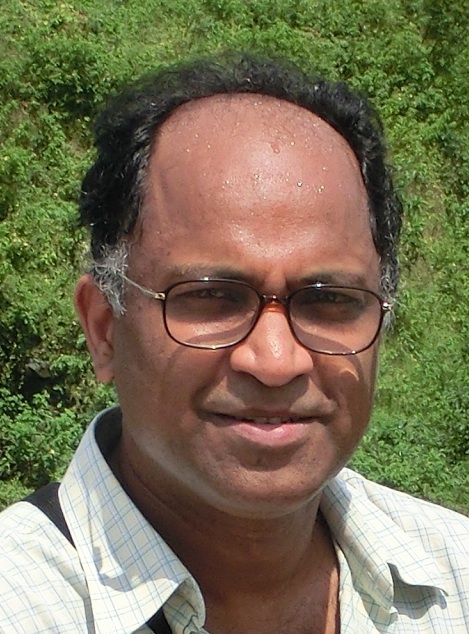
Prof. Mahesan Niranjan
At our drinking session in the Bridgetown pub yesterday, my regular partner, the Sri Lankan Tamil fellow Sivapuranam Thevaram, and I were joined by our countryman friend Polgahawela Aarachchige Don Soloman Rathmana Thanthiriya Bandarawela, known to anyone phonetically challenged as Pol. I might have introduced him before in these pages, but if not, from the length and structure of his name, you might easily infer he is from the Sinhala tribe in Sri Lanka. While this detail is not particularly relevant to our story today, you may wish to note that the meaning of the Sinhala word pol is coconut.
Our friend Pol moved to the UK in his early adulthood, naturalised and acclimatised rather easily, thanks to his fascination for the power and organisational skills of the Suddha (white man). “They come from a little island, but ruled the whole world, machan (buddy),” I remember him saying. While our own island of Sri Lanka – or Ceylon of those days – was under colonial rule for some 450 years, roughly equally split between the Portugese, Dutch and British, it is the last of the masters who impressed our friend Pol a lot. His ancestry managed to be dynamic – acquiring the names “Don” and “Solomon” along the way, and resetting now to “Bandarawela,” so as to gather the right political capital at the right time. Had not things turned out the way they did, with the Empire winding down, Pol might have even considered taking the hyphenated identifier “Crinkle-Bottom” as his surname.
It was during a coffee time conversation, when we had both just started as graduate students in Bridgetown, I learnt of Pol’s particular admiration for the Brits. We were chatting to Pierre Cardin, a mutual friend and fellow graduate student. Pierre, had great difficulty understanding the proof of an algorithm which Pol and I derived for him with ease on the back of a paper napkin.
“These guys don’t appear that smart, no?” I said to Pol, overly generalising the term “these guys” and not yet having learnt that in a civilised society I ought to behave and speak in a colour-blind and other-blind ways.
“But, Pierre is not a Suddha (white man), machan,” Pol said dismissively, “he is French!”
Later in life, settled in a very successful career in the UK, Pol continued to admire the Brits and adopted their ways with ease. The more he restricted his social circles to the affluent sections of the British society – private schooling for the children, membership of rather exclusive gyms, grocery shopping in Waitrose etc. – the greater his admiration became. He did notice societal problems around him but had ready explanations as to what their causes were: laziness leading to unemployment, immigration leading to housing crisis, lack of selection at the age of eleven leading to uneducated urchins loitering in the streets and social security leading to child birth were some of his pet theories. As such, Pol has morphed into a kind of Brit you will be uncomfortable meeting.
Last June, Pol voted for Brexit!
Yet, once in a while Thevaram and I catch up with Pol for a drink. That is our way of sampling how the other half thinks, if at all it does.
In the Bridgetown pub yesterday, Thevaram and I were deep in conversation about happenings back home. The appointment of the Vice Chancellor of UpNawth University in Sri Lanka was our hot topic. We thought the University’s Governing Body handled it rather badly. The gist of it is as follows: There were six applicants – five internal and one from Boston. The application from the external candidate arrived a day after the advertised closing date. The Unions of the proletariat and students appealed to consider a wider field of candidates including the Bostonian, but the Governing Body — which included the five candidates for the job — chose to stick to the rules: “a deadline is a deadline, just as in my undergraduate coursework,” one of its more articulate members is reported to have said. Much unhappiness over the issue has been vented in the pages of Colombo Telegraph recently.
“That wasn’t fair – there was conflict of interest,” shouted one side. “Oh, they are mounting a vicious campaign on this forum,” cried the other.
“At the end of the day, machan, the message was to keep the outsiders out,” Thevaram sighed. “Just like the posters I saw at the Parliamentary election in Nallur in 1977, in support of the local candidate: “Nallur nalluraanukkE” (Nallur is for the local chap), they said, no?”
