

SAITM Crisis: An Ugly Symptom Of A Dreadful Socio-Political Syndrome
 March 8, 2017
“Democracy and socialism have nothing in common but one word, equality. But notice the difference: while democracy seeks equality in liberty, socialism seeks equality in restraint and servitude” ~Alexis de Tocqueville
According to Wikipedia, ‘the South Asian Institute of Technology and Medicine (SAITM) was established in 2008 by Dr. Neville Fernando with the aim to provide tertiary qualifications in Medicine, Engineering and Information Technology, Management and Finance, and Information Communication Technology and Media. The institute was initially affiliated with the Nizhny Novgorod State Medical Academy (Russia), the Asian Institute of Technology (Thailand) and Buckinghamshire New University (England), awarding degrees through those respective institutes. In 2011 SAITM applied for recognition from the University Grants Commission (UGC) as a degree awarding institution, with the ability to award its own degrees. The UGC, in 2013, granted SAITM a degree awarding status despite protests from the Inter-University Students’ Federation (IUSF) and the Government Medical Officers’ Association (GMOA). SAITM held their first convocation in March 2013, conferring degrees to ten students from the Faculty of ICT and Media and eighteen students from the Faculty of Management and Finance.’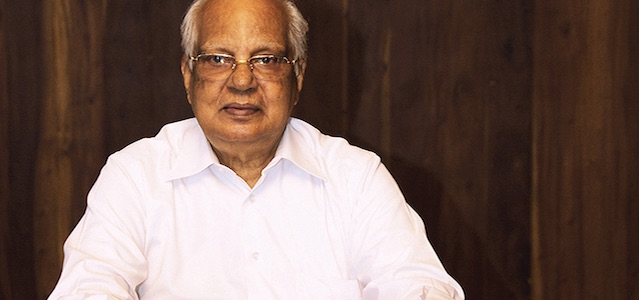
Neville Fernando – photo via Facebook SAITM
Today, SAITM is embroiled in a crisis-laden situation in which the two partners in the governing coalition are facing a decisive showdown, a showdown between two diametrically antagonistic socio-political schools of thought. While the United National Party (UNP) and its leader Ranil Wickremesinghe find themselves in the corner of private sector-backed open market economy, President Maithripala Sirisena and his Sri Lanka Freedom Party (SLFP) traditionally oppose private sector backed ventures in the sector of education, a subject they think has to be severely controlled and regulated by government with no quarter given and none asked for. The well-chronicled schools-takeover in 1962, its wholehearted support of Buddhist schools and portraying them as the vanguard of a nation determined to rise after 450 years of colonial rule, stands as monument to those socio-political policies in the sixties and seventies.
North Colombo Medical College, SITM’s de facto predecessor, another source of political trouble for any government, had one serious and determined backer in the then Executive President, J R Jayewardene. NCMC in fact made it a point to record its deep appreciation of those who helped to make the NCMC a fulltime working private Medical College. Aside from J R J, those who supported this novel education venture were Dr Stanley Kalpage as chairman of the University Grants Commission (UGC) and the then Secretary of Higher Education Prof Stanley Wijesundera and the academic staff of the University of Colombo. (Source: Wikipedia).
Janatha Vimukthi Peramuna (JVP), at the time led by firebrand Rohana Wijeweera launched a pitiless attack on the NCMC since its inception. Wijeweera had the full support of the left-wing political parties in Sri Lanka at the time and this issue of the NCMC was a sharp weapon in his hand and Wijeweera used it in his failed attempt to topple the government in the late eighties in his murderous and vicious campaign which was mistakenly called the ‘second revolution’ by some social scientists. Wijeweera’s attempt to portray NCMC as an agent of the capitalist class ended up in a bomb attack on its administration building in 1988. Yet the Board of Management of NCMC conferred its own medical degree MBBS (NCMC) instead of the one from the University of Colombo.
