

Is There A Case For A Private Medical School In The Health Planning Of Sri Lanka?

By Murali Vallipuranathan –March 10, 2017

Dr. Murali Vallipuranathan
Planning Human Resources for Health is vital for the development and efficient functioning of the health system of a country. As the issue of the private medical school in Sri Lanka has now become the hot topic of this country with more than 4000 doctors marched in a rally in Colombo against SAITM (South Asian Institute of Technology and Medicine) a private medical school a few days back and while President Maithiripala Sirisena has appointed an expert committee to solve this issue. I am writing this article to improve the awareness among the lay public and professionals. To make it easy to understand by everybody I am writing this article in the Frequently Asked Questions (FAQ) format:
Are we producing enough doctors in state medical faculties to cater the country’s needs?
Table 1 Number of medical graduates passed out from Sri Lankan Government Universities compared to the Population in Years 1991, 2001 and 2016 (2) 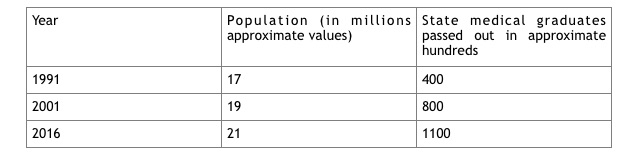 Above statistics in Table 1 clearly shows that over the last 25 years period though the population has increased approximately by 24%, annual production of state medical graduates has increased approximately by 275% during this period. In addition significant number of graduates qualified in foreign medical schools join the workforce of Sri Lankan Health sector more than replacing the local graduates migrating to other countries. The doctor population ratio has improved rapidly during the last 11 years period (3), (4), (5) as shown in Table 2.
Above statistics in Table 1 clearly shows that over the last 25 years period though the population has increased approximately by 24%, annual production of state medical graduates has increased approximately by 275% during this period. In addition significant number of graduates qualified in foreign medical schools join the workforce of Sri Lankan Health sector more than replacing the local graduates migrating to other countries. The doctor population ratio has improved rapidly during the last 11 years period (3), (4), (5) as shown in Table 2.
Table 2 Doctor per Sri Lankan population in years 2006, 2010 and 2014 ** Refers to doctors practicing Western Medicine employed in the Health Ministry (5)
** Refers to doctors practicing Western Medicine employed in the Health Ministry (5)
* Refers to doctors practicing Western Medicine employed in the Health Ministry (excluding doctors attached to universities and private sector)- Source: Annual Health Bulletin 2014
Though our doctor population ratio is below the developed nations we are still doing well among the developing nations with similar economies and our health indicators are much better than other developing countries with better doctor population ratio. A study (6) conducted in 2006 showed that Sri Lanka had a doctor population ratio of 55.2 per 100,000 population above Bangladesh (23) India (51) Nepal (05) but below Pakistan (66) and Malaysia (67). At present the Ministry of Health struggles to give appointment to employ all the medical graduates applying for job. A study conducted in 2006 showed that among the medical practitioners registered with SLMC about 70% were employed with health ministry, about 3% with Universities, about 12% with private sector and about 15% overseas (2). Further expansion of medical graduates passing from state medical faculties may lead to unemployment of doctors in the government sector. In such situation instead of joining the private sector, doctors will start migrating to more lucrative countries overseas because western countries offer much better employment opportunities to Sri Lankan medical graduates when compared to private sector in Sri Lanka. In this context if we take India as an example with the largest number of 460 medical schools in the region with more than 50% of the medical schools are private still remains with a doctor population ratio below Sri Lanka but has become the largest exporter of doctors with around 47000 Indian doctors practicing in US and around 25000 in UK (7). Therefore unless the economy of the country improve to support better doctor population ratio with more employment opportunities and better remuneration, just increasing the production of medical graduates in the country will not improve the doctor’s population serving in this country.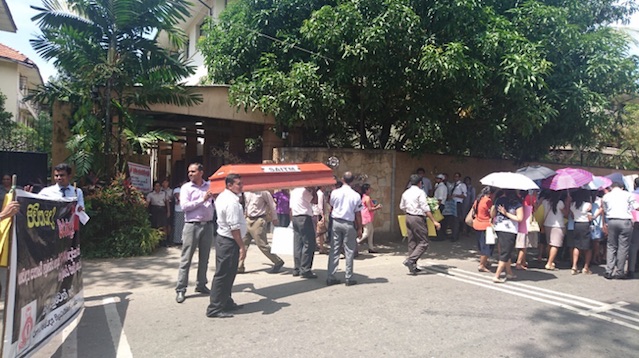
Then what is the problem with medical manpower of this country?
