

Yahapālana Neoliberal State Reforms Vs Democratic State Reforms

By Sumanasiri Liyanage –February 15, 2017
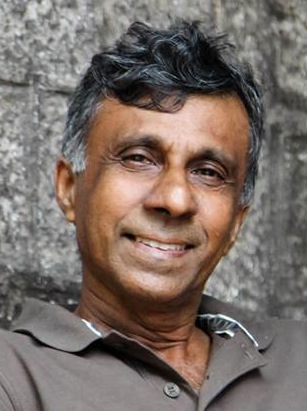
Sumanasiri Liyanage
A German friend of mine whom I met after 7 years in the middle of our conversation asked me about the state reforms project of the Yahapalana government. He said that many people whom he had so far talked to gave a positive nod in spite of the presence of some minor difficulties. Lankans, have been talking about the state reforms since the second republic constitution was promulgated in 1978. Three main questions have been posed, namely, (1) The executive presidential system and over-centralized architecture of the constitution; (2) the constitutional relevance in ethnically divided society; and (3) the representational deficiency in the system of election. After a heated debate in the 1980s and 1990, the heat of the constitutional debate has now subsided as many seem to believe that the present system has reached some stability. This may be partly due to the rigid character of the constitutional design. However, it is not totally true as we have had Parliaments with the necessary 2/3 majority. Hence, the more realistic reason appears to be the fact that the system serves quite well those who hold and exercise power. Already the moribund section of the SLFP has announced that they would field the incumbent as their candidate in 2020. Gotabaya Rajapaksa appears to be the leading contender from the Joint Opposition. What is the position of the UNP is still unknown. In such a context, I told him that the state reforms would be a highly unlikely happening. Since my friend was very much interested in the aforementioned second question and our discussion was also focused on the nexus between the state reforms and the national question, my focus in this article is confined to that issue.
Let me begin with my conclusions. My first conclusion is that a substantial constitutional reform package or a new constitution will not be passed by the present Parliament even the government has enjoyed 2/3 majority in the Parliament and the proposal for constitutional reforms process was adopted by the Parliament unanimously.
My second conclusion is that even a new constitution is passed, it will not be an adequate measure for the resolution of the national question. If we say that the non-adoption of the 1994 constitutional draft was a tragedy, the non-adoption/ adoption of the prospective constitutional draft would be a farce. The whole exercise in fact reminded me what Marx wrote in his beautifully written book, the Eighteenth Brumaire of Louis Bonaparte.
Two Observations as a Point of Departure
Late Dr. Newton Gunasinghe in the mid 1980s before his untimely death stated that the contemporary Lankan politics was overdetermined by the Tamil national question. I am not sure whether he used the term, overdetermination in rigorous Althussarian sense. It seemed he wanted to emphasize the overarching influence of the national question in Lankan body politics. In my opinion he was correct. My submission is that that phase has come to an end in May 2009. Since 2010, roughly during the second tenure of the Rajapaksa regime, and that the class is in the process of being emerged as the driving force of the contemporary Lankan politics replacing the nation in its previous precedence. I am sure that Martian who potters around the Colombo city will be in agreement. Nonetheless, I do not imply that the national question is not of importance in contemporary Lankan politics.
The dominant tendency of Tamil politics in Lanka has always been right-wing. In domestic politics it preferred to align with the UNP and not with the Left even in the pre-1964 period. Before 1964, the Lankan left had realistically correct position on the national question. The Ceylon Communist Party had even included the right of nations for self-determination in its program. The Lanka Samasamaja Party’s stand was in my opinion more realistic and included (1) the parity state for Sinhala and Tamil and (2) extensive Rata Sabha system of governance. Left fought courageously against exclusive Sinhala nationalism when the Parliament was littered with exclusive legislation like citizenship bill and language bill. However, the Tamil Congress and the Federal party wanted to keep a distance from the left because of their right wing economic policies and pro- Western foreign policies. Of course there were exceptions like the Jaffna Youth Congress and the EPRLF under Pathmanabha’s leadership.
Two Kinds of State Reforms
On the basis of these two observations as a mid-point conclusion to my aforementioned two conclusions, let me state that there is no bourgeois solution to the Lankan national question. The maximum solution the bourgeois has had is what we have seen in 2009 May, a non-solution. To find a solution to the national question it is absolutely imperative to have substantive state reforms. There are two kinds of state reforms, namely, the neoliberal state reforms and the democratic state reforms. The basic tenets of neoliberal reforms were outlined in the World Bank, World Development Report in 1997. Of course there are formal similarities and overlapping between the substantially and qualitatively different state reforms projects.
