

Sri Lanka’s Inapt Constitution & Several National Problems

By S. Narapalasingam –February 22, 2017
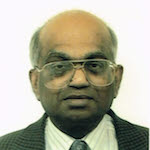
Dr. S. Narapalasingam
‘Democratic Socialist’ Sri Lanka’s Inapt Constitution Denies National Unity, Lasting Peace, Rule of Law, Good Governance, Real Democracy and Sustained National Development
Recent revelations, particularly after the formation of the ‘national unity’ government in 2015 committed to ‘good governance’ indicate that the long-drawn-out ethnic problem is not the only national problem that has denied the environment for peaceful co-existence of ethnic majority and minority communities and steady national development that benefitted all, particularly the poor and under privileged citizens. The members of the ethnic minority Tamil community soon after independence lost the feeling of coexisting as equal sovereign citizens in the traditionally multi-ethnic island with the same rights and livelihood opportunities of those in the majority ethnic community.
The two main political parties, supported largely by the members of the ethnic majority community exploited the abiding ethnic majority and minority division in the contest for gaining countrywide governing power. Attempts by the main governing party to settle the ethnic problem that emerged after independence in 1948 were sabotaged by the rival party in the opposition for narrow political reason. The country paid a huge price for missing several opportunities in the past that would have saved the country from the huge losses incurred after the conflict intensified into a terrible civil war. Despite this deterioration, formulation and implementation of national policies continued to be influenced by this blatant racial difference. The programmes favourable mainly to the ethnic majority were implemented resolutely. The government’s decision-making process has also been influenced by the reluctance to accept the real democratic concept in which all communities and citizens in the sovereign country have equal rights.
The 13th Amendment to the present Constitution intended to settle the national problem has not been fully implemented imagining this would weaken the centralised governing system controlled by the political parties depending mainly on the support of the members of the ethnic majority community. This blatant division between the rights of ethnic majority and minority communities has influenced the prejudiced pattern of governance denying the latter the right to decide on matters concerning their security and well-being. In short, the inapt governing system has been unfavourable to safeguard the solidarity of all citizens regardless of their ethnicity and residing provinces. Parts of the relatively small island that were under different rulers for centuries came under one central government only after the British captured the entire island. The cultural difference between the upcountry and low-country Sinhalese did not cause problem with the over centralised governing system because of their identical mother-tongue and religion.
The Sinhala nationalists believe the unitary system that endows nationwide governing powers to political parties depending mainly on the votes of the ethnic majority is the safeguard against any move to territorial division of the island considered by them to be exclusively their homeland. The fact the ethnic composition of the population in the Northern and Eastern Provinces is significantly different from that of the rest of the island is considered as a ‘recent’ anomaly due to the arrival of immigrants from India. In advanced democratic countries, the fundamental rights of citizens are not denied even to those who acquired citizenship recently. In Sri Lanka’s case, unlike Tamil language the Sinhala language is not the mother tongue of any community in foreign countries. This factor too influences the claim of Sinhala nationalists that the entire island is the nation of the Sinhalese and others (non-Sinhalese) are the descendants of ancient immigrants. This view is also contrary to the real concept of democracy and equality of all citizens regardless of the century their ancestors arrived from different regions in neighbouring India!
Democracy in Sri Lanka focuses mainly on the right of all citizens to vote in the national and local elections. After the elections, the ways the elected governments have functioned since independence cannot be considered as even fair to those who elected their representatives in the governing parties. Generally, the power gained with their support is used for personal or some narrow gains. This corrupt system got firmly rooted with the attention of governments focused mainly on visibly destructive issues like the civil war also arising from nationally damaging policies. These provided opportunities to those anxious to exploit the inapt system for narrow and quick gains. The present high levels in bribery, corruption and fraud in the public sector reflect not only the weaknesses in the highly centralised governing system but also the anti-social behaviour of those in responsible positions. Accountability has also diminished furthering the opportunities for the misuse of public funds.
According to many political analysts, the present government’s performance in the second year (2016) has been disappointing in fulfilling the promises given in January 2015. These gave high hope of creating a new peaceful, prosperous and united Sri Lanka free from the past nationally damaging ways the governments functioned that served the few in powerful positions and their associates. The ground for damaging the concept of one unified nation emerged from the adoption of majoritarianism in over-centralised governing system. The power greedy egoistic politicians exploited the presence of about 60 million Tamils in Tamil Nadu alone (60,793,814 in 2001) to justify the Sinhala majority rule throughout their neighbouring small homeland. This senseless anti-Tamil feeling among a section of the Sinhala nationalists is not the way to secure eternal peace. The ethnic majority in Sri Lanka to relegate them into a small vulnerable community because of the presence of over 60 million Tamils in neighbouring Tamil Nadu is just a fantasy in the modern world.
The beginning of the breakup of sovereign Ceylon
