

The SAARC Cultural Centre Takes A Long Break

By Darshanie Ratnawalli –December 18, 2016
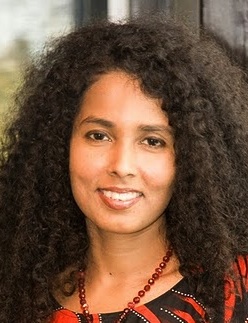
Darshanie Ratnawalli
The SAARC Cultural Centre takes a long break: Some clues to inertia under Wasantha Kotuwella
In January 2016, just over a year since acceding to power, Prime Minister Wickremesinghe publicly disparaged the SAARC Cultural Centre (SCC), Colombo. “We talk about the SAARC Cultural Centre in Colombo. However, in comparison to what you have done for the promotion of literature, they have done nothing. I spoke to the SAARC officials there. They have hardly done anything for culture or literature. However the SAARC Cultural Centre should be for the people, not for the official,” the PM said comparing SCC unfavourably with the Galle Literary Festival organizers.
In the audience, listening with pleasant faced interest to the PM’s remarks was the SCC Director, the dashing and popular actor Wasantha Kotuwella. At that time, just seven months since his June 2015 appointment by the PM’s Office, Kotuwella could afford to be pleasant faced. The PM couldn’t possibly be including his seven month term in the ‘do nothing’ period. That could only belong to G.L.W. Samarasinghe, who had held the sinecure (salaried around Rs 150,000 according to sources) from 2010 to 2015 as the SCC founding Director.
Sounding Defensive
Stung to the quick, Samarasinghe, a retired senior officer of the SL Administrative Service wrote an article to Colombo Telegraph, detailing all he had done to justify SCC’s raison d’être of promoting South Asian culture and literature. However, it was not an entirely satisfactory article. To some it may have sounded defensive and weak. Samarasinghe’s list did not contain anything that matched up even remotely to the hotness of the GLF. While one knew that the latter owed a great deal to lucrative commercial sponsorships and partnerships, whereas the SCC had to manage with funding from the SAARC States, some of whom hadn’t even paid their membership fees in years- one nevertheless couldn’t help hoping for some hot stuff from Wasantha Kotuwella viz-a-viz G.L.W. Samarasinghe.
Now at the end of 2016, the hot stuff hasn’t been delivered. Compared to Samarasinghe’s annual lists of programmes, Kotuwella’s list for 2016, the first full year he has spent in office, looks unusually lean.
A lean time
Sounding quite proud, G.L.W. Samarasinghe had written in his article, “An annual research programme under a designated theme has been conducted by the SAARC Cultural Centre since 2011 and eight research proposals were selected every year from among SAARC Member States and research grants awarded to South Asian researchers and scholars to carry out a project. By the end of 2015, 21 research projects and their reports have been completed and received by the SAARC Cultural Centre. Steps have been taken to publish these research reports and eight research reports are currently in print”.
Kotuwella hasn’t been able to continue this. Under his watch, 2016 stands out as .the only year to be bereft since 2011 of some gravitas producing topic of South Asian relevance such as ‘Diminishing cultures in South Asia’ (SCC Research Project-2011), ‘Diasporic Cultures of South Asia’ (SCC Research Project-2012), ‘Traditional Knowledge and Traditional Cultural Expressions in South Asia’ (SCC Research Project-2013/14), ‘Cultural Heritage Tourism and Sustainable Development’ (SCC Research Project 2014/15).
Nor has Kotuwella been able to organize a single research conference or seminar in 2016 or during his half of 2015. During his watch, 2016 remains the only year since inception that SCC has failed to become a player in the vibrant scholastic dialogues of South Asia. The last display of such academic dynamism – SAARC Seminar on Cultural Dynamics in National Harmony – was given by the SCC in May 2015, just before Kotuwella’s appointment. It seems a pity to break SCC’s habit of acting as a SAARC think tank by bringing scholarly minds of the region to bear on topical cultural issues of South Asia. Even in their inaugural year-2010, the infant SCC had organized ‘Seminar on Rituals, Ethics and Social Stability in the SAARC Region’. In 2011 there had been two symposia, ‘Shared Heritage of Sculpture and Decorative Arts in South Asia’ and ‘Folk Dances in South Asia’ held in Colombo and Bangladesh respectively. 2012 had featured the SAARC International Conference on ‘Archaeology of Buddhism: Recent Discoveries in South Asia’. In August 2013 they had held the SAARC Workshop on World Heritage Sites, followed by the SAARC International Conference on Development of Archives in South Asia in December. In 2014, the SCC had organized SAARC Capacity Building Workshop on preparation of proposals of new sites for inclusion in the UNESCO’s World Heritage list as well as the Conference on Development of South Asian Museums.
Under Kotuwella, SCC’s publication output for 2016 is a lone newsletter. This presents an odd contrast to the SCC output during the Samarasinghe years. According to the SCC website, 2014- Samarasinghe’s last full year in office – produced two books of abstracts, one book of contemporary poems from the SAARC region, one book of contemporary short stories from the SAARC region, one research paper, Volume 5 of the SCC annual academic journal and three newsletters.
In 2013, the SCC output comprised two books of abstracts, one book of contemporary short stories from the SAARC region, one book of contemporary poems from the region, Volume 4 of the SCC annual journal and four newsletters. In 2012, SCC has produced one book of abstracts, one book of contemporary short stories, one book of poems, one research conference report, Volume 3 of the annual academic journal and four newsletters. In 2011 one symposium report, one conference report, Volume 2 of the annual journal and four newsletters represented the publication output, while during 2010, the new SCC had produced one seminar report and the maiden volume of the annual academic journal. During his last half year in office, 2015, the Samarasinghe contribution to the SCC publications toll has been one book of abstracts and one research paper.
