

Judicial Corruption: Criminal Law Sets Into Motion

By Nagananda Kodituwakku –December 7, 2016
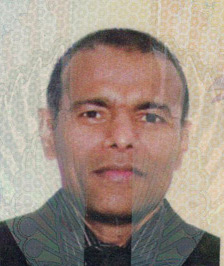
Nagananda Kodituwakku
The Judicial Corruption complaint made to the Commission to Investigate Allegations of Bribery or Corruption (CIABOC) on 15th February 2016 by way of an affidavit together with credible evidence, against four former Chief Justices (Parinda Rajasinghe, Sarath N Silva, Shirani Bandaranayake, Mohan Pieris) and the incumbent Chief Justice K Sripavan for abuse of office to confer benefits or favours for themselves or others has finally seen the light of the day with a lapse of period of 10 months. This could possibly be considered as a victory for the people in a country where the so-called intelligentsia maintaining a deafening silence whilst people at large become victims of vicious system in operation.
The CIABOC, now under the new Director General, Sarath Jayamanne, who seems to be demonstrating his worth by deeds on 01st December 2016 informed me that the Commission has initiated an investigation (BC/C/1057/2016/B132) into the complaint referred to above.
People losing trust in the Judiciary due to Judicial Corruption
Judicial corruption in this country has already put the Government in a very embarrassing situation before the international community, particularly before the United Nations Human Rights Council, compelling the Government of Sri Lanka to concede that people of Sri Lanka have no trust and confidence in the justice system and therefore to cosponsor a resolution (A/HRC/RES/30/1) on 01st Oct 2015, to set up a judicial mechanism with international dimension to try serious crimes committed against humanity.
Legislature and Executive shall be held accountable for the failure of the Judiciary
Lord Dennings once remonstrated that ‘… judges cannot afford to be timorous souls. They cannot remain impotent, incapable and sterile in the face of injustice…’. Yet, the Judges holding public office in the Judiciary are not men with divine powers but ordinary human beings and unless they are permitted to exercise the people’s judicial power freely without being subjected to intimidation and interference by the other two arms of the government (Legislature and the Executive), they naturally are not in a position to discharge their constitutional duties.
Recently Prime Minister, Ranil Wickremaeinghe, referring to a judgment popularly known as the Singarasa case, [(Singarasa vs. Attorney General (2006) pronounced by the Supreme Court (SC/SPL/LA/182/99) decided on December 15, 2006], launched a stringent attack on the independence of the Judiciary in the Parliament, hiding himself under the cover of Parliamentary (Powers and Privileges) Act, which is an ordinary peace of legislation.
He then, in one of the most brazen acts by a prime minister in this country, made a request to the Speaker to overrule the Singarasa judgment and some of the extracts (folio 189 -194 of the) taken from the Hansard dated 07th July 2016 are given below.
‘… The judicial power of the people is not exercised by the Supreme Court, but by Parliament through the Courts and directly by Parliament…’
‘…The powers of Parliament cannot be taken away by the Supreme Court as and when they like it…’
‘…It is a judicial coup against Parliament and the sovereignty of the people…’
‘…In my view, it is nothing but an attempt by the judiciary to usurp the powers of both Legislature and the Executive…’
‘…The Court does not even have to exercise the judicial power of the people. The Parliament has it and the Court does it on its behalf…’
‘…the Supreme Court does not have the power to violate the basic tenets of the Constitution; which the Supreme Court has been unfortunately doing in the last decade. …’
‘…I would ask the Hon. Speaker, after necessary consultation, to give his Ruling on this matter raised by the Hon. Member and the Statement made by me…’
‘…The powers of Parliament cannot be taken away by the Supreme Court as and when they like it…’
‘…It is a judicial coup against Parliament and the sovereignty of the people…’
‘…In my view, it is nothing but an attempt by the judiciary to usurp the powers of both Legislature and the Executive…’
‘…The Court does not even have to exercise the judicial power of the people. The Parliament has it and the Court does it on its behalf…’
‘…the Supreme Court does not have the power to violate the basic tenets of the Constitution; which the Supreme Court has been unfortunately doing in the last decade. …’
‘…I would ask the Hon. Speaker, after necessary consultation, to give his Ruling on this matter raised by the Hon. Member and the Statement made by me…’
I draw the attention of the readers to an extract taken from the complaint made to the CIABOC and invite them to study it in full to understand the scale of the Judicial Corruption, which continue to damage people’s trust and confidence in the Judiciary. This is in spite of the fact that the judiciary is required by law to perform its public duty, in protecting, vindicating and enforcing the people’s sovereign rights enshrined in the Constitution [Article 105 of the Constitution) which has been denied to the people due to the direct interference with the affairs of the judiciary by the corrupt elements holding public office in the Legislature and the Executive.
