

Being Evicted From House & Home

By Emil van der Poorten –December 4, 2016
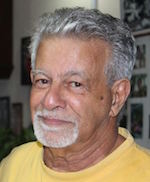
Emil van der Poorten
Election-Related Violence – Part III
Not so long after the Sirima Bandaranaike government resumed ruling Sri Lanka, and with her brother, Barnes, appointed to the position of Public Trustee, whose subordinate I was under the terms of my late father’s Last Will and Testament, it was believed that the inevitable would befall me and my family – economic and/or personal “payback” for my support of the recently-deposed United National Party (UNP) government.
My first (very pleasant) surprise was Barnes Ratwatte who proved an eminently fair, decent and competent person. The other surprise was his Chief Accountant, a man called Gunaseela Vithanage, who played a leadership role in the Bauddha Jathika Balavegaya, that period’s reputedly intolerant Buddhist-oriented entity with a reputation, not unlike that of the current Bodhu Bala Sena! Gunaseela and his family became good personal friends of mine and I discovered that his wife and children (?) were practicing Roman Catholics!
Dr. Colvin R. de Silva was the recently-appointed Minister of Plantations and Doric D’Souza was his Permanent Secretary, the head of that Ministry’s administration. I had a nodding acquaintance with the latter and the Public Trustee department folks believed that my seeing Colvin in person wouldn’t hurt, my siblings having been his erstwhile political comrades. It was hoped that this meeting would spike the guns of those lining me up for political retribution by “acquiring” my land and livestock farming enterprise “for a (nebulous) public purpose.”
I did succeed in making an appointment with Colvin and Doric at short notice and, both I and the Public Trustee official who accompanied me were greeted cordially.
Colvin opened, in his typically charming manner, with references to the fact that my siblings were his (admired younger) comrades in years past and that he was well aware of the pioneering work I had done in crop diversification and non-traditional livestock husbandry. I remember, very distinctly, his dissertation on what he planned for the plantations of the country. While the intent was that, ultimately, “the people” would own the source of what was then the economic lifeblood of Sri Lanka, he had no intention of killing the goose that was laying the (economic) golden eggs at that time. Succinctly put, his complex plan for the plantation industries made eminent economic and practical sense both from the practical and (left) theoretical end of things. He made it crystal clear that he certainly would not be party to the economic disruption that would be the fall-out of behaviour driven by a need for exacting political vengeance.
In brief, Colvin’s plans were torpedoed by Hector Kobbekaduwa, driven by exactly those impulses that Colvin had decried and his need for power and authority over Sri Lanka’s primary economic engine. He brought to that initiative a capacity for the exaction of personal vengeance probably without previous parallel in Sri Lankan politics. He brought in his so-called “Land Reform” bill.
An addendum to that move could well have been that this piece of legislation was the “carrot” response to the 1971 insurrection where the “stick” had been Sirima Bandaranaike’s ruthless elimination of those romantic revolutionaries, the Che Guevarists. After all, give a peasant land and he will be eternally grateful to you, right?
As someone who’d known Hector Kobbekaduwa from the time I was “knee-high to a duck” and assuming that he knew what kind of person I was and the work I was doing in the mid-country of Sri Lanka in the matter of plantation land rehabilitation, crop diversification and integrated livestock development. I didn’t expect any grief from him or his Ministry.
