

Regulatory Reforms To Assure Due Compliance With Laws, Transparency & Good Governance

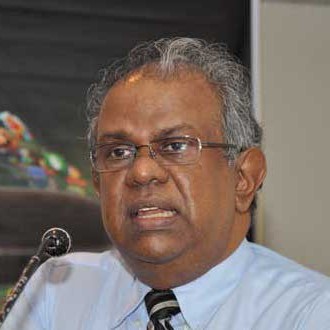
Chandra Jayaratne
Chairman,
Sri Lanka Accounting and Auditing Standards Monitoring Board,
3rd floor, Bible House Building,
293 Galle Road,
Colombo 3.
Sri Lanka Accounting and Auditing Standards Monitoring Board,
3rd floor, Bible House Building,
293 Galle Road,
Colombo 3.
President,
Institute of Chartered Accountants of Sri Lanka
30A, Malalasekera Mawatha,
Colombo 7.
Institute of Chartered Accountants of Sri Lanka
30A, Malalasekera Mawatha,
Colombo 7.
Dear Sirs,
Regulatory Reforms to Assure Due Compliance with Laws, Transparency & Good Governance
It is reported by professional analysts and also commonly believed by intellectuals, that;
- the significant fall in tax revenues to gross domestic product ,from around twenty percent to around ten percent, may be due to a high level of tax, customs duty and excise evasion / avoidance, grant of excessive and unjustified tax holidays and specific exemptions; and
- the share of the informal black economy has increased significantly over the last several decades; and
- a significant extent of money laundering has taken place over the last decade, mainly using proceeds of crime, bribery and corruption; and
- leading bankers believe, that a majority of financial statements and valuation reports presented in securing loans and other facilities, as well as financial facilities supported by project linked estimates submitted to lending agencies, are inaccurate, contain gross misrepresentations and are prepared violating accepted principles and standards; and
- a significant minority of professional practitioners have aided and abetted in the carrying out and concealment of above; and
- a regrettable failure of due enforcement of laws and regulations are visible throughout the economy;
and these issues need addressing with essential regulatory reforms.
Good governance champions and investigators have reported significant deficiencies at individual entity level regard management action and regards external audit review effectiveness;
- not having in place strong chains of control and compliance processes;and
- low effectiveness of professional due diligence, upholding of ethical standards and conduct and application of professional best practices;
- ineffectiveness of the operation of audit committees eg. Audit committee Chairman persuading a highlight on ‘going concern status’ to be removed by the auditors;
- use of inappropriate accounting policies eg. Small business standards adopted in entities with billions of rupees of turnover, profits, assets etc and these accounts not being submitted for review by the SLAAMB;
- audited accounts issued without effective disclosure of related party details eg. By noting that related party details are to be filled in by the management;
- secretarial companies with related party networks to auditors operating as the Company Secretary of audited companies;
- misleading tagging of assets to avoid impairment provisions eg. Uncollateralized REPO’s;
- auditors and professionals providing regulatory agencies and investigators with incorrect information eg. Auditors misrepresenting facts to COPE;
- classification of taxable revenues and taxable profits as exempt income and exempt profits;
- bankers, professionals and othersentities, required to exercise caution in terms of FATF 40 guidelines for control of money laundering and terrorism financing, failing to do so; and not obtaining ‘know Your Customer” declaration; and not exercising due diligence in crediting proceed of large cash deposits/inward remittances as well as outward remittances and withdrawal of large amounts in cash;
