

Why there might be many more universes besides our own
The idea of parallel universes may seem bizarre, but physics has found all sorts of reasons why they should exist
Is our Universe one of many?
 The idea of parallel universes, once consigned to science fiction, is now becoming respectable among scientists – at least, among physicists, who have a tendency to push ideas to the limits of what is conceivable.
In fact there are almost too many other potential universes. Physicists have proposed several candidate forms of "multiverse", each made possible by a different aspect of the laws of physics.
The trouble is, virtually by definition we probably cannot ever visit these other universes to confirm that they exist. So the question is, can we devise other ways to test for the existence of entire universes that we cannot see or touch?
Earth is one of many planets (Credit: Mopic/Alamy Stock Photo)


A black hole (Credit: NASA/JPL-CalTech)
Worlds within worlds
In at least some of these alternative universes, it has been suggested, we have doppelgängers living lives much like – perhaps almost identical to – our own.
Giordano Bruno speculated that the Universe might be infinite
That idea tickles our ego and awakens our fantasies, which is doubtless why the multiverse theories, however far-out they seem, enjoy so much popularity. We have embraced alternative universes in works of fiction ranging from Philip K. Dick's The Man in the High Castle to movies like Sliding Doors.
Indeed, there is nothing new about the idea of a multiverse, as philosopher of religion Mary-Jane Rubenstein explains in her 2014 book Worlds Without End.
In the mid-16th century, Copernicus argued that the Earth is not the centre of the Universe. Several decades later, Galileo's telescope showed him stars beyond measure: a glimpse of the vastness of the cosmos.
So at the end of the 16th century, the Italian philosopher Giordano Bruno speculated that the Universe might be infinite, populated by an infinite number of inhabited worlds.

An illustration from Fontenelle's "Conversations on the Plurality of Worlds" (1686) (Credit: King's College London/Science Photo Library)
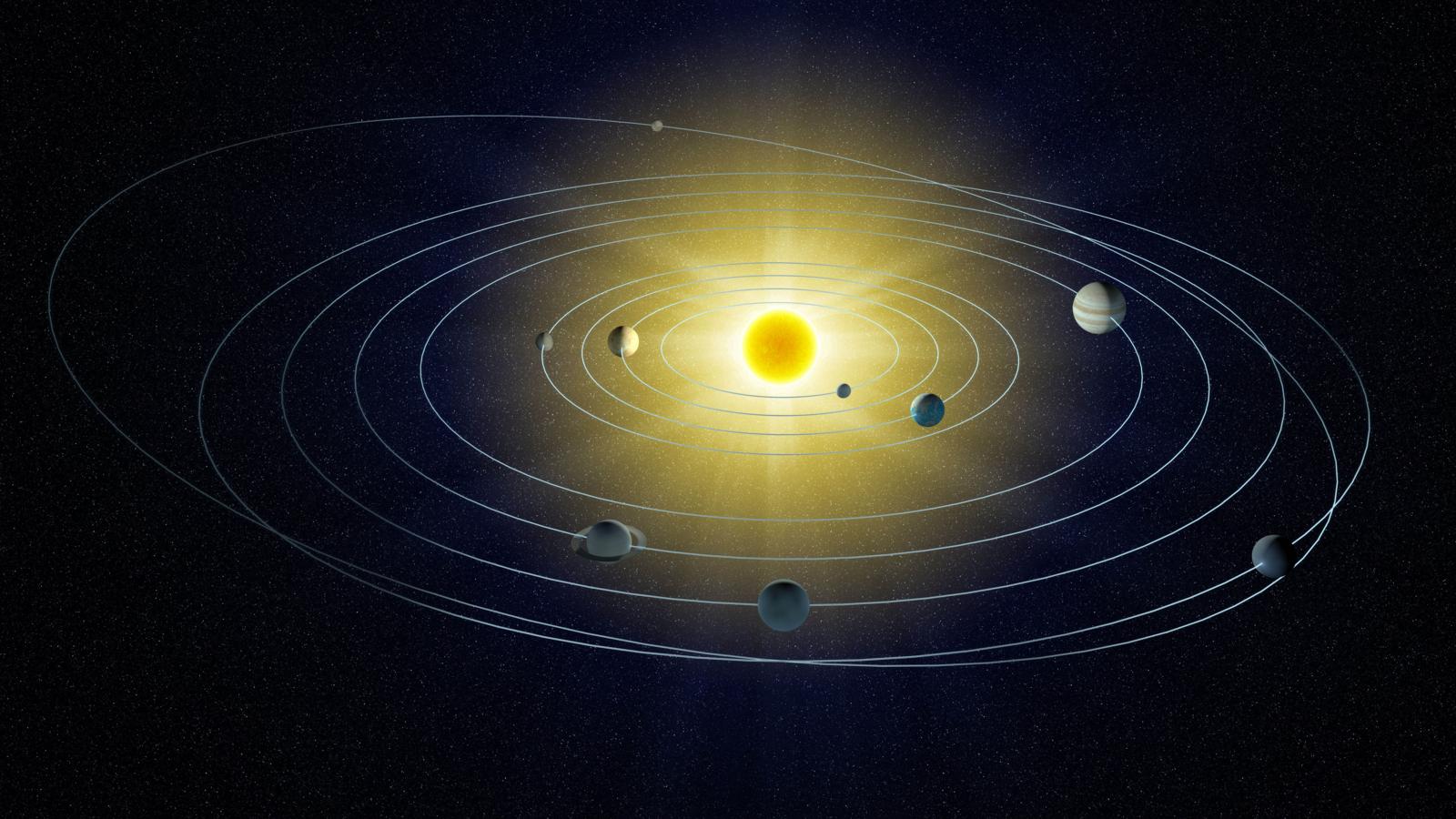
The idea of a Universe containing many solar systems became commonplace in the 18th Century.
By the early 20th Century, the Irish physicist Edmund Fournier d'Albe was even suggesting that there might be an infinite regression of "nested" universes at different scales, ever larger and ever smaller. In this view, an individual atom might be like a real, inhabited solar system.
Scientists today reject that notion of a "Russian doll" multiverse, but they have postulated several other ways in which multiverses might exist. Here are five of them, along with a rough guide to how likely they are.
Full Story>>>