

Pressure forces amendment to Univ. of California intolerance report
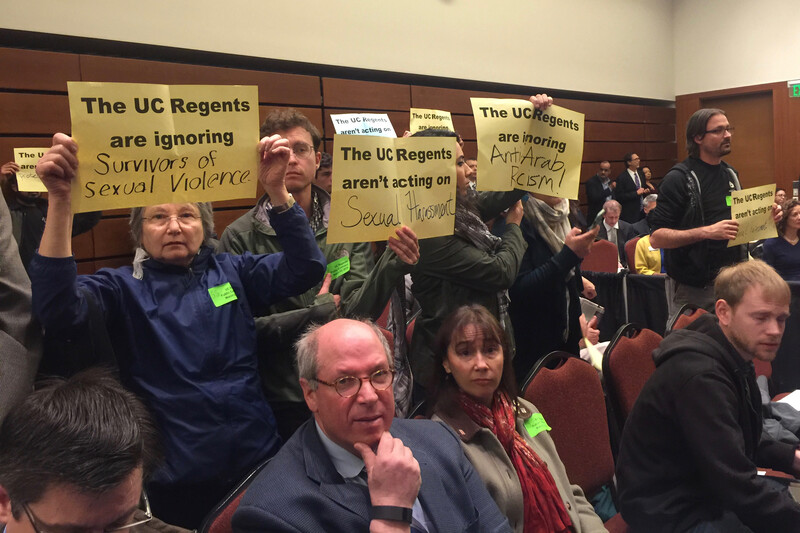
Protestors hold signs during a meeting of the University of California Board of Regents, at the San Francisco Mission Bay campus, on 23 March.Charlotte Silver
Charlotte Silver-24 March 2016
 A decision came down this week in a battle that may influence how university administrators deal with campus activism on Palestine around the US.
The University of California Board of Regents rejected a proposal to equate anti-Semitism with anti-Zionism, approving an amended [report] on intolerance, which had been widely criticized for conflating political speech with discrimination.
The report, which focuses almost exclusively on anti-Semitism, had been undertaken at the behest of Israel advocacy organizations.
It blames anti-Zionist activism on UC campuses for an alleged rise in anti-Semitic incidents.
Notably, the Anti-Defamation League reported that last year the number of anti-Semitic incidents on college campuses was the lowest since 1999, when the organization started tracking them.
Criticism of the report, which was written by an eight-person working group, had focused on the sentence: “Anti-Semitism, anti-Zionism and other forms of discrimination have no place at the University of California.”
At Wednesday’s UC Regents meeting, board member Norman J. Pattiz proposed the sentence be changed to: “Anti-Semitism and anti-Semitic forms of anti-Zionism and other forms of discrimination have no place at the University of California.”
Pattiz said his suggestion was based on feedback from the UC Academic Council.
The council had written a letter to the regents that said the statement as it was written would cause “needless and expensive litigation, embarrassing to the university, to sort out the difference between intolerance on the one hand, and protected debate and study of Zionism and its alternatives on the other.”
