

Reconciliation Versus Geneva 2015

By Izeth Hussain –October 19, 2015
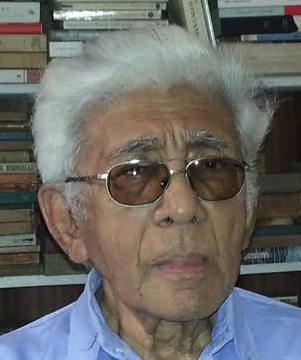
Izeth Hussain
George Rupesinghe(GR) in his letter in the Island of October 13 makes two points of great importance on which clarifications are necessary. The first point is that the US has been pushing its geopolitical interests through the UNHRC. It seems to me, on the contrary, that India was the prime player behind the UNHRC Resolution, and that the US acted as India’s partner to push primarily India’s interests and not those of the US. The premise behind my thinking is that all the great powers would concede that Sri Lanka belongs to India’s sphere of influence. A further factor of importance is that after the Soviet withdrawal from Afghanistan the US has been trying to build up a special relationship with India, the main purpose of which is to contain China. A further factor of importance for the future is that Russian intervention over Syria probably signals that Russia now wants to play a role in international relations that befits a great power. Here we must bear in mind that the very special relationship that India built up with the Soviet Union has continued with the successor state of Russia – at least such was my impression during my spell of service in Moscow from 1995 to 1998. The US and the Western powers could have anxieties that India could play a central role in a new power configuration in Eurasia. For such reasons it seems to me inconceivable that the US engineered the UNHRC Resolution without regard to India’s interests. My guess is that those interests were of primary importance.
The second point made by GR, on which I want to concentrate in this article, is that in focusing on the final stage of the war the UNHRC Resolution conveniently ignores all the horrors perpetrated by the LTTE in the past. This fact, he points out, is not lost on the majority of the people, and he concludes eloquently: “If ALL the crimes, by all the parties, including India, are not fully investigated, one thing is certain: this tumour of deliberate injustice will grow into a cancer that will wreck community relations in Sri Lanka beyond repair”. GR is here articulating a view that is probably held widely, and passionately, by the majority of the Sinhalese. Before commenting on it I want to make a clarification. The war crimes investigations proposed cover the period 2002 to 2009. They would cover therefore two of the greatest horrors perpetrated by the LTTE: the forcible recruitment of child soldiers, and what seems to me the historically unparalleled horror of using no less than 330,000 Tamils as human shields, arguably a feat worthy of Adolph Hitler. So it would appear that the principle of equity has not been forgotten. But the problem is that the LTTE leaders who perpetrated those horrors are safely dead and therefore it would be only those regarded as war heroes by the Sinhalese who would be arraigned for war crimes. That certainly would reek of injustice. It would not be quite the best way of promoting reconciliation.Read More
