

Good Governance A Way Out Of Quagmire Of Divisive Politics In Sri Lanka

By G K Nathan –September 4, 2015
Dr. G K Nathan
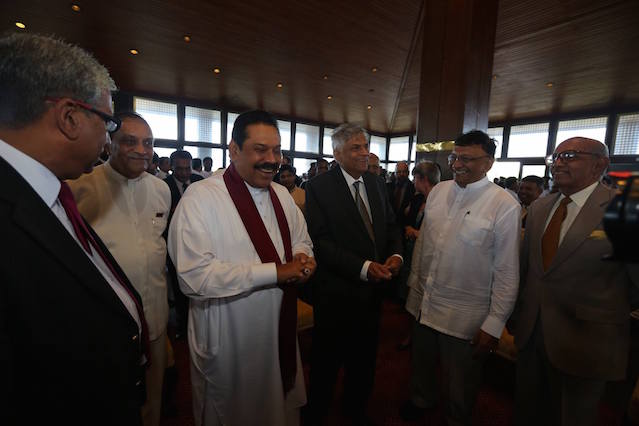
The two elections held in 2015: first is the Presidential on 8th of January and second is the Parliamentary on 17th of August provided the opportunity to the people to make a choice between: the introduction of good governance or the consolidation of totalitarian regime in Sri Lanka; majority of the people, voted for a change on both elections. Hoping for a better future for all. Former President Mahinda Rajapaksa, the practitioner of sectarian politics during his regime was defeated in the first and again in the second attempt to grab power through the Parliament. Formation of a National Government with participation of both major parties in Sri Lanka: Maithripala Sirisena of Sri Lanka Freedom Party (SLFP), as the President and Ranil Wickremesinghe of United National Party (UNP), as the Prime Minister sets a new path in the post-independence history of Sri Lanka. The divisive politics in Sri Lanka and sectarianism became the focal point when SLFP was formed breaking away from the UNP government in 1951, from the first government formed just prior to independence on 4th of February 1948. The International community has welcome the formation of the National Government with a promise to uphold good governance in Sri Lanka. The challenge for the new government is to respond to all the resolutions passed at the United Nation Human Rights Council (UNHRC) sessions from 2012 to 2014 on allegations of war crimes and crimes against humanity. Should the members of the former regime becomes the sacrificial lamb, if found guilty so that the new National government can start with clean slate or continue to protect them and follow the path of the previous government? Also, taking note that the approaches of the last regime did not impress the International community which has stood steadfastly on their demands: to uphold human rights with justice for war victims, accountability for alleged war crimes and repeated calls for reconciliation between different groups in Sri Lanka. Acceptance of good governance provides a second opportunity to emerge from the quagmire of divisive politics in Sri Lanka dominated by the differences in religions, ethnicities and languages, since independence. At that time Sri Lanka had relatively well educated population and also, enjoyed universal suffrage that was introduced in 1931; the first country in Asia and among other countries in the Indian Ocean rim that achieved both, during the colonial occupation. Unfortunately, in the post-independence period in Sri Lanka, good governance was ignored and the imposition of divisive politics based on differences, rather than bringing people together, persuaded many to migrate from Sri Lanka to other countries, especially to Western democracies. The Tamil Diaspora has become a force to be reckon with and will continue to strengthen with time, their interest in what is happening in Sri Lanka and their support for the rights of Tamils will also continue; upholding good governance will be a way to draw on the input from Tamil Diaspora to support the country in many fronts. The Tamil Diaspora, initially, originated from South India and Sri Lanka, started spreading far and wide, during the colonial era; in all there are about 3.3 million, including just over one million Tamils who left Sri Lanka in the post-independence period. Sri Lanka has the potential to become once again, a successful, proud and prosperous country, as during the pre-independence days. Will the new National government pursue an inclusive policy and ignore, Rajapaksa regime differentiating, Tamils as “tigers”? Read More
