

Tamil Nationalism Under The Scanner


Mahendran Thiruvarangan
The election campaign of the Tamil National Alliance (TNA) and the Tamil National People’s Front (TNPF) in the Tamil-majority regions in the Northern and Eastern provinces has re-animated the discussions on the political solution to the national question. While the major political parties in the south have rejected national self-determination and federalism, the solutions presented by the two major Tamil political groups are, for the most part, in line with the fundamental principles of Tamil nationalism put forward by the collective of Tamil groups during their peace negotiations with the Sri Lankan government in Bhutan’s capital Thimpu in 1985. These fundamentals include the recognition of the Tamils as a nation, their right to self-determination and the merged northern and eastern regions of Sri Lanka as their homelands. The TNPF has stated that it seeks the people’s mandate for these principles in the upcoming elections. The election manifesto of the TNA includes a slight variation of these fundamentals. Instead of nation, the TNA manifesto describes the Tamils as “a distinct People with their own culture, civilization, language and heritage [who] from time immemorial have inhabited [the] island [of Sri Lanka] together with the Sinhalese People and others” or, as stated in the Tamil version of the manifesto, as a “Thesiya Inam” meaning nationality.
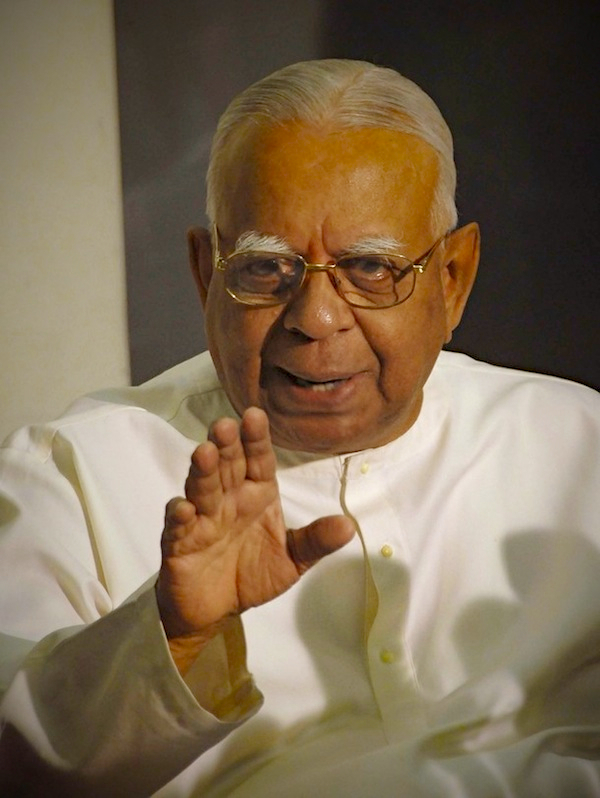
Rajavayothi Sampanthan – The Leader TNA
The polarization of communities that politics grounded on notions like ethnic self-determination and autonomy has brought about in Sri Lanka and elsewhere behooves us to place them under careful scrutiny. Framing self-determination in an ethnicized or national collective sense indeed generates an oppositional consciousness among oppressed communities at the receiving end of majoritarian, nationalistic states and strengthens them in their pursuit of emancipation. But ethnic self-determination alone would not lead to the harmonious cohabitation of different communities in a shared territory. This is why it is important for us to discuss the inadequacies of the Tamil nationalist constructions of identity and territory and Tamil nationalism’s skewed vision for ethnic cohabitation. Calling attention to the exclusivist predilections of Tamil nationalist politics, however, does not imply that all is well with the manner in which Sinhala-based political parties and social movements approach the national question. The JVP’s indifference to ethnicity in Lankan politics and its outright rejection of federalism, for instance, deserve as much criticism as the narrow, ahistorical articulations of national self-determination by the TNA and the TNPF. Read More
