

Why Should We Encourage Political Participation Of Persons With Disabilities

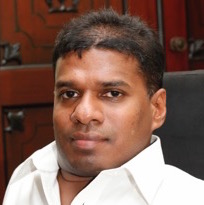
Senarath Attanayake
Persons with disabilities are considered one of the most marginalised communities in the world. The inequalities however, do not arise from their disabilities but from social and institutional barriers that deprive them of the opportunity to enjoy the same rights and privileges as their non-disabled peers. Governments in most parts of the world ignore the community of persons with disabilities in the formulation of laws and policies mainly due to the lack of understanding of issues that particularly affect disabled persons. One of the main reasons for this ignorance arise from the exclusion of persons with disabilities from the political process.
Equitable participation is the primary requirement of a sustainable democracy. Gender advocates have, for a long time, fought for gender equality in politics and have demanded women’s representation in the legislature. We saw in the news this week that the Ministry of Women’s Affairs has requested all political parties contesting the August parliamentary elections to nominate at least 30 percent of women candidates from their respective parties. Let us hope that the parties respond to this call and make changes in a country where women’s representation was one of the lowest in South Asia so far.
The community of persons with disabilities across the world are believed to comprise of at least 15% of the global population according to the World Health Organization (WHO). In Sri Lanka, available data indicate that 8.6% of the population live with some form of disability, which means that at least 1.7 million Persons could be living with Disabilities in the country. Added with the family members and caregivers, the entire constituency of disabled persons could be at least 5 million persons in Sri Lanka. These numbers could prove to be much more if accurate statistics on the population of persons with disabilities were available. Additionally, due to the rising percentage of older persons in Sri Lanka, who are estimated to reach 22% of the population by 2030, there is a sharp increase of age-related disabilities in the country.
The Convention on the Rights of Persons with Disabilities (CRPD) in Article 29 of establishes the right to equal participation in political and public life including the right to vote, stand for elections and hold office. The opportunity of equal participation is at the heart of what it means to live in a democratic society for persons with disabilities. Read More
