

Ilattamils’ Defying GoSL’s Disenfranchisement Of Mourning After May 2009

Prof. Peter Schalk

Disenfranchisement of mourning is not a new phenomenon. An older name in Latin makes this clear: it is damnatio memoriae ‘ban on memorialising’ – a certain person or group of persons. Some Latin emperors and Egyptian Pharaohs did not wish to be reminded about a predecessor. They wiped out every trace of them. The Nazis destroyed the monuments of the Communist Party in Germany. Damnatio memoriae includes the removal of portraits, books, doctoring people out of pictures. In the island Lanka, graves of the combatants are turned into macadam by the GoSL and the SLAF. The site of the former tuylum illam ‘house of rest’ in Varani, Kotikamam, has been acquired by the Sri Lanka Army (SLA) citing the Land Acquisition Act.
When the armed conflict was over in May 2009, it continued verbally. The annual return of May 18th was and still is in 2015 the area of conflict. Two incompatible evaluations of the past encounter, one by Ilattamils’ and one by GoSL loyalists. The former regard the past as a traumatic series of events over long time and the latter as a victorious series of events, especially during the Rajapaksa regime from 2005 to 2009. The former expressed their emotions annually on 18th May in a solemnity memorialising the civil victims and the fallen combatants, and the latter on May 18th in a in a spectacular victory parade over terrorism. Both parties justify their actions, which makes clear that there is no sign of reconciliation.
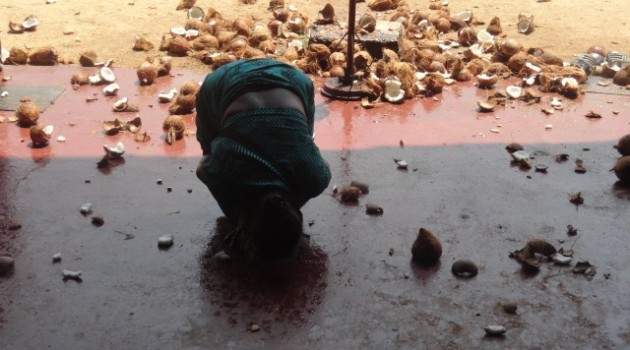 A clarifying article by the Tamil Guardian in London, also published by Tamil Net in Norway in 2010, gave the background to the beginning of the annual solemnities of mourning on May 18th by Ilattamils. The article did not focus only what happened in Mullivaykkal in the last months of the armed struggle in 2009, but opened also a historical perspective on the bereavement of the Ilattamils:
—-2009’s single, protracted program of state-conducted slaughter has a sixty year-long antecedent, beginning well before the armed conflict erupted in 1983. From 1956 to then, thousands of Tamils died in regular episodes of rioting by Sinhala mobs.—-
The article ended with a correct prediction of coming protests and their message against the GoSL:
