

Impact Of Globalization & Sri Lanka’s Reconciliation

By Ayathuray Rajasingam –May 20, 2015
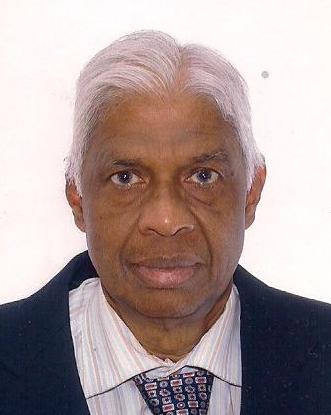
Ayathuray Rajasingam
The open economy introduced in Sri Lanka by the JR Jayewardene(JR)-led government marked a fresh page in the history of Sri Lanka with the emergence of globalization. JR had a formidable team of Ministers like Lalith Athulathmudali, Ronnie de Mel, and Gamini Dissanayake who played a vital role in the best interests of Sri Lanka. Srimavo Bandaranaike and her Ministers failed to address their minds on open economic policies and market liberalization, as a result people underwent untold hardships. Globalization can be described as the process of interaction and integration of economics, social and cultural relations among the people of various countries.

However, the clumsy handling of the 1983 communal riots by JR Jayewardene gave birth to the Sri Lankan Tamil Diaspora. Indra Gandhi waited for an opportunity to take on JR and exploited the Tamil issue, when JR remarked her as a cow and her son, a calf, for which he paid heavily. All efforts by JR to control the Tamil rebels were smashed with the air-drop of parcels by the Indian Air Force and by the Indo-Sri Lanka Peace Accord. Had JR and the subsequent leaders continued to implement the 13th Amendment genuinely, globalization would have played a contributory role in neutralizing secessionism. The lack of broader vision on the 13th Amendment was instrumental for the creation of tension and conflict in the country. Even the Peace move initiated by Ranil Wickremesinghe (RW) through the signing of the Memorandum of Understanding with the LTTE, was again spoilt by Chandrika Kumaranatunga (CBK). In fact, the people failed to realize that the LTTE was hoodwinked by RW. The parties to the MOU, who were the violators of human rights viz, the LTTE leader, the UNP and the Army Commander, had not signed in the presence of one another. After signing the MOU at different places, RW just waved his hand across Vavuniya to please the Tamils. RW initiated this Peace move with the support of the US President Bush and British PM Blair. RW had two plans – First plan was to change the mindset of the LTTE and the Second plan was to take adequate action should the LTTE return to war again. But CBK realizing RW may capture power and took this opportunity to mislead the people, and dissolved the Parliament. The creation of the Provincial Councils was viewed by the Sinhalese political leaders with bitterness but failed to view the other side of the 13th Amendment in conjunction with the process of globalization.
Federal countries throughout the world have strengthened the Provincial governments with constitutional provisions, making it a co-partner in a Federal system, paving way for inter-governmental co-operation. It is a pity that politicians failed to realize that economic integration would gain priority within the Provinces on account of the impact of globalization instead of the call for secession. Had the 13th Amendment been implemented in the proper manner by way of granting land powers and allocating adequate funds to its needs, Sri Lanka would have witnessed some functional autonomy for efficiency gains with the passage of time and the impression that Federalism would lead to separation would have gradually disappeared. But the narrow-minded ruling politicians were reluctant to relax restrictions to attract international capital for the Provincial governments, the result of which saw the deterioration of Sri Lanka’s economy.Read More
