

The Economics Of The Colombo Port City Project

DNR Samaranayaka
Since the formation of the coalition government, there has been an unprecedented interest in the Colombo Port City (CPC) Project, especially after the announcement by Mr Rajitha Senaratne, who is the Cabinet spokesperson of the new government, declaring that the project has received the approval of the cabinet. This announcement was contrary to the pre-election undertaking made by the coalition to cancel the CPC project under a coalition government. However, the announcement made by Mr Senaratne was later rejected by the Prime Minister saying that the government has not completed the review of the environmental assessment of the project. Since then there have been several announcements with the latest announcement contradicting the one before. According to the most recent announcement in early March, the government has instructed the CPC project officials to suspend the project. As the government has been giving mixed signals since its formation in January, it is not clear whether the project is abandoned, stopped temporarily or whether it will be proceeded with a modified agreement between the two parties.
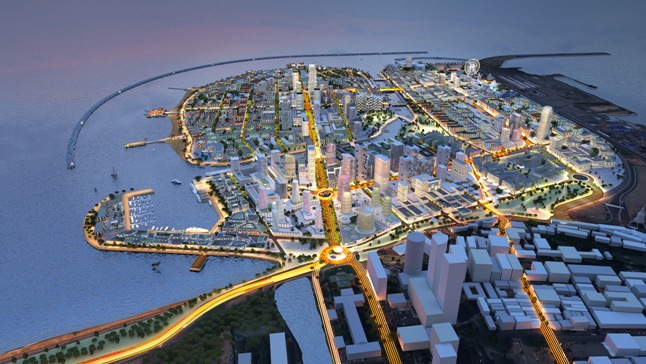
If the Rajapaksa administration had returned to power at the last presidential election, the implementation of the CPC was an absolute certainty. With the change of the government, it would seem that China began to have doubts about the continuation of the project, and this uncertainty became a serious issue of concern to the Chinese government. On February 6, the assistant minister of foreign affairs, Mr Liu Jianchao, arrived in Sri Lanka for talks with the new government about the project. The decision to send a high-ranking representative highlights the level of concern about the CPC’s strategic importance to the Chinese government. Furthermore, the attendance of the Chinese President Mr Xi Jinping at the opening ceremony of the CPC on 17 September 2014 also clearly signals the immense importance of this project to the Chinese.
