

Lawyers to boycott appearing before Mohan Peiris


BY Ruwan Laknath Jayakody- 2015-01-
Lawyers affiliated to the Bar Association of Sri Lanka (BASL) have decided to boycott cases heard in the Supreme Court, presided over by the 44th Chief Justice Mohan Peiris.
The Executive Committee of the BASL took this decision on Saturday (24).
Chairman of the Standing Committee on Rule of Law of the BASL and Convener for Lawyers for Democracy and Lawyers' Collective, Lal Wijenayake. .added that lawyers have stated that they do not want their cases in Supreme Court taken up before any Bench comprising Peiris.
The Executive Committee of the BASL took this decision on Saturday (24).
Chairman of the Standing Committee on Rule of Law of the BASL and Convener for Lawyers for Democracy and Lawyers' Collective, Lal Wijenayake. .added that lawyers have stated that they do not want their cases in Supreme Court taken up before any Bench comprising Peiris.
Peiris has agreed to resign and retire but he is now putting forward conditions, he remarked.
"Now he is bargaining because he knows that there is a lacuna in the law with regards to removing him. This can only be done through an impeachment, a process which would take three to four months at the very least. His conditions imposed on the government include wanting to be made an Ambassador. Thus, the attorneys have decided to not appear in the Apex, superior Court of the Supreme Court when the cases of which they are the legal counsel are taken up in the presence of the incumbent Chief Justice," Wijenayake explained.
Restoring Independent Commissions – Make Them Viable
By R.M.B Senanayake -January 26, 2015
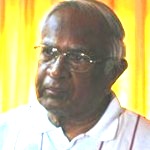
R.M.B Senanayake

The 17th Amendment is to be re-introduced. But it is necessary to make some amendments to it to preserve the rationale for such an independent Commission like the previous Public Service Commission. To ascertain the rationale for such an independent Commission for recruitment, promotion and discipline of public officers one has to go into the theory and practice in countries like the UK and USA. In USA the spoils system prevailed under which the president and the ministers appointed the officials to the public service not on merit but on political affiliation and loyalty. They used the power to favor their party supporters and in the process ignored the principle of merit in appointments and promotions. In 1872 the New York Reform League consisting of citizens campaigned for the principle of merit and following the UK practice demanded the setting up of an independent Civil Service Commission. Their agitation led to the enactment of a law in 1883 and the setting up of the Civil Service Commission.

From the beginning its scope was limited to that of maintaining the merit principle in appointments, promotions and protecting public servants from unfair exercise of power by the President or his Ministers. It was realized that personnel administration was a part of executive management and that the heads of Departments should exercise these powers themselves but be required to follow the principles of merit in appointments and promotions and fairness in discipline. It is intended to protect the public servants from the politicians who are the Executive, be they presidents, prime ministers or ministers who want them to carry out illegal or unethical decisions. Public officers in the higher ranks have enough experience of the excesses of executive powers. Several public officers have in their routine work been requested to ignore the law, delay the law or wink at it. It is in this way that the attack on good governance takes place. Human beings are not angels and they are not governed by angels as observed by James Madison. So in the interests of good governance and the upholding of the rights of the citizens vis a vis the State, the protection of the public officers is necessary. This is what happened after 1956 when politicians started dictating to public officers irrespective of the law and principles of good governance. So the rationale for an independent Commission is purely for the upholding of the merit principle and the protection of the public officers from unjust actions of the Executive. The threat to the merit system comes from politicians including the president or prime minister or the ministers.Read More
