

Dilemma In Two Fronts: OHCHR Investigation On Human Rights And Pursuit Of Reconciliation In Sri Lanka

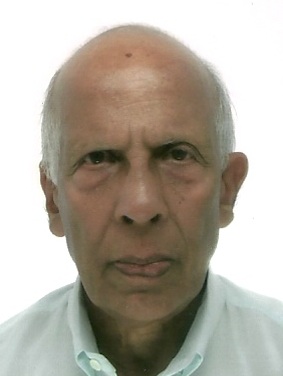
Dr. G K Nathan
Members of the International community are currently taking an approach which is to persuade Sri Lanka to cooperate with the Office of High Commissioner for Human Rights’ (OHCHR) Investigation on Sri Lanka (OISL), which was mandated by the Resolution (A/HRC/25/L.1/Rev.1) passed at United Nation Human Rights Council (UNHRC) at the 25th session in March 2014. Direct intervention on Sri Lanka was initiated after the International community failed to persuade the current Government of Sri Lanka (GSL) at the end of war with the Liberation Tigers of Tamil Eelam (LTTE) in May 2009, to pursue: reconciliation, accountability and human rights in Sri Lanka. The underlying reasons for the failure is because the six decades long conflict between the Tamil and Sinhala Nations is used by the Sinhala dominated parties to capture power, as well as to remain in power by opposing any proposal to devolve power. Any approach to resolve the conflict, makes the party in power weak or conceding too much to the others in the eyes of majority Sinhala voters in the country; which led the current GSL to ignore, the previous two UNHRC resolutions, the first one at the 19th session (A/HRC/19/L.2 of March 2012) and the second one at the 22nd session (A/HRC/22/L.1/Rev1 of March 2013). Following the precedence set earlier for the reason given above, the GSL led by President Mahinda Rajapaksa has rejected the OISL process and decided not to cooperate with OHCHR. The intransigence behavior of GSL and rejection of the majority of democratic countries call are perhaps in the believe that countries like China and Russia will come to their aid, if required at the UN Security Council? Recent arrival of nuclear submarines of China at the shores of Sri Lanka for the first time is a signal that cooperation between China and Sri Lanka is being consolidated with military cooperation, but at the expense of other friendly countries in the region. It should be noted at the same time; China is consolidating its position in South China Sea and further spreading and consolidating its tentacles in the Indian Ocean. Sri Lanka, a small country, is unwisely getting drawn into a geopolitical tug-of-war so as to establish an authoritarian regime in Sri Lanka at the expense of neutrality which was the policy in the past. In the long run, this strategy might affect the country adversely and the security and survival as a unified country is in question? In the 21stcentury, the worst conflict in the world, that caused deaths, deprivations, displacements and destruction of belongings occurred in Sri Lanka, while the world silently watched; in all more than half a million people are still waiting since the end of conflict in 2009 for justice, it is turning out to be “Justice delayed is Justice denied”.
