

Did Tamils Always Paint Themselves Into A Corner?

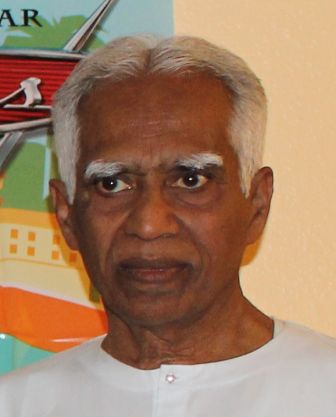
S. Sivathasan
A Harmful Outgrowth
If the answer is yes, for how long have we done so? For as long as eight decades and more, some would say. When did the painting start? With elections to the State Council in 1931 and the Jaffna Boycott. The initiative and organization were by the Youth Congress of Jaffna. The mindset which originated then evolved subsequently and has permeated Tamil consciousness ever since. Deriving greater strength through surgical intervention to remove this malignant growth is good for future wellbeing. It did not fail to raise its plaintive head even as late as September 2013, at the Provincial Council Elections. We Tamils require a great deal of introspection to identify our repetitive ways and to wrest ourselves from the boycott mindset. Dispassionate analysis of the stands we have taken and the negative results we have obtained will have to go alongside.
Origin
Two strong factors fueled the boycott of the State Council elections. The abolition of communal representation which reduced the strength of Tamil membership in the Council compared to a might have been under the previous system of weighted representation had earned the ire of many a Tamil. In this receptive atmosphere the Youth Movement in Jaffna with an emergent leadership had a credible political complaint. TheDonoughmore Reforms did not go far enough towards independence was their stance. Such a position certainly flowed from the reactions of the Indian National Congress to failed reform missions in their country.
Out of Sync
In India, ten years prior to Donoughmore Commission, was the Montagu Chelmsford Reforms which resulted in the Government of India Act of 1919, granting only partial self- government. To Indians who had agitated vigorously for full freedom it was a far cry from independence, dashing India’s expectations of purna swaraj. The Jaffna Youth Movement picked up its threads rather idealistically from India. How mighty was India’s fight for Independence? Around 1957, Nehru had said “Independence came too early for India. We did not fight for our freedom. We never had a ‘Long March’ as in China”. Did we Tamils fight prior to 1931 to deserve full independence and for the British to grant it with a mere boycott? In two years the un-wisdom of the step was realized and Tamils demanded elections and representation. Was it realistic pursuit of politics to permit this pervasive mindset to continue to date?Read More
