

Neutralizing The Conflict Between The Buddhist Extremists And Muslims

By Ayathuray Rajasingam -August 16, 2014 |
Ayathuray Rajasingam
The conflict with the Muslims throughout Western democratic countries including some Asian countries has taken a new dimension due to the impact of Wahabbism with the creation of ‘no-go zones’. While the short-sighted policies of the Sri Lankan politicians laid the foundation for Sri Lanka to march towards a religious-centred State, the rise of Muslim fundamentalism made it a complex issue after experiencing the intolerance of Tamil militants. Meanwhile India which was aware of the new developments of the Muslim fundamentalism eventually stepped into Sri Lanka with the signing of the Indo-Sri Lanka Peace Accord. The consequences of razing Kathankudy by the IPKF saw the rise of Muslim fundamentalism with the formation of the Sri Lanka Muslim Congress.
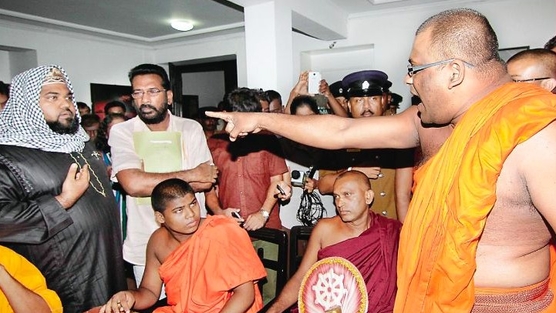 Conflicts have arisen between faiths in countries practising pluralism and Religious-centred countries after the 2nd World War. In religious-centred countries, the rights of the minority religious community will be a questionable issue. However the recent establishment of the so-called ‘no-go zone’ carried out by a specific religious group have become a challenge to democracy in countries where pluralism is practised. Conflict do arise when a specific religious organization is criticized and amounts to hate propaganda. But there is justification when allegations are found to be true and made in good faith in the best interests of avoiding the threat that are likely to cause damage to the sovereignty of a country.
While the UN ensured the rights of the minorities, Europe also saw the formation of a European Union by which democracy was strengthened with the enshrinement of Human Rights. However, Asia confronted the problems of the emergence of Islamic political movements in the Middle-East countries, Pakistan and Bangladesh, the impact of which had affected the democratic countries in Asia, Europe and America. Such Islamic political movements gave birth to the Religious-centred State like in Iran and eventually culminated as Theocracy against Democracy. Read More
