

Cold-Blooded Assault On Lieutenant By Brigadier But Military Spokesman Denies Allegations
 July 26, 2014
A Lieutenant attached to the Palali Army Camp has been heavily assaulted with an iron chair by a Brigadier of the same camp, for failing to report to him dressed in official sports attire.
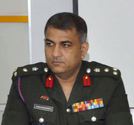
Ruwan Wanigasooriya
The victimized Lieutenant had been off-duty as he had been advised by a doctor to take rest due to his ill-health, when he had been summoned by the Brigadier for a program on July 23. The Brigadier had lost his temper when he saw the Lieutenant not dressed in appropriate garb and had lifted an iron chair and assaulted him heavily.
The victimized officer is presently receiving treatment at the Palali military hospital.
However, the Military Spokesman Brigadier Ruwan Wanigasooriya, ever ready to defend the ‘holier-than-thou’ image of Sri Lanka Army has rejected the claims of an assault in his comments to local media concerning the incident.
“There had been a workshop and a group of officers had been summoned to participate in the program including this Lieutenant. He had been severely warned and advised due to his delayed arrival but there has absolutely been no clash or brawl,” he has told local media.
The Vijaya Kumaratunge Assassination
By Rajan Hoole -
Rajan Hoole
Political Murders, the Commissions and the Unfinished Task – 8
A presidential commission comprising Supreme Court Judges P. Ramanathan and S.N. Silva (who subsequently became Attorney General and then Chief Justice), and High Court Judge D. Jayawickrema heard evidence on the assassination of Vijaya Kumaratunge (VK), a rising political star. He was assassinated on 16th February 1988, early during the JVP insurgency. In the findings, a prima facie case was said to lie against President Premadasa on the grounds that the former President was implicated by evidence of a motive for the assassination, and by circumstantial evidence of the suppression of the investigation. UNP Minister Ranjan Wijeratne was implicated by the Commissioners on the grounds that he illegally and improperly interfered in the conduct of the investigation. The motive attributed to
Premadasa is political – that VK who appealed to the same populist base as Premadasa was a formidable rival at the presidential elections scheduled for the end of 1988.
Some of the reasons given for the conclusions by the Commission are given below:
The CID and CDB of the Police worked closely in the investigation and obtained a description of the assassins from witnesses. On 14th March 1989 (3 months after Premadasa became president), the CDB arrested the suspected chief assassin Lionel Ranasinghe, who in turn confessed to the act. Subsequently he was interviewed by Minister Wijeratne and Ernest Perera, IGP, at a high security cell at Slave Island Police Station. Ranasinghe was shortly afterwards transferred to the CID on the orders of the minister, faithfully carried out by the IGP. Frank de Silva, then DIG/CID, denies that he was either consulted or knew anything about the transfer.
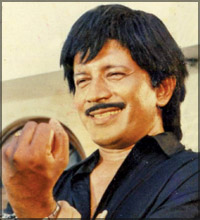
Vijaya
Another circumstance has to do with Bennet Perera, SSP, Director CID, who was closely involved in the case and had already been transferred out of the CID with one hour’s notice just after Premadasa had become president in December 1988. He was shot dead subsequently by an unknown person. Before leaving the CID he had told a subordinate of his discovery of the involvement of some government ministers in the assassination and advised him to keep out of the case. General Attygalle, then defence secretary, and the IGP could give no reason for the transfer of the admittedly effective officer, except that they were possibly passing down a ministerial order. Chandra Jayawardana, the new director installed, recorded a statement from the suspected chief assassin Ranasinghe, now in his custody, implicating him as a JVP assassin for the record, but did nothing to pursue leads, make arrests or carry out any further investigation.
