

Pakistan air strikes in North Waziristan 'kill 80 militants'
Intelligence sources say Uzbek commander who was involved in masterminding attack on Karachi airport is among dead
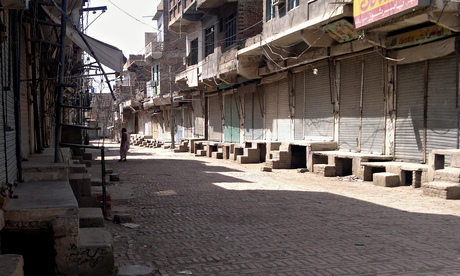
A deserted market in Miranshah, North Waziristan. Pakistani fighter jets have bombed militant hideouts in the region, which is a stronghold for Taliban and al-Qaida-linked groups. Photograph: AFP/Getty
Reuters in Miranshah-Sunday 15 June 2014
 Pakistani fighter jets have carried out raids on suspected militant hideouts in the tribal North Waziristan region in response to anaudacious attack on the country's busiest airport a week ago.
Nearly 80 militants, mainly ethnic Uzbek fighters, were killed in the air assault on Sunday in the region bordering Afghanistan, where some ofPakistan's most feared militants and al-Qaida commanders are based, intelligence sources said.
"Fighter jets targeted militant hideouts in the village of Dagan near the Pakistani-Afghan border," said a source in the regional capital of Miranshah.
"An important Uzbek commander, Abdul Rehman, has been killed in the air strike," he said, adding that Rehman was believed to be directly involved in masterminding the Karachi airport attack.
The account could not be independently verified and the Taliban did not immediately comment on the air strikes.
Uzbeks with the Islamic Movement of Uzbekistan, a militant group based in North Waziristan, claimed responsibility for last Sunday's commando-style attack on Karachi airport.
The all-night assault in effect destroyed prospects of peace talks with the militants who are fighting to topple the government in the capital, Islamabad, and impose a strict sharia-based theocracy.
After the Karachi attack, in which 38 people were killed, US dronesconducted the first air strikes in Pakistan since the start of the year, hitting militant positions.
Pakistani air force jets have also been pounding militant hideouts and there has been increased speculation that the army is preparing for a major ground and air offensive in the region.
In anticipation of more violence, families have been fleeing North Waziristan to other parts of Pakistan as an atmosphere of fear has gripped the mountainous region.
Pakistani authorities also fear that militants themselves may be fleeing the area too, possibly into neighbouring Afghanistan, making it harder to kill or capture them. Officials said a curfew had been imposed in the region and the army was setting up more checkpoints to improve security.
