

Independence Of Police Under 17A Is Possible Under Up-Dated 13A
By Elmore Perera -June 22, 2014
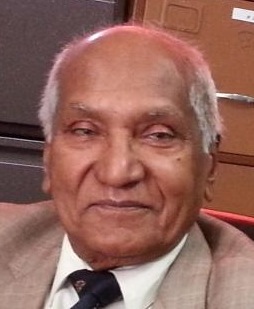
Elmore Perera
 Neville Ladduwahetty is quite right in stating in his article published in the Island of 20th June 2014 that “recent incidents in Aluthgama and Beruwala have highlighted the crying need to address issues relating to Law and Order in Sri Lanka”. Perhaps the only way to improve the Law and Order situation is by restoring the provisions for a National Police Commission as set out in the 17th Amendment.
For the Rule of Law to prevail it is imperative that the Police who are responsible for maintaining Law and Order should be independent of political or other patronages.
Article 155G(1)(b) of Chapter XV111A – NATIONAL POLICE COMMISSION (under the 17th Amendment introduced in 2001) stated that “The Commission shall not in the exercise of its powers under this Article, derogate from the powers and functions assigned to the Provincial Police Service Commission as and when such commissions are established under Chapter XVIIA – Provincial Councils.
The Provincial Councils under the 13th Amendment, introduced in 1987, presently provides that the Provincial Police Commission (if and when it is constituted) shall be composed of the DIG of the Province appointed by the National Police Commission; a person nominated by the National Public Service Commission in consultation with the President and a nominee of the Chief Minister.
Clause 11:1 in Appendix 1 to List 1 of the Ninth Schedule to the Constitution presently provides that “The DIG of the Province shall be responsible to and under the control of the Chief Minister thereof in respect of the maintenance of public order in the Province and the exercise of police powers in the Province”. As stated by Neville, this means that 2 of the 3 members of the Provincial Police Commission are under the control of the Chief Minister. Admittedly, in those
circumstances the Provincial Police will NOT be independent of political patronage.
circumstances the Provincial Police will NOT be independent of political patronage.
The solution is clear and simple. The aforementioned provision in Article 155G(1)(b) was introduced at a time when a Provincial Division of the Sri Lanka Police Force was still only a concept. It merely provided that the National Police Commission shall not act in derogation of the powers and functions that may, thereafter, be assigned to the Provincial Police Service Commission.
The reintroduction of the 17th Amendment can only be done by an amendment to repeal the 18th Amendment. This amendment could also amend the aforementioned clause 11:1 in Appendix 1 to List 1 of the Ninth Schedule of the 13th Amendment to provide that the Provincial DIG shall be responsible to and under the control of the Governor of the Province, or perhaps the Provincial Police Commission. This will hopefully result in the creation of Independent Provincial Police Forces together with an independent National Police Force.
There appears to be widespread belief that the acts of omission and commission on the part of members of the National Police Service were largely responsible for the incidents at Alutgama and Beruwela.
Could these have happened if a Provincial Police Service was in place?
I think NOT. Perhaps Neville, (who, like me, was born and bred beyond the Bentara Ganga) will also agree.
* Elmore Perera , Attorney-at-Law - Founder, Citizen’s Movement for Good Governance -Past President, Organisation of Professional Associations
