

Can We (Not) Design Post War Democracy – In Sri Lanka ?
By Suren Rāghavan -June 20, 2014
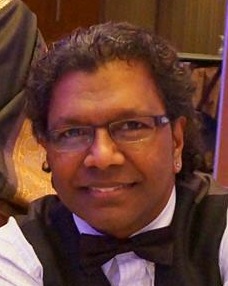
Dr. Suren Rāghavan
 Designing democratic developments in a post-conflict situation is ideologically, institutionally, and qualitatively, different from a post-colonial democratic construct. Reestablishing the vacuum of law and order and demilitarizing while the space for non –violent reasoning and debating towards a collective civic order will take priority. The genuine commitment of the political class to foster such environment, in which the new democratic possibilities can grow, is indispensable. No amount of international actors and their interventions can bring this condition, unless otherwise the indigenous elites are committed to democratic values.
What is happening in Sri Lanka at this stage seems exactly this-the rulers are not interested in democracy while the international actors are coming in the form of inquiry which is interpreted as a direct invasion. More countries have seen the return of conflict due the absence of above minimum conditions in their immediate post conflict period. Lanka has spent five full years after May 2009 when she comprehensively defeated the Tamil Tigers, ending over 25 years of civil war. Yet her possibility to normalcy and democracy has been totally undermined by a political class (or family). All southern elections became mere mechanism of consolidating power than sharing them. Governance is considered an opportunity for self-glories than for the goodness of all sections of the society. Media and freedom of information are limited with a militaristic embargo. Charges of corruptions are far more serious than the times of war. In essence, the victory at war has turned to a defeat of wider democracy. Gravitational center of such situation is due to a political culture depended on the culture and values of newer political elites.
Old Fires at New Village-(Aluthgama) Read More

The Liberal Party of Sri Lanka is deeply concerned at the recent breakdown in Law and Order and the exacerbation of communal violence that has taken place in the last couple of days. Whilst we still await further details of what actually happened, it is clear that the authorities have not acted with a sense of responsibility, in having permitted public demonstrations in an inflammable situation.
By Kamal Nissanka -June 20, 2014
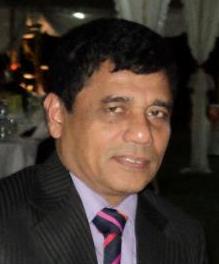
Kamal Nissanka
The Liberal Party of Sri Lanka is deeply concerned at the recent breakdown in Law and Order and the exacerbation of communal violence that has taken place in the last couple of days. Whilst we still await further details of what actually happened, it is clear that the authorities have not acted with a sense of responsibility, in having permitted public demonstrations in an inflammable situation.
It is also worrying that there is no clear reporting of what is going on, since this leaves room for all sorts of rumours. In a context in which the government, understandably, feels that there are efforts at destabilization, it must be all the more careful to ensure that there is a clear chain of command so that the safety of all citizens can be ensured.
The intensity of the provocation being exercised seems related to the absence of the President from the country. This is understandable given that the general belief is that he is the only person fit and able to exercise authority. But this is not an acceptable situation, since clearly it is necessary for him to leave the country on occasion, not least because he is the only person in a position to represent the country credibly in other countries.
